WhentoIntroduceAdvancedSwimmingActivities?

Summary
- Good communication with parents and students is crucial for clear expectations.
- Digital tracking systems make progress and technical skills visible.
- Tracking systems support personalized swimming lessons and swimmer motivation.
Determining the right moment to introduce advanced swimming activities is important for effective swimming lesson planning. Swimming instructors and parents need insight into the swimming lesson progress to offer exercises appropriately.
In this article, we discuss factors such as the starting level, motor development, and confidence in the water. Additionally, we cover the use of a digital tracking system to systematically record and assess progress.
Furthermore, practical criteria and adjustments are addressed that help tailor swimming lessons to individual swimmers. The role of communication with parents and students is also explained.
1. Assessing the Starting Level of Swimmers
The starting level of swimmers determines when advanced swimming activities are introduced.
This is related to previous swimming experience, motor development, and confidence in the water.
In this chapter, we discuss how these factors together determine the starting point of the swimming lesson.
Effect of Previous Swimming Experience
The swimming experience a child has previously gained influences the pace of learning new skills.
Children with prior swimming lessons or sports experience often pick up techniques faster.
However, it is important that the lessons are adjusted to sufficiently challenge them.
This keeps motivation high and prevents stagnation.
Role of Motor Development
Motor development plays a major role in learning swimming techniques.
Children with good coordination often learn new movements faster and more easily.
Slower motor developers can make rapid progress with targeted guidance.
Therefore, it is important to tailor the lesson content to the motor skill level of the swimmer.
Influence of Confidence and Fear
Confidence in the water partly determines the willingness to try new swimming activities.
Children who are fearful need more time and a patient approach.
Positive and calm guidance helps build confidence.
This creates a safe foundation for introducing more complex exercises.
What is Zwemlesmaatje?
Zwemlesmaatje is an independent app that allows you to track, assess, and celebrate swimming progress — whether you are a parent, adult swimmer, or instructor. You are not dependent on the swimming school but keep control yourself.
For parents, the app offers a clear learning path of 7 levels (from Red to Gold) with 86 exercises. You assess each exercise with a simple scoring system (0 to 6) and receive a personal swimming certificate for each achieved level. This way, you can see at a glance where your child stands and what still needs work.
Adults who want to learn (better) swimming use Zwemlesmaatje discreetly and without group pressure. The app provides structure, breaks the learning process into manageable steps, and helps overcome insecurity. You train at your own pace, whenever it suits you.
Swimming schools and instructors use Zwemlesmaatje completely free as a digital system for student administration, schedules, and progress. Parents see their child's development in real-time — without you having to do any work. A handy Marketing Toolbox also helps you create professional flyers, social media posts, and certificates.
Discover now how Zwemlesmaatje supports your swimming journey.
2. The Importance of Progress Tracking
Progress tracking is essential to introduce swimming activities at the right moment.
This chapter discusses systematic observation techniques, recording technical skills, and monitoring emotional factors.
These insights help tailor lessons better to the development of each swimmer.
Techniques for Systematic Observation
Systematic observation starts with regularly and structurally watching swimming behavior and technique.
Instructors can, for example, use checklists to assess specific movements and breathing.
By observing consistently, small improvements and points of attention become visible.
This prevents swimmers from staying too long at the same level without new challenges.
Recording Technical Skills
Recording technical skills is done based on concrete criteria per level.
Examples include correctly performing breathing, floating, and stroke technique.
This data can be noted manually or digitally recorded with an app.
This creates a clear overview of which skills are mastered and which still require attention.
Monitoring Emotional Factors
Emotional factors such as confidence and fear strongly influence the learning process.
It is important to regularly monitor these signals, for example through observation and conversations with the swimmer.
A child who feels safe generally learns faster and dares to try new exercises.
By including these aspects in progress tracking, the lesson can be better tailored to individual needs.
3. Criteria for Advanced Exercises
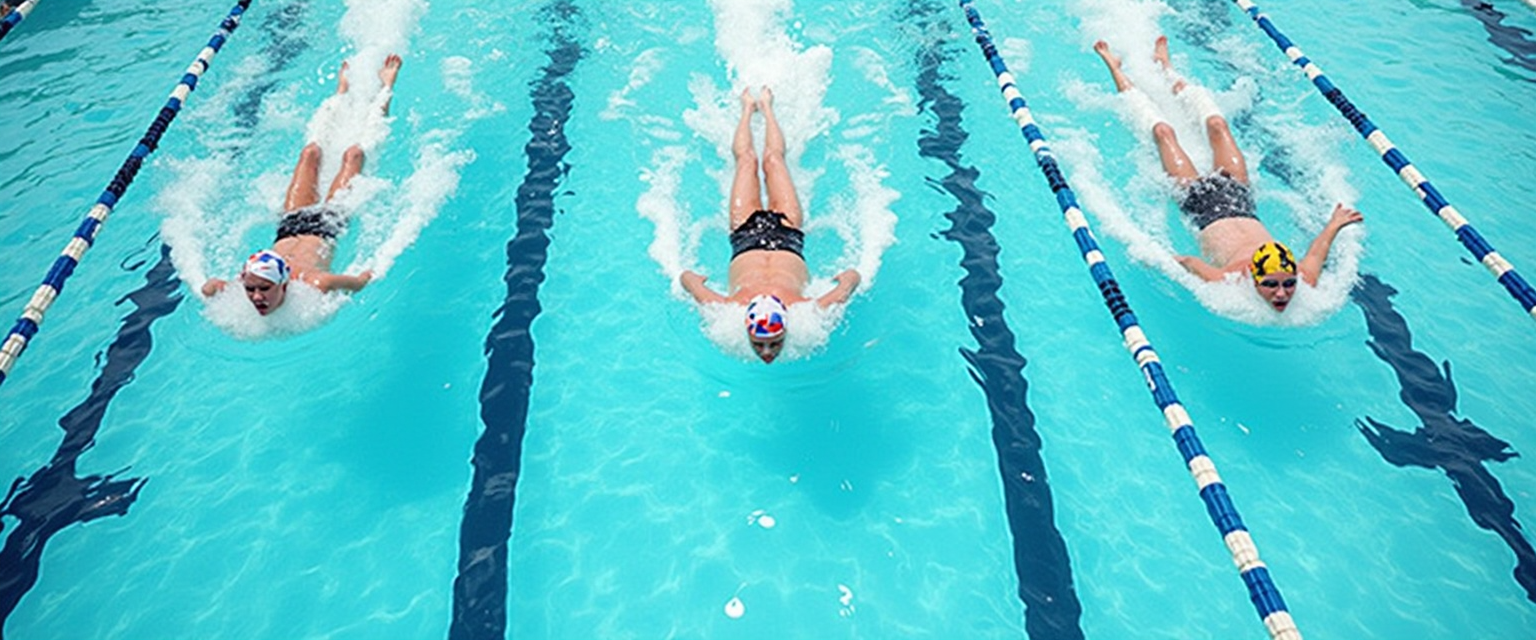
When introducing advanced swimming activities, it is important to use clear criteria.
These criteria help determine when a swimmer is ready for more challenging exercises.
In this chapter, we discuss measurable assessment criteria, signals to create challenges, and the role of motivation and self-confidence.
Measurable Assessment Criteria
Advanced swimming activities are best introduced based on measurable criteria.
This means the swimmer masters certain technical skills, such as correct breathing, floating, and stroke technique.
These skills can be recorded with a structured checklist or digital progress tracking.
By measuring regularly, the instructor knows exactly when a swimmer is ready for the next step.
Signals for Creating Challenges
Besides measurable criteria, there are also signals indicating that a swimmer is ready for more challenge.
For example, if a child performs exercises quickly and effortlessly, this may be a sign that the level is too low.
A lack of motivation or boredom during the lesson can also indicate a need for new stimuli.
It is important to recognize these signals and adjust the lesson content accordingly.
Role of Motivation and Self-Confidence
Motivation and self-confidence play a major role in successfully introducing advanced exercises.
A swimmer who feels confident dares to try new techniques better and learns faster.
Therefore, it is essential to create a positive and supportive atmosphere.
This way, the swimmer can work on more challenging exercises with confidence and maintain progress.
4. Practical Tips for Lesson Adjustment
In this chapter, we discuss how to practically adjust swimming lessons to the needs of different swimmers. We cover adapting the exercise material, the importance of patient and positive guidance, and designing exercises that match individual capabilities. This ensures an effective and motivating learning environment.
Differentiation in Exercise Material
It is important to differentiate the exercise material so that each swimmer is challenged at their own level. This means offering variations in difficulty and pace. For example, a child who masters the basic skills can receive extra technique variations, while another child gets more time to practice a skill.
This approach prevents swimmers from becoming bored or overwhelmed. Differentiation also helps keep motivation high and stimulates progress. It requires good observation and flexibility from the instructor.
Patient and Positive Guidance
Patient and positive guidance is essential when introducing advanced swimming activities. Swimmers need time to process new skills and build confidence. By giving positive feedback, you stimulate their self-confidence and willingness to practice.
It is important to celebrate small successes and acknowledge that each swimmer has their own pace. This prevents frustration and promotes a safe learning environment. This way, swimmers can make progress with pleasure and without pressure.
Designing Tailored Exercises
Designing tailored exercises means taking into account the individual capabilities and learning goals of each swimmer. This can be done by offering variations in distance, technique, or pace. For example, a swimmer who struggles with breathing can receive specific breathing exercises.
Additionally, you can adjust exercises to the motor development and confidence of the swimmer. This keeps the lesson challenging but achievable. Regularly evaluating the exercises helps keep them current and appropriate.
5. Communication with Parents and Students
Good communication with parents and students is essential when introducing advanced swimming activities.
Sharing clear information about progress helps manage expectations.
Additionally, utilizing feedback provides valuable insights for a suitable lesson offer.
Sharing Information About Progress
Regularly sharing progress information ensures transparency between instructors, parents, and students.
Use simple reports or digital tools to make technical skills and achieved goals visible.
This way, parents can better understand which steps their child is taking and where attention is still needed.
An example is showing earned certificates or scores after a series of lessons.
Utilizing Feedback from Parents
Parents often have valuable observations about their child's behavior and motivation outside of swimming lessons.
By actively asking for and processing this feedback, the instructor can better tailor the lesson program to individual needs.
This promotes a positive learning environment and prevents students from becoming discouraged.
A practical way is organizing short evaluation talks or using a digital feedback form.
Setting Realistic Expectations
It is important to set realistic expectations about the pace and difficulty of advanced swimming activities.
Explain that progress can vary per child due to factors such as motor development and self-confidence.
This prevents disappointments and encourages a patient and positive attitude among parents and students.
An example is discussing the criteria for starting new exercises in advance and the importance of a good foundation.

Summary
Summary of Advanced Swimming Activities and the Importance of a Digital Tracking System
Good communication with parents and students is essential when introducing advanced swimming activities. Sharing clear information about progress helps manage expectations and provides valuable insights for a suitable lesson offer.
Regularly sharing progress information ensures transparency between instructors, parents, and students. Digital tools make technical skills and achieved goals visible, allowing parents to better understand the steps their child is taking.
Why a Digital Tracking System Helps
A digital tracking system supports adapting swimming lessons to the needs of different swimmers. It enables differentiation by tailoring exercise material and pace to individual levels.
With measurable criteria, the system determines when a swimmer is ready for more challenging exercises. Systematic observation and recording of technical skills ensure better alignment of the lesson offer.
The tracking system takes into account the starting level of swimmers, such as previous swimming experience and motor development. This helps determine the right moment for new activities and maintain motivation.
Dear reader, in this blog post we discussed when to introduce advanced swimming activities.
We would love to hear if you have experience offering these activities. Feel free to leave a comment below this article.
You can try Zwemlesmaatje for free via zwemlesmaatje.com.
Thank you for reading and your involvement.

Bob van Soest
As an expert in operating sports facilities (such as swimming pools) and developer of, among others, Zwemlesmaatje.com, I am passionately committed to making swimming lessons simpler, more fun and more insightful for parents, swimming instructors and everyone who wants to learn to swim.
Frequently Asked Questions
Related articles

Why Showering Before Swimming Lessons Is So Important
Why shower before swimming lessons? Discover why hygiene and preparation are crucial for the best swimming experience. Read our tips and avoid surprises!
When to Start Swimming Lessons for Optimal Progress
Effectively Registering Swimming Lesson Progress from What Age?
Discover Zwemlesmaatje
The all-in-one app for swimming lesson progress. For parents, swim schools, and adult swimmers.