TrackingSwimmingLessonProgressAbroad

Summary
- Consistent teaching methods and regular evaluations promote swimming lesson progress abroad.
- Digital tools provide overview, structure, and transparent communication with parents and students.
- Flexible planning and clear goals improve the efficiency and alignment of swimming lessons.
Tracking swimming lesson progress abroad requires a structured approach. Swim schools and instructors need a clear overview of students' development, despite language and location differences.
In this article, we discuss how a digital tracking system can help register swimming levels and plan swimming lessons. Additionally, we cover practical methods to ensure smooth communication with parents and students.
This creates a clear picture of the swimming lesson schedule and progress, even with changing circumstances and international situations.
1. Preparing for Swimming Lessons Abroad
In this chapter, we discuss how to prepare your swimming lesson progress when taking lessons abroad. We cover determining the necessary documentation and goals, assessing students' swimming levels, and handling language barriers. This lays a solid foundation for a structured and effective swimming lesson experience in a different environment.
1.1 Establishing Documentation and Goals
For good preparation, it is important to first gather all relevant documentation. Think of previous swimming reports, certificates, and medical information. With this, you can set clear goals that match the student's level and wishes.
These goals help to plan the swimming lessons purposefully and measure progress. Also, make sure you know the requirements set by the swim school abroad. This prevents surprises and allows you to better tailor the lessons to the student.
1.2 Determining Students' Swimming Level
Determining the student's swimming level is essential to follow appropriate lessons. This can be done through an intake interview or a short trial lesson at the new swim school. This gives the instructor insight into skills and any points of attention.
With this information, the swim school can offer a suitable lesson program. It prevents the student from moving too fast or too slow through the material. This contributes to a positive learning experience and better progress.
1.3 Handling Language Barriers
Language barriers can be a challenge during swimming lessons abroad. It is important to first identify which languages the instructors and students speak. This helps to prevent communication problems.
Where possible, use visual aids or digital translation apps to make instructions clear. It can also help to learn important swimming terms in the local language. This makes the lesson run more smoothly and helps the student better understand what is being asked.
What is Zwemlesmaatje?
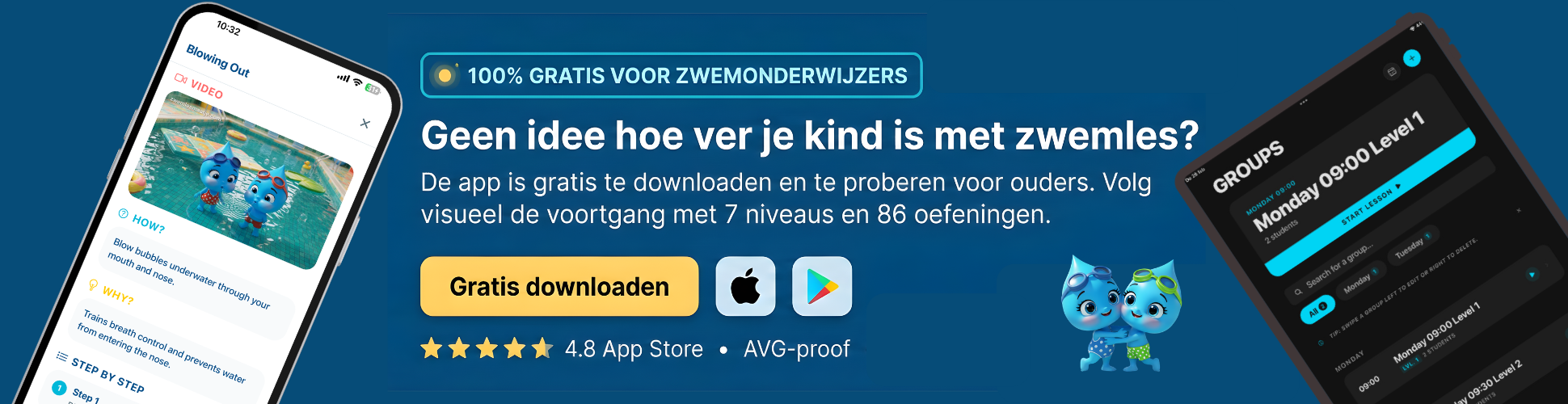
Zwemlesmaatje is an independent app that allows you to track, assess, and celebrate swimming progress — whether you are a parent, adult swimmer, or instructor. You are not dependent on the swim school but keep control yourself.
For parents, the app offers a clear learning path of 7 levels (from Red to Gold) with 86 exercises. You assess each exercise with a simple scoring system (0 to 6) and receive a personal swimming certificate for each achieved level. This way, you can see at a glance where your child stands and what still needs work.
Adults who want to learn (better) swimming use Zwemlesmaatje discreetly and without group pressure. The app provides structure, divides the learning process into manageable steps, and helps overcome insecurity. You train at your own pace, whenever it suits you.
Swim schools and instructors use Zwemlesmaatje completely free as a digital system for student administration, schedules, and progress. Parents see their child's development in real-time — without extra work for you. A handy Marketing Toolbox also helps you create professional flyers, social media posts, and certificates.
Discover now how Zwemlesmaatje supports your swimming journey.
2. Methods for Progress Tracking
In this chapter, we discuss various methods to track swimming lesson progress abroad. We compare digital and paper systems, provide an overview of practical tools and apps, and explain how regular evaluation moments can contribute to a clear insight into development. This gives you tools to register progress effectively and clearly.
2.1 Digital versus Paper Systems
There are two main types of systems to register swimming lesson progress: digital and paper systems. Paper systems are simple and direct, such as a notebook or cards with notes. They are easy to carry but can quickly become unclear with many students or longer periods.
Digital systems often offer more structure and possibilities, such as automatic reports and adding photo or video material. They are accessible via smartphone or computer, which is convenient for international swimming lessons. Digital systems make it easier to share progress with parents and colleagues, even if they are remote.
2.2 Practical Tools and Apps
There are various apps and tools specifically for swim schools and instructors to register progress. Examples include platforms that record lesson results, attendance, and skills. These tools often provide a clear dashboard with progress graphs.
Additionally, there are apps that allow parents to follow their child's progress, including photos and videos of swimming lessons. This promotes involvement and communication. It is important to choose a tool that is user-friendly and offers multilingual support, especially in an international environment.
2.3 Scheduling Regular Evaluation Moments
Regular evaluation moments are essential to properly monitor swimming lesson progress. Schedule fixed moments to discuss achieved goals with students and parents. This can be, for example, after each course phase or monthly period.
By recording these moments in the tracking system, a clear overview of development emerges. This allows potential bottlenecks to be identified and addressed in time. Evaluations also motivate students because they see their progress.
3. Communication with Parents and Students
Good communication with parents and students is essential when tracking swimming lesson progress abroad. This chapter covers the importance of clear progress reports, providing interim feedback, and handling cultural differences in communication. This way, instructors and parents can effectively follow and support swimming development together.
3.1 Clear Progress Reports
Clear progress reports give parents and students insight into achieved skills and points of attention. They contain clear, concrete information about the swimming skills practiced and the next goals. For example, a report may indicate that a child floats independently and is now working on breathing technique.
By sharing these reports regularly, everyone stays informed about the progress. Using visual aids such as graphs or photos can make the report more understandable. This creates transparent communication without ambiguities.
3.2 Interim Reports and Feedback
Interim reports and feedback moments are important to monitor and adjust progress. They provide the opportunity to ask questions and signal concerns in time. For example, an instructor can indicate during an interim update that a student needs extra practice going underwater.
Regular feedback stimulates involvement from parents and students. It also helps manage expectations and keeps the learning process positive. This way, the swimming lesson remains tailored to the child's needs.
3.3 Cultural Differences in Communication
Cultural differences influence how communication about swimming lesson progress is received and understood. In some countries, direct feedback is common, while elsewhere a more reserved style is appreciated. Instructors must take this into account to avoid misunderstandings.
It is useful to inquire beforehand about the preferences of parents and students. For example, it may be necessary to offer reports in multiple languages or provide extra explanation about certain terms. This makes communication more effective and respectful.
4. Swimming Lesson Planning and Group Division
For swimming lessons abroad, good planning and group division are essential for smooth operation.
This chapter discusses how lesson schedules can be organized flexibly, how swimming groups are efficiently divided, and how local facilities are taken into account.
This creates a practical approach that fits the specific circumstances of each location.
4.1 Organizing Lesson Schedules Flexibly
Lesson schedules must consider the varying availability of pools and instructors.
Flexibility is important, for example by offering multiple lesson times per week.
This allows students and parents to choose what best fits their stay and agenda.
Digital planning tools help implement changes quickly and maintain overview.
4.2 Efficiently Dividing Swimming Groups
Efficient group division ensures appropriate lesson content and optimal guidance.
Groups are divided based on swimming level and age, so instructors can work purposefully.
For example, beginners can start in smaller groups, while advanced swimmers practice in larger groups.
This promotes progress and keeps lessons clear.
4.3 Adapting to Local Facilities
Local facilities vary by country and pool, which affects lesson planning and group division.
For example, the size of the pool or availability of special teaching materials may vary.
Instructors adjust the lesson setup to make optimal use of available resources.
Safety rules and opening hours are also included in the planning.
5. Tips for Success and Continuity
In this chapter, we discuss how to successfully track swimming lesson progress abroad. We provide practical tips to ensure consistency, use data effectively, and offer support to instructors and parents. This way, the quality of swimming lessons remains guaranteed, even with changing circumstances.
5.1 Maintaining Consistency in Teaching
It is important to maintain a fixed structure in swimming lessons, even when working abroad. Ensure instructors follow the same teaching methods and goals so students continuously make progress. Regular evaluations help monitor progress and make adjustments where needed.
Use digital tools to record lesson content and results. This prevents information loss when instructors or locations change. This keeps the learning process clear and organized for the swimmer.
5.2 Using Data for Improvements
Data about swimming lesson progress provides valuable insights for improvement. For example, analyze which skills need more attention or where students often get stuck. This helps to adjust the lesson program purposefully.
By sharing progress data with parents and instructors, transparent communication arises. This encourages involvement and makes it easier to collaborate on the learning process. Practical examples include tracking achieved certificates or registering specific swimming techniques.
5.3 Providing Training and Support
Good training and support for instructors are essential for continuity. Provide training in working with the progress system and handling cultural differences. This increases the quality of lessons and satisfaction of parents and students.
Additionally, it is important to guide parents in understanding progress reports. This can be done via short explanatory videos or informative meetings. This way, they feel involved and can better support their child.

Summary
Summary of Tracking Swimming Lesson Progress Abroad
Tracking swimming lesson progress abroad requires a structured approach. Consistency in teaching methods and regular evaluations ensure clear progress for students.
A fixed structure and digital tools help keep lesson content and results clear. This keeps the learning process transparent, even with changing instructors or locations.
Why a Digital Tracking System Helps
A flexible lesson schedule and efficient group division are important for smooth swimming lessons. Digital planning tools make it possible to quickly make adjustments and maintain overview.
Clear communication with parents and students strengthens collaboration. Progress reports with concrete information and visual aids provide transparency.
Digital systems offer more structure than paper systems. They make it easy to share progress and include extra features such as automatic reports and multimedia.
Good preparation starts with gathering relevant documentation and setting clear goals. This helps plan swimming lessons purposefully and tailor them to the student's level.
Dear reader, this blog post was about tracking swimming lesson progress abroad.
We would love to hear if you have experience with digitally following swimming lessons. Feel free to leave a comment below this article.
You can try Zwemlesmaatje for free via https://zwemlesmaatje.com.
Thank you for your attention and for reading this blog post.

Bob van Soest
As an expert in operating sports facilities (such as swimming pools) and developer of, among others, Zwemlesmaatje.com, I am passionately committed to making swimming lessons simpler, more fun and more insightful for parents, swimming instructors and everyone who wants to learn to swim.
Frequently Asked Questions
Related articles

Why Showering Before Swimming Lessons Is So Important
Why shower before swimming lessons? Discover why hygiene and preparation are crucial for the best swimming experience. Read our tips and avoid surprises!
When to Start Swimming Lessons for Optimal Progress
Effectively Registering Swimming Lesson Progress from What Age?
Discover Zwemlesmaatje
The all-in-one app for swimming lesson progress. For parents, swim schools, and adult swimmers.