RecordingSwimmingLessonProgressforChildrenwithFearofSwimming
Summary
- Special guidance focusing on trust and pace helps children overcome fear of swimming.
- Small groups and private lessons provide calm, personalized swimming environments.
- Digital tracking systems enhance progress monitoring and lesson adjustments.
Recording swimming lesson progress for children with fear of swimming requires a focused and careful approach. Swimming instructors and parents need a clear overview of small steps and achieved successes. A digital tracking system can support this by making the development transparent.
In this article, we discuss how to recognize fear of swimming and its impact on the learning process. Additionally, we cover practical methods to guide children step by step and how digital tools can help document progress.
The information aims to provide a clear picture of the possibilities and benefits of structured progress registration for children with fear of swimming.
1. Recognizing Fear of Swimming in Children
In this chapter, we discuss how to recognize fear of swimming in children. We cover the most common symptoms, differences with adults, and possible causes. This gives you insight into identifying fear of swimming and its background.1.1 Common Symptoms
Fear of swimming in children often shows in visible behavior. They may cling to parents or instructors and refuse to enter the water. Sometimes they cry or panic when near water. These are clear signals that the child does not feel safe.
Additionally, a child may become quiet or exhibit hyperactive behavior to hide their fear. It is important to take these behaviors seriously. Recognizing these symptoms helps provide timely appropriate support. This way, the swimming lesson better matches the child's needs.
1.2 Differences Between Children and Adults
The expressions of fear of swimming differ between children and adults. Children often show directly visible behavior such as crying or clinging. Adults usually avoid swimming pools or feel tension without always expressing it. Adults also sometimes make excuses to avoid swimming.
Children often have fewer words to describe their fear. Therefore, observing is important. Adults can better verbalize their fear but sometimes do not dare to admit they are afraid. This difference requires an adapted approach when recognizing fear of swimming.
1.3 Causes of Fear of Swimming
The causes of fear of swimming are diverse. Often unpleasant experiences in the water play a role, such as near-drowning or unexpected situations. Fear can also be inherited from parents or caregivers who themselves are afraid of water. Unfamiliarity with water and lack of positive experiences reinforce the fear.
Additionally, the feeling of losing control underwater can be an important cause. Every child is unique, so it is important to understand the background of the fear. This helps in choosing an appropriate approach in the swimming lesson.
What is Zwemlesmaatje?
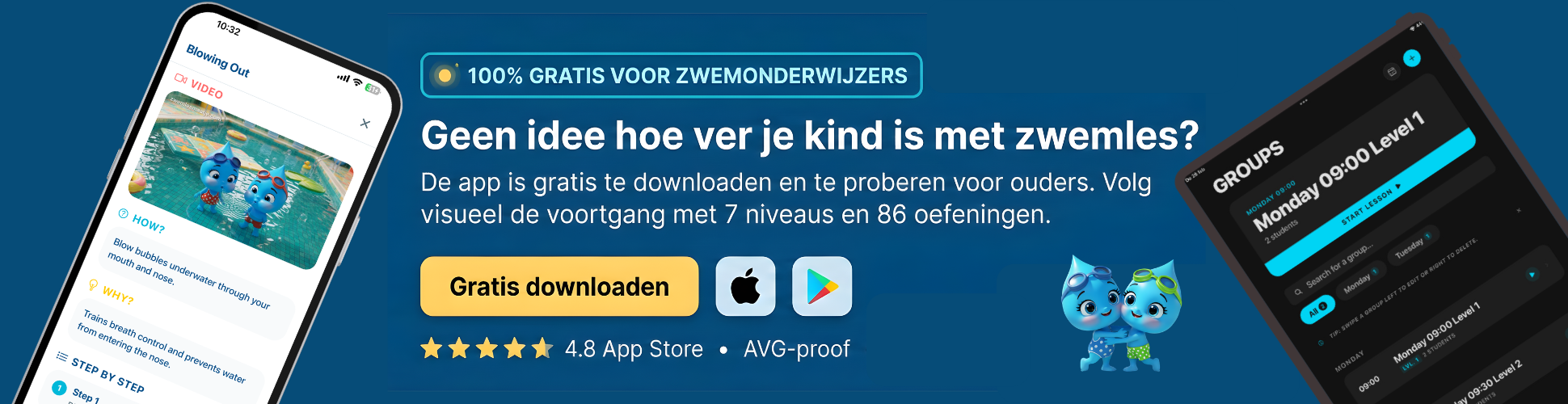
Zwemlesmaatje is an independent app that allows you to track, assess, and celebrate swimming progress — whether you are a parent, adult swimmer, or instructor. You are not dependent on the swim school but keep control yourself.
For parents, the app offers a clear learning path of 7 levels (from Red to Gold) with 86 exercises. You assess each exercise with a simple scoring system (0 to 6) and receive a personal swimming certificate for each achieved level. This way, you see at a glance where your child stands and what still needs work.
Adults who want to learn (better) swimming use Zwemlesmaatje discreetly and without group pressure. The app provides structure, divides the learning process into manageable steps, and helps overcome insecurity. You train at your own pace, whenever it suits you.
Swim schools and instructors use Zwemlesmaatje completely free as a digital system for student administration, schedules, and progress. Parents see their child's development in real time — without extra work for you. A handy Marketing Toolbox also helps you create professional flyers, social media posts, and certificates.
Discover now how Zwemlesmaatje supports your swimming journey.
2. Effects of Fear of Swimming on Progress
Fear of swimming affects children's progress in various ways. It impacts safety, the learning process, and self-confidence. In this chapter, we discuss these effects to provide better insight into the challenges during swimming lessons.
2.1 Safety and Risks
Fear of swimming can affect safety during lessons because children may panic more quickly. This increases the risk of accidents, especially if they unexpectedly go underwater. It is therefore important that instructors are alert to signs of fear and respond accordingly.
Because of the fear, a child may also show avoidance behavior, which reduces their ability to cope with water. Creating a safe and familiar environment helps limit these risks. This way, children can gradually get used to the water without feeling threatened.
2.2 Influence on Learning Process
Fear of swimming affects the learning process because children are less willing to try new skills. They may get stuck in their development because they are afraid to make mistakes or go underwater. This requires an adapted teaching approach focusing on small, achievable goals.
By digitally recording progress, instructors and parents can better see which steps the child takes. This keeps the learning process clear and allows the pace to be adjusted to the child. This prevents frustration and encourages perseverance.
2.3 Impact on Self-Confidence
Self-confidence is essential when learning to swim, but fear of swimming can undermine this. Children with fear often feel insecure and dare less to swim independently. This can reduce the enjoyment of swimming and negatively affect motivation.
Building confidence happens through positive experiences and celebrating small successes. A calm and supportive attitude from parents and instructors strengthens self-confidence. This makes swimming a safe and enjoyable activity.

3. Practical Tips for Teaching
When teaching children with fear of swimming, it is important to work calmly and step by step.
In this section, we discuss how a gradual exposure method, breathing exercises, and making swimming lessons fun can help.
These practical tips support building trust and enjoyment in the water.
3.1 Gradual Exposure Method
The gradual exposure method means that children slowly get used to the water without pressure or haste.
For example, start by playing at the water's edge and let the child decide when they want to take the next step.
By taking small steps, such as wetting feet and later submerging the face, confidence grows.
This approach prevents overload and helps the child maintain control over the situation.
3.2 Applying Breathing Exercises
Breathing exercises are an effective way to reduce tension during swimming lessons.
Teach children to breathe in and out calmly, for example by blowing together on the water surface.
This helps them stay relaxed and better cope with anxious feelings.
Regular practice of breathing contributes to a calm and safe experience in the water.
3.3 Making Swimming Lessons Fun
Making swimming lessons fun increases motivation and reduces fear in children.
Use games and playful exercises that connect with the child's world of experience.
By combining fun with learning, a positive association with water is created.
This way, a child can gradually get used to the water and build confidence without pressure.
4. Effectively Recording Swimming Lesson Progress
Recording swimming lesson progress for children with fear of swimming requires a structured approach. Digital progress systems provide an overview and insight into small learning steps. Additionally, it is important to actively involve parents in monitoring development.
4.1 Use of Progress Systems
Progress systems help instructors accurately track the development of children with fear of swimming. They provide a clear overview of acquired skills and points of attention. This makes it possible to adjust the lesson program to the child's pace.
By using digital tools, swimming instructors can easily add notes and visually display progress. This keeps the learning process transparent for both instructor and parents. This promotes focused and consistent guidance.
4.2 Recording Small Steps
Recording small steps is essential for children with fear of swimming. Every progress, no matter how small, deserves attention and recognition. For example, getting used to water contact or practicing breathing exercises can be documented.
By documenting these small successes, a motivating overview emerges. This helps increase the child's confidence and positively supports the learning process. It prevents only large milestones from being seen.
4.3 Involving Parents in Progress
Parents play an important role in monitoring swimming lesson progress. By actively involving them through progress reports or digital updates, they stay well informed. This strengthens cooperation between instructor and family.
Regular communication about achieved goals and points of attention helps parents provide the right support at home. It also creates more understanding and patience for the child. This results in a joint approach that promotes confidence and motivation.
5. Specialized Guidance and Lesson Forms
Children with fear of swimming often need specialized guidance to increase confidence.
This can be through small groups, private lessons, and professional support.
Additionally, it is important to respect the child's pace and build trust step by step.
5.1 Small Groups or Private Lessons
Small groups or private lessons offer a calm environment where children feel safer.
In such a setting, each child receives more personal attention from the instructor.
This makes it possible to tailor exercises to the child's pace and needs.
An example is a child who first plays alone with the instructor at the edge of the pool.
This way, the child can get used to it without pressure from others.
Private lessons are also suitable for children who need extra time to gain confidence.
5.2 Engaging Professional Support
Professional support can consist of instructors specialized in fear of swimming.
These guides know techniques to reduce fear and stimulate confidence.
They use calm communication and positive reinforcement, for example.
They can also collaborate with parents to closely monitor and adjust progress.
This creates a safe learning environment where the child feels supported.
5.3 Building Confidence at Own Pace
Building confidence happens best at the child's own pace.
It is important to celebrate small successes and avoid pressure.
By practicing new skills step by step, self-confidence grows gradually.
A child can, for example, first get used to water contact before swimming deeper.
This approach prevents overload and strengthens the feeling of control.
This keeps swimming a positive experience.

Summary
Summary of Fear of Swimming in Children: Guidance and Digital Progress
Fear of swimming in children requires special guidance with attention to trust and pace. Small groups and private lessons offer a calm environment with personal attention.
The use of a digital tracking system helps instructors accurately record swimming lesson progress. This system provides insight into small learning steps and makes it possible to adjust the lesson program.
Why a Digital Tracking System Helps
A digital tracking system offers an overview of acquired skills and points of attention. Instructors can easily add notes and visually display progress.
This ensures transparency towards parents and promotes focused and consistent guidance. This way, the learning process is better aligned with the child's pace.
Dear reader, this blog post was about recording swimming lesson progress for children with fear of swimming.
We would love to hear if you have experience following swimming lessons this way. Feel free to leave a comment below this article.
You can try Zwemlesmaatje for free via zwemlesmaatje.com. We wish you much success in tracking swimming lesson progress.

Bob van Soest
As an expert in operating sports facilities (such as swimming pools) and developer of, among others, Zwemlesmaatje.com, I am passionately committed to making swimming lessons simpler, more fun and more insightful for parents, swimming instructors and everyone who wants to learn to swim.
Frequently Asked Questions
Related articles
Why Showering Before Swimming Lessons Is So Important
Why shower before swimming lessons? Discover why hygiene and preparation are crucial for the best swimming experience. Read our tips and avoid surprises!
When to Start Swimming Lessons for Optimal Progress
Effectively Registering Swimming Lesson Progress from What Age?
Discover Zwemlesmaatje
The all-in-one app for swimming lesson progress. For parents, swim schools, and adult swimmers.