RecordingSwimmingLessonProgressinBabyandToddlerSwimming
Summary
- Smooth transition from baby and toddler swimming prevents gaps in swimming lesson progress.
- Digital tracking systems make registration easy and increase motivation with rewards.
- Parents strengthen confidence and motor skills through active involvement during swimming lessons.
Tracking swimming lesson progress in baby and toddler swimming is essential for structured development. With a digital tracking system, instructors and parents can easily gain insight into the skills and growth of young swimmers.
This article discusses the benefits of recording swimming lesson progress and provides an overview of various methods to do this effectively. Additionally, attention is given to the role of parents and the transition to follow-up lessons.
The information helps swim schools and instructors organize swimming lessons and supports parents in monitoring their child's swimming development.
1. Importance of Swimming Lesson Progress
Recording swimming lesson progress in baby and toddler swimming helps to make children's development transparent.
This chapter discusses why tracking progress is important, the benefits it offers to parents and instructors, and how it influences children's motivation.
This creates a clear picture of the children's growth and confidence in the water.
Why record progress?
Recording swimming lesson progress is essential to monitor the development of young children in the water.
By systematically keeping track of which skills a child masters, instructors can better tailor the lesson program to the child's level.
Additionally, it provides parents with insight into the steps their child takes during the lessons.
This helps keep expectations realistic and appreciate the progress made.
Benefits for parents and instructors
For parents, tracking progress offers clarity about their child's development in the water.
They can see which skills have already been learned and where more attention is needed.
Instructors use this information to plan lessons more purposefully and to provide timely support where necessary.
This creates good cooperation between parents and instructors around the learning process.
Impact on children's motivation
Making progress visible is motivating for children during swimming lessons.
By recognizing small successes, self-confidence and engagement in learning to swim grow.
Rewards such as certificates enhance this effect and make the learning process more enjoyable.
A positive experience in the water encourages children to actively participate and develop new skills.
What is Zwemlesmaatje?
Zwemlesmaatje is an independent app that allows you to track, assess, and celebrate swimming progress — whether you are a parent, adult swimmer, or instructor. You are not dependent on the swim school but keep control yourself.
For parents, the app offers a clear learning path of 7 levels (from Red to Gold) with 86 exercises. You assess each exercise with a simple scoring system (0 to 6) and receive a personal swimming certificate for each level achieved. This way, you can see at a glance where your child stands and what still needs work.
Adults who want to learn (better) swimming use Zwemlesmaatje discreetly and without group pressure. The app provides structure, breaks the learning process into manageable steps, and helps overcome insecurity. You train at your own pace, whenever it suits you.
Swim schools and instructors use Zwemlesmaatje completely free as a digital system for student administration, schedules, and progress. Parents see their child's development in real-time — without extra work for you. A handy Marketing Toolbox also helps you create professional flyers, social media posts, and certificates.
Discover now how Zwemlesmaatje supports your swimming journey.
2. Age Groups and Learning Goals
Swimming lessons for babies, toddlers, and preschoolers are divided into age groups, each with its own learning goals.
These groups align with the child's developmental phase and stimulate motor skills, coordination, and confidence in the water.
The following paragraphs discuss the specific goals per age group.
Babies: 0 until walking
Babies from 0 until they can walk mainly get acquainted with water and the environment.
The lessons focus on building trust and stimulating sensory experiences.
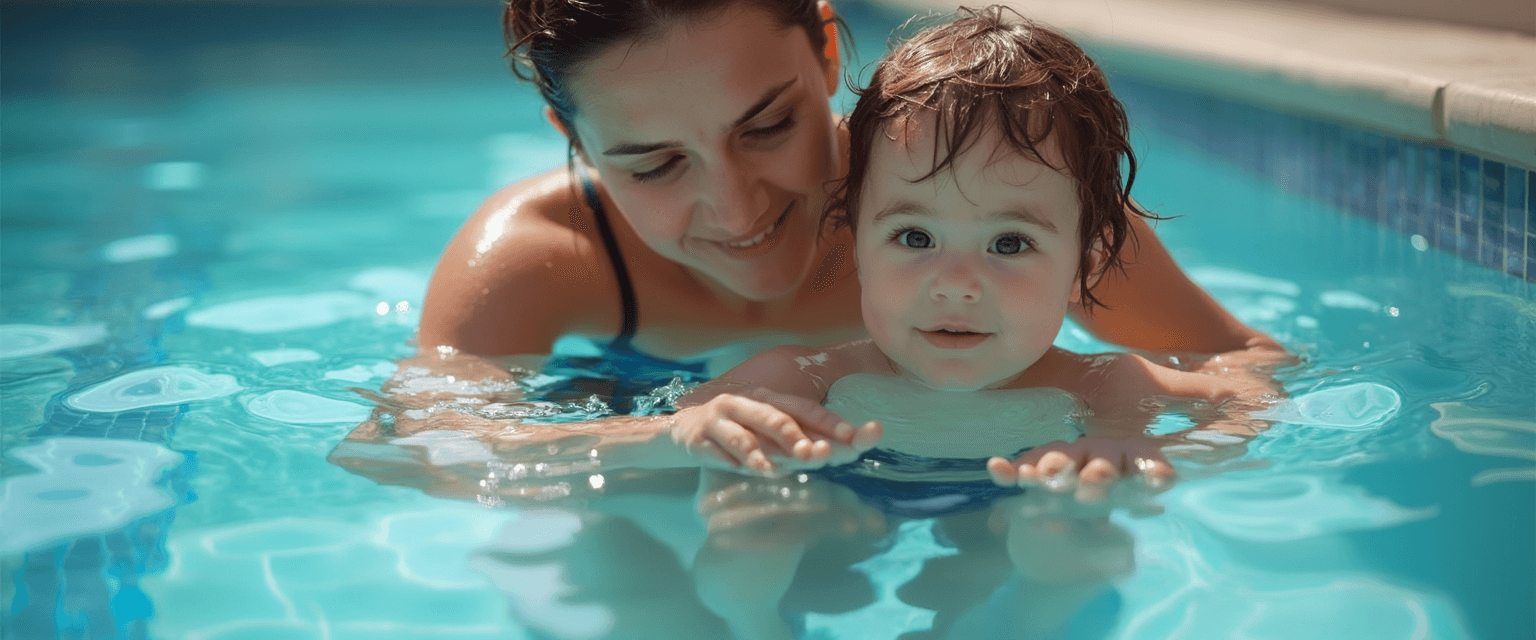
Parents or grandparents are actively involved and help the child get used to the warm, shallow water.
Through games and floating, motor skills are gently developed and contact with water is experienced positively.
Toddlers: walking until 2 years
Toddlers from walking until about 2 years are encouraged to move more actively in the water.
They practice walking, jumping, and simple water activities that promote strength and balance.
The focus is on increasing coordination and confidence while moving in the water.
Parents remain involved and support the child in discovering new skills.
Preschoolers: 2 to 4 years
Preschoolers from 2 to 4 years work on more independence and self-reliance in the water.
They practice jumping from the edge, floating, and simple underwater skills.
These activities strengthen confidence and prepare for the transition to regular swimming lessons.
The lessons also stimulate social interaction and muscle development, with attention to fun and safety.
3. Methods for Progress Recording
In this chapter, we discuss three ways to record progress in baby and toddler swimming. We cover recording practical observations, using rewards and certificates, and applying digital registration systems. This provides insight into how these methods contribute to monitoring and stimulating swimming development.
Recording practical observations
Recording practical observations is a direct way to monitor the development of young swimmers. Instructors note during lessons how children respond to exercises and games, for example their motor skills and water confidence. These observations provide a realistic picture of progress and help adjust the lesson program.
By regularly making short notes, instructors can keep track of changes and improvements well. This is especially valuable in baby and toddler swimming, where small developmental steps are important. This creates an overview that can also be used in conversations with parents.
Use of rewards and certificates
Rewards and certificates are a practical way to increase children's motivation. In baby and toddler swimming, children receive, for example, washcloths or certificates as recognition for milestones achieved. This encourages them to keep practicing with pleasure and gives parents tangible proof of progress.
These rewards are tailored to the child's age and development, making them relevant to their experience. Awarding certificates can also be a moment to involve parents and inform them about the next steps in the swimming journey.
Applying digital registration systems
Digital registration systems offer a structured and clear way to keep track of swimming lesson progress. Instructors can easily record notes, achieved goals, and attendance per child. This makes it possible to identify trends and better tailor the lesson offerings to individual needs.
For parents, it is often pleasant to follow progress via an app or online platform. This creates transparency and allows them to stay actively involved in the learning process. Moreover, digital registration simplifies communication between the swim school and family.
4. Involving Parents and Grandparents
Parents and grandparents play an important role in baby and toddler swimming. They can actively participate in the water, which strengthens the bond and increases the child's confidence.
Clear communication about swimming lesson progress is also essential to stay involved.
Using lesson booklets also helps to make the child's development transparent and supported.
Being active together in the water
Parents and grandparents are invited during lessons to be in the warm, shallow water together with the child.
By doing exercises together, such as floating, splashing, and singing, a safe and familiar environment is created.
This active involvement not only stimulates the child's motor skills but also strengthens the emotional bond.
Children thus experience the water as a pleasant place where they can discover and grow together with their family.
Communication about progress
Regular feedback about progress helps parents and grandparents follow their child's development.
Instructors share practical tips and observations during or after the lesson so that practice can continue at home.
This communication ensures better alignment between swimming lessons and the home environment.
Parents can thus provide targeted support, and the child's confidence in the water is further built up.
Use of lesson booklets
The lesson booklet is a handy tool to record and follow swimming lesson progress.
It contains games, stories, and information that match the child's age and level.
Parents and grandparents can make notes about achieved goals and points of attention.
This promotes involvement and makes it easier to reflect together with the child on the progress made.
5. Transition and Follow-up Lessons
This chapter discusses how the transition from baby and toddler swimming to follow-up lessons proceeds smoothly.
We look at the importance of good follow-up, preventing gaps in swimming lesson progress, and how this helps better prepare for the next swimming lessons.
This gives you insight into the process and benefits of a structured transition.
Follow-up after toddler swimming
After toddler swimming, it is important to closely monitor the child's progress.
This involves looking at the skills achieved and confidence in the water.
This information helps instructors determine when a child is ready for the next step, such as regular swimming lessons.
A clear overview of development prevents children from transitioning too early or too late.
Preventing gaps in progress
Gaps in progress can occur when not all skills are properly recorded or followed up.
By systematically registering which exercises and skills a child masters, these gaps are prevented.
This ensures that instructors can provide targeted adjustments and that children do not skip important steps.
A complete picture of swimming development contributes to a consistent learning path.
Better preparation for swimming lessons
Good registration of swimming lesson progress makes preparation for follow-up lessons more effective.
Instructors can better tailor lessons to the child's level and needs.
Parents also gain insight into what their child can already do and where more attention is needed.
This promotes a targeted approach and increases the chance of success in the next swimming phase.

Summary
Summary of Tracking Swimming Lesson Progress in Baby and Toddler Swimming
The transition from baby and toddler swimming to follow-up lessons proceeds smoothly with good follow-up. This prevents gaps in swimming lesson progress and better prepares children for the next lessons.
It is important to closely monitor the child's progress. This helps instructors determine when a child is ready for the next step in swimming lessons.
Parents and grandparents play an active role during swimming. Their involvement strengthens the bond and the child's confidence in the water.
By doing exercises together in the water, a safe environment is created. This stimulates both the child's motor skills and emotional development.
Why a digital tracking system helps
A digital tracking system makes recording swimming lesson progress simple and clear. Instructors can quickly record practical observations and track changes.
The system supports the use of rewards and certificates, which increases children's motivation. Parents also gain clear insight into their child's development.
Swimming lessons are divided into age groups with specific learning goals. This aligns with the developmental phase and promotes motor skills, coordination, and confidence.
Systematically recording swimming lesson progress helps better tailor the lesson program. This provides a realistic picture of the child's growth and confidence in the water.
Dear reader, this blog post was about recording swimming lesson progress in baby and toddler swimming.
We would love to hear if you have experience with digitally tracking swimming lessons. Feel free to leave a comment below this article.
You can try Zwemlesmaatje for free via https://zwemlesmaatje.com.
Thank you for your attention and involvement.

Bob van Soest
As an expert in operating sports facilities (such as swimming pools) and developer of, among others, Zwemlesmaatje.com, I am passionately committed to making swimming lessons simpler, more fun and more insightful for parents, swimming instructors and everyone who wants to learn to swim.
Frequently Asked Questions
Related articles
Why Showering Before Swimming Lessons Is So Important
Why shower before swimming lessons? Discover why hygiene and preparation are crucial for the best swimming experience. Read our tips and avoid surprises!
When to Start Swimming Lessons for Optimal Progress
Effectively Registering Swimming Lesson Progress from What Age?
Discover Zwemlesmaatje
The all-in-one app for swimming lesson progress. For parents, swim schools, and adult swimmers.