ManagingSwimmingLessonProgressDuringTransfer
Summary
- Clear transfer prevents repetition and ensures correct levels for swimmers.
- Digital tracking system facilitates communication between parents, instructors, and swimming schools.
- Student tracking systems provide overview, motivation, and involvement in swimming lesson progress.
This blog post titled "Managing Swimming Lesson Progress During Transfer" was updated on date: .
Managing swimming lesson progress during a transfer is important for consistent and clear swimming lesson planning. Both parents and swimming instructors benefit from a structured approach to properly monitor swimmers' development.
In this article, we discuss various methods to record swimming lesson progress, with attention to the use of a digital tracking system. Additionally, we cover the importance of clear communication and motivation during the transition between supervisors.
The information helps those involved to ensure continuity of swimming lessons and to facilitate smooth collaboration.
1. Importance of Clear Transfer
A clear transfer of swimming lesson progress is crucial for a smooth transition between supervisors. This chapter discusses why transfer is essential, how it affects lesson continuity, and the responsibilities supervisors have in this process.
Why Transfer Is Essential
Transferring swimming lesson progress is essential to properly monitor the learning process of swimmers. Without clear information, new instructors may miss important details. This can lead to unnecessary repetition or skipping important skills.
A good transfer ensures that each swimmer can continue practicing at the right level. This keeps the lesson content tailored to individual needs and prevents confusion for both student and instructor.
Impact on Lesson Continuity
The continuity of swimming lessons strongly depends on a structured transfer. When information about progress is missing, lesson quality can decline. This can cause delays in achieving goals and frustration among swimmers.
A clear transfer helps keep lesson planning and structure consistent. This maintains swimmers' motivation and ensures a smooth learning process, even when supervisors change.
Responsibilities of Supervisors
Supervisors have the responsibility to carefully record and transfer progress. This means they must clearly document relevant observations and achieved goals. Additionally, they should make agreements about follow-up actions and points of attention.
By taking these tasks seriously, supervisors support each other and ensure a stable learning environment. This benefits swimmers' development and strengthens teamwork.
What is Zwemlesmaatje?
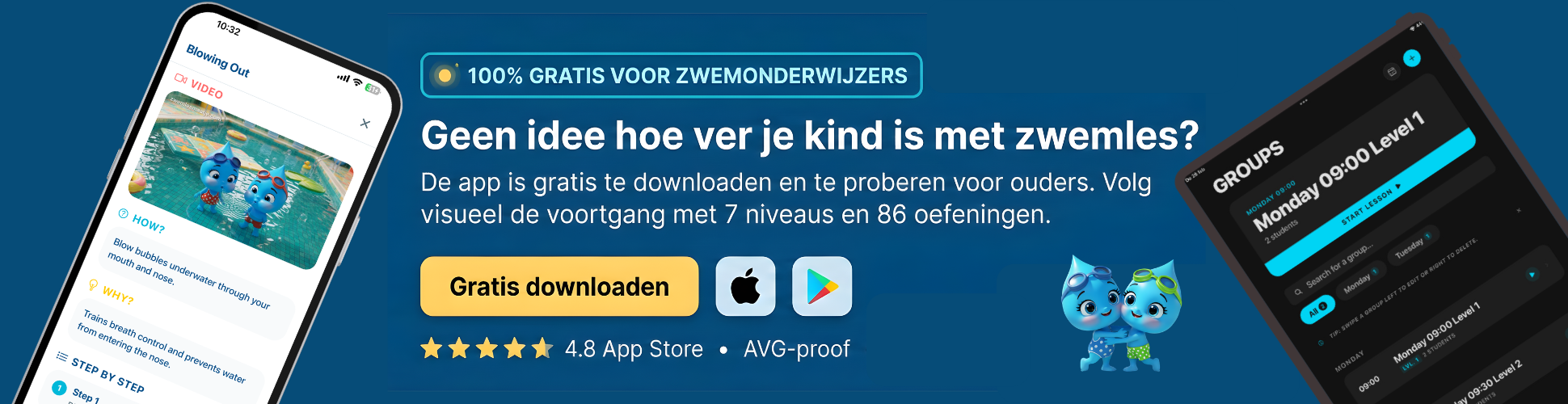
Zwemlesmaatje is an independent app that allows you to track, assess, and celebrate swimming progress — whether you are a parent, adult swimmer, or instructor. You are not dependent on the swimming school but keep control yourself.
For parents, the app offers a clear learning path of 7 levels (from Red to Gold) with 86 exercises. You assess each exercise with a simple scoring system (0 to 6) and receive a personal swimming certificate for each achieved level. This way, you can see at a glance where your child stands and what still needs work.
Adults who want to learn (better) swimming use Zwemlesmaatje discreetly and without group pressure. The app provides structure, breaks the learning process into manageable steps, and helps overcome uncertainty. You train at your own pace, whenever it suits you.
Swimming schools and instructors use Zwemlesmaatje completely free as a digital system for student administration, schedules, and progress. Parents see their child's development in real-time — without you having to do extra work. A handy Marketing Toolbox also helps you create professional flyers, social media posts, and certificates.
Discover now how Zwemlesmaatje supports your swimming journey.
2. Methods for Progress Recording
There are various methods to record and manage swimming lesson progress.
These methods range from student tracking systems to traditional documentation and evaluations.
It is also important to understand the differences between digital and paper systems for efficient transfer.
Use of Student Tracking Systems
Student tracking systems are specially designed to keep swimmers' development clearly organized.
They often provide a digital environment where instructors can register lesson results, skills, and diplomas.
Such a system makes it possible to quickly gain insight into progress when transferring to another instructor or swimming school.
Additionally, parents can often view progress, which increases involvement.
Documentation and Evaluation
Documentation and evaluation form the basis of progress recording.
Instructors regularly note achieved skills and provide feedback on swimming level.
This data is used to adjust the lesson program and set goals.
A good evaluation helps clarify which steps are still needed for the next diploma.
Digital versus Paper Systems
Digital systems offer advantages such as quick access, automatic reports, and less chance of data loss.
They are often user-friendly and support communication between instructors and parents.
Paper systems are simpler and require no technical knowledge but can be less clear during transfer.
The choice depends on the size of the swimming school and available resources.
3. Communication Between Supervisors
Good communication between supervisors is essential when managing swimming lesson progress. This chapter discusses the importance of regular meetings, giving clear instructions about goals, and conducting feedback and progress conversations. This keeps everyone informed and ensures continuity of swimming lessons.Regular Meetings
Regular meetings between instructors and other supervisors provide a shared view of the swimmer's progress.
These meetings can take place weekly or monthly, depending on the organization and number of students. During such meetings, observations are shared and any points of attention are discussed. This prevents misunderstandings and ensures everyone uses the same information.
An example is discussing the progress of a child who has just switched to another instructor. This allows the new supervisor to immediately align with the level and learning goals. Using a digital tracking system can support this communication by sharing up-to-date data.
Clear Instructions About Goals
Clear instructions about learning goals are important to keep swimming lesson progress focused. Supervisors need to know which skills the student must develop and within what timeframe.
These goals are ideally agreed upon and recorded in advance, for example in a lesson plan or digital system. This way, all involved know what is expected and can steer accordingly. This prevents different expectations from arising.
A concrete example is agreeing that a child should be able to swim 25 meters independently within four weeks. The instructor can practice this and track progress. Parents can also better understand what their child is working on.
Feedback and Progress Conversations
Feedback and progress conversations provide a moment to evaluate and adjust the swimmer's development. This can be with parents, the student, and other supervisors.
Regular conversations ensure transparency and allow questions to be answered. They also help maintain motivation and involvement. During such a conversation, successes can be celebrated and points of attention discussed.
An example is an interim evaluation where the instructor indicates which skills are going well and where extra attention is needed. Parents can better support, and the student receives clear guidance. This contributes to a positive and structured learning experience.
4. Managing Motivation During Transfer
Motivation plays an important role during the transfer of swimming lessons. In this chapter, we discuss how motivation can decrease, how playful elements can help, and how rewarding effort contributes to maintaining enthusiasm. This gives you insight into practical ways to manage motivation during the transition between supervisors.
How Motivation Can Decline
Motivation can decrease due to various factors such as fatigue, repetition, and uncertainty in group lessons. Children may find it difficult to persevere if progress seems slow. Busy schedules and long waiting times for diplomas also play a role. This can lead to less enjoyment and less willingness to participate in lessons.
A fixed routine with predictable moments helps reduce resistance. This way, children know what to expect and feel safer. It is important to be alert to signs of decreased motivation so timely adjustments can be made. This keeps swimming lessons a positive experience.
Incorporating Playful Elements
Playful elements make swimming lessons more attractive and increase engagement. Favorite exercises and small games can easily be added to the lesson. Swimming together with friends also increases fun and motivation. This creates a relaxed atmosphere in which children develop faster.
It is effective to let children choose which playful activities they enjoy. This increases their sense of control and involvement. Additionally, parents can repeat small games at home to maintain motivation. This keeps swimming fun and challenging.
Rewarding Effort
Rewarding effort encourages children to continue, even when it gets difficult. Small rewards such as stickers or compliments focus attention on effort rather than just results. This helps children be proud of their progress, no matter how small. This keeps motivation sustainable.
It is important to set goals that are achievable in the short and long term. These goals can be aligned together with the child and instructor. This keeps the learning process clear and motivating. Rewards and recognition make the process concrete and enjoyable.
5. Practical Tips for Parents and Schools
In this chapter, you will find practical advice for parents and swimming schools on managing swimming lesson progress during a transfer.
We discuss how collaboration between those involved runs smoothly, the importance of good planning and rest moments, and possible alternatives in case of motivation problems.
These tips help make the transition as pleasant and effective as possible for children.
Collaboration Between All Parties
Good collaboration between parents, swimming schools, and instructors is essential for a smooth transfer of swimming lesson progress.
Regular communication prevents misunderstandings and ensures everyone is aware of current goals and achievements.
Sharing clear information, for example via a digital tracking system, makes it easier to monitor progress and adjust where necessary.
This way, parents and schools can jointly decide on the best next steps for the child.
Planning and Rest Moments
A fixed schedule with sufficient rest moments helps children stay motivated and energetic during swimming lessons.
It is important to plan lesson times so they are not too close to other activities.
A light snack before the lesson can also contribute to better concentration and less fatigue.
By paying attention to timing and rest, the swimming lesson experience becomes more enjoyable and effective.
Alternatives in Case of Motivation Problems
If a child struggles with motivation, alternative lesson formats can offer a solution.
Small groups or private lessons often provide more personal attention and fewer distractions, which can increase motivation.
Additionally, involving friends in the lesson or using playful exercises can increase fun.
It is important to work together with the child and instructor to find an approach that stimulates learning to swim.

Summary
Summary of Effectively Managing Swimming Lesson Progress with a Digital Tracking System
A clear transfer of swimming lesson progress is essential for a smooth transition between supervisors. This prevents unnecessary repetition and ensures each swimmer can continue practicing at the right level.
Good collaboration between parents, swimming schools, and instructors is important. Regular communication and sharing information via a digital tracking system make monitoring progress easier.
Why a Digital Tracking System Helps
Motivation can decrease during transfer due to factors like fatigue and uncertainty. A fixed routine and rewarding effort help maintain enthusiasm.
Regular meetings between supervisors provide a shared view of swimming lesson progress. The digital tracking system supports this communication by sharing up-to-date data.
There are various methods to record progress, but student tracking systems offer a clear and efficient way. They digitally register lesson results, skills, and diplomas.
Parents can often view the system, which increases involvement. This keeps swimming lesson planning tailored to the individual needs of the student.
Dear reader, this blog post was about managing swimming lesson progress during transfer.
We would love to hear if you have experience with keeping swimming lesson records. Your feedback is welcome below this article.
You can try Zwemlesmaatje for free via https://zwemlesmaatje.com.
Thank you for reading and sharing your experiences.

Bob van Soest
As an expert in operating sports facilities (such as swimming pools) and developer of, among others, Zwemlesmaatje.com, I am passionately committed to making swimming lessons simpler, more fun and more insightful for parents, swimming instructors and everyone who wants to learn to swim.
Frequently Asked Questions
Related articles

Why Showering Before Swimming Lessons Is So Important
Why shower before swimming lessons? Discover why hygiene and preparation are crucial for the best swimming experience. Read our tips and avoid surprises!
When to Start Swimming Lessons for Optimal Progress
Effectively Registering Swimming Lesson Progress from What Age?
Discover Zwemlesmaatje
The all-in-one app for swimming lesson progress. For parents, swim schools, and adult swimmers.