KeepingTrackofChildren'sSwimmingLessonProgressClearly
Summary
- Digital tools simplify swimming lesson progress tracking and improve communication with parents.
- Motivation improves through playful exercises, good planning, and light snacks before lessons.
- Regular evaluations keep progress transparent and involve parents and instructors.
This blog post titled "Keeping Track of Children's Swimming Lesson Progress Clearly" was updated on: .
Keeping track of swimming lesson progress clearly is important for parents, instructors, and swimming schools. With a digital tracking system, it becomes easier to monitor children's development and keep an eye on learning goals.
In this article, we discuss various methods to record swimming lesson progress. We cover both traditional and digital solutions and provide practical tips for a structured approach.
Additionally, we address how digital tools can contribute to efficient swimming lesson planning and reporting. This creates a clear picture of swimming development, benefiting all involved.
1. Why Progress Is Important
Tracking children's swimming lesson progress helps to monitor their motivation. Parents and instructors gain better insight into development. It also contributes to maintaining safety and achieving learning goals.
Monitoring Children's Motivation
Monitoring children's motivation during swimming lessons is important to keep them engaged. Children can sometimes become less enthusiastic due to routine or fatigue. By regularly monitoring their motivation, parents and instructors can respond promptly to changes. This prevents children from becoming discouraged and helps them maintain enjoyment in swimming.
An overview of their progress makes it easier to celebrate small successes. This keeps learning fun and challenging. It can also help discover which exercises best match their interests. This contributes to a positive swimming experience.
Benefits for Parents and Instructors
For parents and instructors, having an overview of swimming lesson progress offers clear advantages. Parents gain insight into what their child can already do and where more attention is needed. This makes it easier to provide support at home. Instructors can better tailor their lessons to each child's level and needs.
Moreover, a clear overview improves communication between parents and instructors. Together, they can set goals and discuss progress. This promotes a collaborative approach and a positive learning environment. It also helps keep expectations realistic.
Maintaining Safety and Learning Goals
Maintaining safety and learning goals is an essential part of tracking swimming lesson progress. By systematically recording which skills a child has mastered, risks can be better assessed. This contributes to a safe swimming environment. It also clarifies whether the child is ready for the next step in the swimming program.
The overview helps make learning goals concrete and measurable. This allows the instructor to work specifically on swimming skills that need attention. This prevents important skills from being skipped. Thus, the swimming process remains structured and goal-oriented.
What is Zwemlesmaatje?
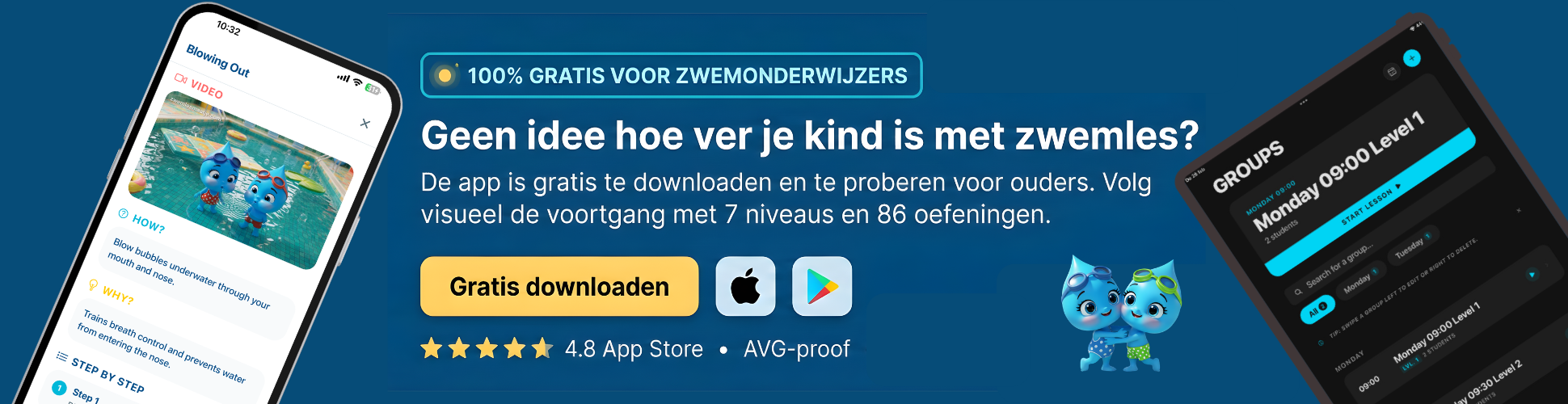
Zwemlesmaatje is an independent app that allows you to track, assess, and celebrate swimming progress — whether you are a parent, adult swimmer, or instructor. You are not dependent on the swimming school but keep control yourself.
For parents, the app offers a clear learning path of 7 levels (from Red to Gold) with 86 exercises. You rate each exercise with a simple scoring system (0 to 6) and receive a personal swimming certificate for each achieved level. This way, you can see at a glance where your child stands and what still needs work.
Adults who want to learn (better) swimming use Zwemlesmaatje discreetly and without group pressure. The app provides structure, breaks the learning process into manageable steps, and helps overcome insecurity. You train at your own pace, whenever it suits you.
Swimming schools and instructors use Zwemlesmaatje completely free as a digital system for student administration, schedules, and progress. Parents see their child's development in real-time — without extra work for you. A handy Marketing Toolbox also helps you create professional flyers, social media posts, and certificates.
Discover now how Zwemlesmaatje supports your swimming journey.
2. Methods for Tracking Progress
There are various ways to keep track of children's swimming lesson progress. Traditional paper methods, digital student tracking systems, and visual progress charts each offer their own advantages. In this chapter, we discuss these three methods and what they practically mean for parents, instructors, and swimming schools.
Traditional Paper Methods
Traditional paper methods are still widely used in swimming schools. Here, the instructor notes progress on forms or in a notebook. This makes it easy to quickly jot down notes during or after the lesson.
An advantage is that it requires no technical knowledge and is immediately available without internet. A downside can be that paper documents may get lost or are difficult to share with parents. Still, it remains a simple way to keep basic information clear.
Digital Student Tracking Systems
Digital student tracking systems offer a modern solution for keeping track of swimming lesson progress. Instructors can enter progress, skills, and comments via an app or online platform.
These systems make it easy to share data with parents and other stakeholders. Moreover, reports can be generated automatically, saving time. Digital systems provide a structured overview and make it possible to quickly identify trends and areas for improvement.
Visual Progress Charts
Visual progress charts are a practical way to give children insight into their swimming development themselves. This can be done, for example, with stickers, color codes, or symbols indicating each mastered skill.
These charts are often displayed visibly in the pool or given to parents. They motivate children because they can see and understand their own progress. Visual charts are easy to use and enhance motivation without much administration needed.
3. Practical Tips for Overview
A clear swimming lesson progress requires regular evaluations, clear goals, and involvement of all parties.
In this chapter, we discuss practical tips to organize this well.
This way, progress remains transparent and motivating for children, parents, and instructors.
Schedule Regular Evaluations
Schedule fixed moments to evaluate swimming lesson progress, for example every month or after a certain number of lessons.
This regularity helps to timely detect developments and adjust where necessary.
Use short evaluations to discuss what is going well and where extra attention is needed.
This keeps the overview current and allows parents and children to work purposefully with the instructor on improvements.
Short- and Long-Term Goals
Together with the child and instructor, set achievable short- and long-term goals.
Short-term goals can be mastering a specific swimming technique, for example.
Longer-term goals focus on obtaining diplomas or increasing confidence in the water.
By making goals concrete and measurable, progress remains visible and motivation is stimulated.
Involving Children and Parents
Actively involve children and parents in keeping track of swimming lesson progress.
Regularly discuss the steps achieved and what still needs to be learned.
This increases understanding and involvement of everyone in the learning process.
A child who sees their own progress often feels more motivated to continue.
4. Dealing with Motivation Issues
Motivation problems in children during swimming lessons occur regularly. In this chapter, we discuss how fatigue can be recognized, how playful exercises can increase motivation, and when alternative lesson formats offer a solution.
This practical approach helps parents and instructors keep the swimming lesson experience positive and children engaged in their swimming development.
Recognizing Fatigue
Fatigue is an important cause of loss of motivation in children. Watch for signs such as less enthusiasm, complaints about tiredness, or difficulty concentrating during the lesson.
A child may also become more easily irritated or withdrawn. It is useful to review the swimming lesson schedule and ensure lessons do not take place immediately after school or other intensive activities.
A light snack before the lesson can help maintain energy levels. This way, the child stays more engaged and can enjoy the swimming lesson more.
Using Playful Exercises
Playful exercises make swimming lessons more fun and increase motivation. By adding favorite games or simple challenges, the child stays active and interested.
Involving friends in the lesson can also improve the atmosphere and encourage the child to participate. Small rewards for effort, such as stickers, reinforce positive behavior.
Variety in exercises prevents the lesson from becoming boring. This keeps the child motivated to practice and make progress.
Considering Alternative Lesson Formats
If motivation problems persist, considering alternative lesson formats can help. Smaller groups or private lessons often offer more attention and fewer stimuli.
This can be especially pleasant for children who quickly feel overwhelmed in larger groups. Also, a different lesson location or time may better suit the child's rhythm.
Discuss these options with the instructor to jointly determine what best fits the child's needs. This way, swimming remains a positive experience.
5. Using Tools and Resources
In this chapter, we discuss how digital tools can simplify keeping track of swimming lesson progress.
We cover choosing suitable software, automating reports, and linking with lesson planning.
This gives you insight into practical applications that save time and provide overview.
Choosing Suitable Software
When choosing suitable software, it is important to pay attention to user-friendliness and functionality.
Software should be easy for both instructors and parents to register and view progress.
An example is a system that tracks swimming skills per lesson and automatically organizes them.
Additionally, it is useful if the software can generate reports and send notifications at important milestones.
Automating Reports
Automating reports saves a lot of time and prevents errors when manually keeping track of data.
With a good system, progress reports are automatically compiled and periodically sent to parents and instructors.
This ensures a regular update without extra work, keeping everyone informed about development.
An example is a weekly progress update with achieved skills and points of attention.
Integration with Lesson Planning
Integration with lesson planning makes it possible to directly link progress to specific lessons and goals.
This allows an instructor to easily add notes during the lesson that are immediately visible in the tracking system.
This promotes efficient communication and makes it possible to adjust lesson content based on progress.
An integrated system also helps plan next steps and prevents double administration.

Summary
Summary of Digitally Tracking Swimming Lesson Progress and Maintaining Motivation
Digital tools make keeping track of swimming lesson progress easier and clearer. They provide insight into swimming lesson planning and automate reporting.
When choosing software, user-friendliness is important for both instructors and parents. Good systems register swimming skills per lesson and send notifications at milestones.
Motivation and Planning During Swimming Lessons
Motivation problems in children often arise from fatigue. Signs include less enthusiasm, concentration problems, and irritability.
Playful exercises and good planning, for example not immediately after school, help improve motivation. A light snack before the lesson can also boost energy levels.
Regular Evaluation and Clear Progress
Fixed evaluation moments provide insight into swimming lesson progress. This helps to timely adjust and keep goals clear.
Short evaluations discuss what goes well and where extra attention is needed. This keeps parents, children, and instructors involved and motivated.
Methods for Keeping Track of Swimming Lesson Progress
There are paper methods, digital student tracking systems, and visual progress charts. Paper methods are simple and immediately available without internet.
Digital systems offer more overview and share information more easily with parents. Each system has practical benefits for swimming schools and instructors.
Benefits of a Digital Tracking System
A digital tracking system provides better insight into children's swimming lesson progress and motivation. It supports a structured swimming lesson planning and simplifies communication between parents and instructors.
This contributes to a positive swimming experience and achieving learning goals.
Dear reader, this blog post was about clearly keeping track of children's swimming lesson progress.
We would love to hear if you have experience with digitally tracking swimming lessons. You can leave a comment below this article.
You can try Zwemlesmaatje for free via zwemlesmaatje.com. We hope it can help you keep track of swimming lesson progress.

Bob van Soest
As an expert in operating sports facilities (such as swimming pools) and developer of, among others, Zwemlesmaatje.com, I am passionately committed to making swimming lessons simpler, more fun and more insightful for parents, swimming instructors and everyone who wants to learn to swim.
Frequently Asked Questions
Related articles

Why Showering Before Swimming Lessons Is So Important
Why shower before swimming lessons? Discover why hygiene and preparation are crucial for the best swimming experience. Read our tips and avoid surprises!
When to Start Swimming Lessons for Optimal Progress
Effectively Registering Swimming Lesson Progress from What Age?
Discover Zwemlesmaatje
The all-in-one app for swimming lesson progress. For parents, swim schools, and adult swimmers.