ClearOverviewofSwimmingLessonProgresswithMultipleGroups

Summary
- Digital tracking systems improve communication and collaboration between parents and instructors.
- Regular updates and structured reports stimulate motivation and insight into swimming lesson progress.
- Clear group division and digital administration ensure efficient and error-free swimming lesson organization.
Keeping track of swimming lesson progress clearly is important for both swim schools and parents. Especially with multiple groups, it is a challenge to properly monitor the development of each swimmer.
A digital tracking system can support this by centrally managing swimming lesson planning and progress. This provides more structure and clarity in the lesson process.
In this article, we discuss how to effectively organize swim groups, which digital tools are available, and how to improve communication between instructors and parents. This creates a clear picture of swimming lesson progress across different groups.
1. Importance of Overview in Swimming Lesson Progress
Having an overview of swimming lesson progress is crucial for a structured approach when managing multiple groups.
It helps instructors to provide targeted guidance and gives parents insight into their child's development.
In this chapter, we discuss why having an overview is important and what benefits it offers to all involved.
Why Overview is Essential
An overview of swimming lesson progress is essential to properly monitor the development of each student.
With multiple groups, it can quickly become unclear who has mastered which skills.
A clear overview prevents important steps from being skipped or repeated unnecessarily.
This way, the progress of each student remains transparent and the lesson program can be better tailored.
Benefits for Instructors
For instructors, having an overview of progress is a practical tool to plan lessons efficiently.
It makes it possible to quickly see which skills need attention per group or student.
Additionally, it helps to identify students who may need extra support.
A good overview contributes to a structured and goal-oriented teaching approach.
Benefits for Parents and Students
Parents and students benefit from an overview because they can clearly see which steps have already been taken.
This increases confidence in the learning process and encourages motivation to continue.
Parents can also better contribute and support when they have insight into the progress.
This leads to better collaboration between parents, students, and instructors.
What is Zwemlesmaatje?
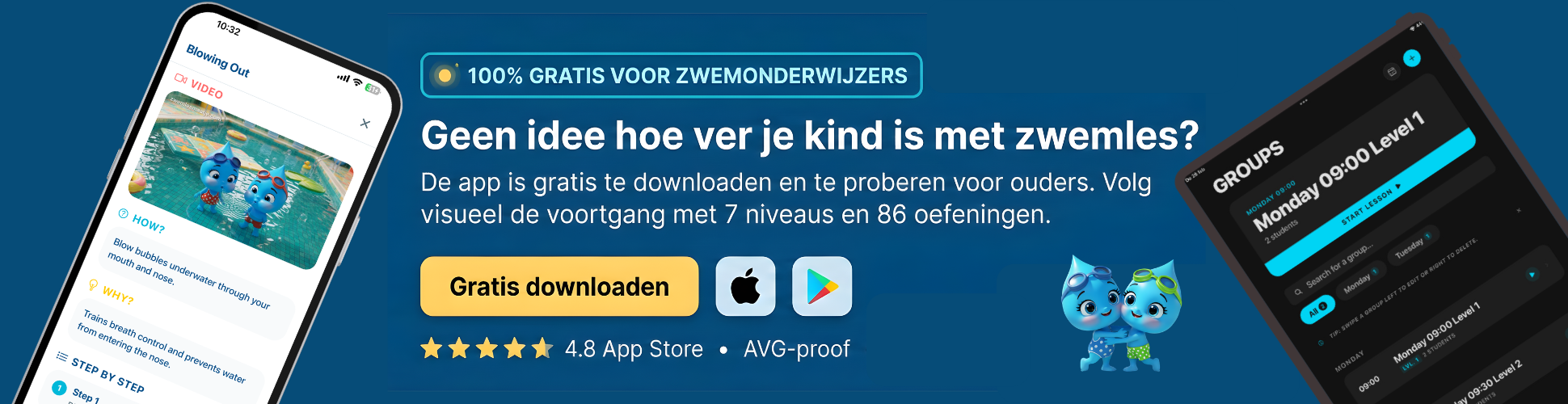
Zwemlesmaatje is an independent app that allows you to track, assess, and celebrate swimming progress — whether you are a parent, adult swimmer, or instructor. You are not dependent on the swim school but keep control yourself.
For parents, the app offers a clear learning path of 7 levels (from Red to Gold) with 86 exercises. You assess each exercise with a simple scoring system (0 to 6) and receive a personal swimming certificate for each level achieved. This way, you can see at a glance where your child stands and what still needs work.
Adults who want to learn (better) swimming use Zwemlesmaatje discreetly and without group pressure. The app provides structure, breaks the learning process into manageable steps, and helps overcome insecurity. You train at your own pace, whenever it suits you.
Swim schools and instructors use Zwemlesmaatje completely free as a digital system for student administration, schedules, and progress. Parents see their child's development in real time — without extra work for you. A handy Marketing Toolbox also helps you create professional flyers, social media posts, and certificates.
Discover now how Zwemlesmaatje supports your swimming journey.
2. Effectively Organizing and Managing Groups
Effectively organizing and managing swim groups is essential for clear progress tracking. In this chapter, we discuss the main criteria for group division, how to determine the composition and level per group, and the importance of good communication between groups. This creates a clear picture of how to smoothly organize multiple groups.
Criteria for Group Division
When dividing swim groups, it is important to apply clear criteria. Consider age, swimming ability, and learning goals of the students. The number of participants per group also plays a role to ensure sufficient attention.
Additionally, social factors can be taken into account, such as friends who want to swim together. This creates a safe and stimulating learning environment. It is wise to establish these criteria in advance and evaluate them regularly.
Composition and Level per Group
The composition of a group partly determines the lesson level and content. Groups with similar skills ensure an efficient lesson structure. This allows instructors to offer targeted exercises that match the swimmers' level.
It is useful to regularly assess the group's level and make adjustments if necessary. For example, by moving swimmers to a higher or lower group. This prevents students from progressing too quickly or too slowly.
Communication Between Groups
Good communication between groups and instructors promotes progress and overview. Instructors can share experiences and observations to improve the teaching approach. This also helps identify swimmers who need extra attention.
Furthermore, it is important that information about progress and goals is clearly passed on during group changes. This keeps everyone informed and allows parents to be better involved in the learning process.
3. Use of Digital Tools
In this chapter, we discuss how digital tools make swimming lesson progress clear. We cover software for tracking results, applying digital lesson planning, and the benefits of online systems. This gives you insight into practical applications that support the lesson process.
Software for Tracking Progress
Software for tracking swimming lesson progress helps instructors easily register data per student and group.
With these tools, skills, obtained diplomas, and points of attention can be digitally recorded.
An example is entering test results immediately after the lesson, so progress is always up to date.
Additionally, some programs offer clear dashboards that allow comparing groups and individual students.
This saves time and prevents errors that can occur with paper administration.
Applying Digital Lesson Planning
Digital lesson planning makes it possible to efficiently organize and manage lessons and groups.
Instructors can link lesson components to specific learning goals and schedule these per group or student.
This creates a clear overview of which skills are addressed when.
A practical application is automatically reminding about important test moments or adjusting the schedule in case of illness.
This ensures a structured lesson flow and better coordination within the team.
Benefits of Online Systems
Online systems offer multiple benefits for swim schools, instructors, and parents.
They make progress visible and promote transparent communication among all parties involved.
For example, parents can follow their child's development via a secure portal.
Additionally, these systems support quickly identifying learning needs and planning targeted support.
The digital approach makes managing multiple groups clearer and more efficient.
4. Practical Tips for Tracking Progress
Tracking swimming lesson progress requires a structured approach. This chapter covers how regular reports, effective feedback, and student motivation contribute to a clear overview. This way, instructors and parents can better monitor and encourage swimmers' development together.
Regular Progress Reports
Creating regular progress reports helps make each swimmer's development transparent. These reports can be compiled per group and contain clear goals and achieved skills. By sharing this information periodically, both instructors and parents stay well informed.
An example is monthly recording of swimming skills, such as floating or breathing technique. This makes it easier to timely identify points of attention and work on improvement. Digital systems can support this process by automatically registering progress and presenting it clearly.
Giving and Receiving Feedback
Feedback is an important part of the learning process and should be both given and received. Instructors can provide short, concrete comments on students' performance during or after the lesson. This helps swimmers understand what is going well and what they can work on.
Additionally, it is valuable to collect feedback from students and parents as well. This can be done via short surveys or conversations. This creates open communication that contributes to better alignment of lessons with the needs of the group and individual.
Stimulating Motivation in Students
Motivation plays a big role in maintaining and improving swimming skills. Encouraging students can be done by setting achievable goals and celebrating small successes. This increases self-confidence and engagement in swimming lessons.
Practical examples include using stickers or small rewards for mastering a new technique. Also involving friends or organizing playful exercises can boost motivation. This keeps swimming fun and challenging for all ages.
5. Involving Parents and Instructors
In this chapter, we discuss how parents and instructors can be actively involved in swimming lesson progress. We cover practical ways to improve communication and discuss progress. Additionally, we explain how collaboration between parents and instructors leads to better results for swimming students.
Effective Parent Communication
Clear and regular communication with parents is essential to keep them involved in the swimming lessons. This can be done via digital progress reports or short updates after the lesson. This way, parents know exactly which skills their child has learned and where attention is still needed.
It also helps to provide practical tips that parents can practice at home. This strengthens collaboration and ensures a consistent learning environment. Using simple language and visual aids makes the information accessible to everyone.
Discussing Progress with Instructors
Instructors can discuss student progress during team meetings or individual conversations. This provides space to highlight strengths and points of attention. By sharing experiences and observations, a better picture of development per group and student emerges.
It is important that instructors also take feedback from parents into account. This creates a complete view of the swimming experience and allows lessons to be better tailored. Regular evaluations ensure a focused approach and keep motivation high.
Collaborating for Better Results
Good collaboration between parents and instructors contributes to the success of swimming lessons. Through open communication and sharing information, both parties can better respond to the needs of the student. This promotes trust and involvement.
Practically, this means that parents and instructors make agreements about goals and expectations. For example, by setting realistic goals together and regularly discussing progress. This creates a shared responsibility for the learning process.

Summary
Summary of Effectively Tracking Swimming Lesson Progress with a Digital Tracking System
Parents and instructors can collaborate better through clear communication about swimming lesson progress. Regular updates and practical tips ensure a consistent learning environment at home and during lessons.
Tracking progress requires structured reports and targeted feedback. This helps make swimmers' development transparent and stimulates motivation.
Digital tools support clear registration of results and lesson planning. Software makes it possible to record test results immediately and easily compare groups.
A good division of swim groups is important for clear progress. Criteria such as age, swimming ability, and social factors ensure a safe and effective learning environment.
Overview in swimming lesson progress prevents errors and duplicate lessons. It helps instructors provide targeted guidance and gives parents insight into their child's development.
Why a Digital Tracking System Helps
A digital tracking system makes it easy to keep track of swimming lesson results and attendance. This saves time and prevents errors in administration.
With clear reports and dashboards, parents and instructors gain better insight into the swimming lesson progress. This allows the lesson program to be better tailored to the needs of each student.
The system also supports swimming lesson planning by managing groups clearly and monitoring progress per group. This contributes to a structured and effective swimming lesson organization.
Dear reader, this blog post was about clearly tracking swimming lesson progress with multiple groups.
We would love to hear if you have experience with digitally tracking swimming lessons. Feel free to leave a comment below this article.
You can try Zwemlesmaatje for free via https://zwemlesmaatje.com. We wish you much success in tracking swimming lesson progress.

Bob van Soest
As an expert in operating sports facilities (such as swimming pools) and developer of, among others, Zwemlesmaatje.com, I am passionately committed to making swimming lessons simpler, more fun and more insightful for parents, swimming instructors and everyone who wants to learn to swim.
Frequently Asked Questions
Related articles

Why Showering Before Swimming Lessons Is So Important
Why shower before swimming lessons? Discover why hygiene and preparation are crucial for the best swimming experience. Read our tips and avoid surprises!
When to Start Swimming Lessons for Optimal Progress

Effectively Registering Swimming Lesson Progress from What Age?
Discover Zwemlesmaatje
The all-in-one app for swimming lesson progress. For parents, swim schools, and adult swimmers.