AdjustingSwimmingLessonProgressforChildrenwithDownSyndrome

Summary
- Balance between structure and flexibility is crucial for swimming lessons with children with Down syndrome.
- Digital tracking system supports accurate registration and alignment of swimming lesson goals.
- Safe swimming environment and adapted guidance promote confidence and motivation.
Adjusting swimming lesson progress for children with Down syndrome requires a careful approach. By taking their specific motor development into account, it is possible to better support the learning process.
In this article, we discuss how a digital tracking system can help accurately record swimming lesson progress. Additionally, we cover practical methods to tailor swimming lessons and the importance of collaboration between parents, instructors, and specialists.
The information provides tools for a structured and flexible swimming lesson plan that meets the needs of these children.
1. Understanding Swimming Lesson Adjustments
In this chapter, we discuss what swimming lesson adjustment entails and the characteristics of children with Down syndrome. We also explain why individual guidance during swimming lessons is important. This creates a better understanding of how customized swimming lessons can be designed.
What is swimming lesson adjustment?
Swimming lesson adjustment means that the lesson is tailored to the specific needs of a child. This can involve pace, explanations, or the exercises used. The goal is to support the child appropriately in learning to swim. This way, every child has the chance to make progress at their own level.
Swimming lesson adjustment takes into account the child's abilities and limitations. This requires flexibility from the instructor and an open attitude. It is important that the adjustments are clear and practical so that the child feels safe and understood.
Characteristics of Down syndrome
Children with Down syndrome often have a unique combination of characteristics that affect their swimming lessons. For example, they may have delayed motor development and lower muscle tone. This calls for an adapted approach during the swimming lesson.
Additionally, they may benefit from extra repetition and visual support. It is important to know these characteristics to make the swimming lesson effective and enjoyable. This way, the child can learn to swim in a calm and structured manner.
Importance of individual guidance
Individual guidance is essential when adapting swimming lessons for children with Down syndrome. Each child has their own pace and learning style. Personal attention allows the instructor to better respond to the child's needs.
Individual guidance also helps build confidence and increase motivation. This contributes to a positive swimming experience. Learning to swim becomes achievable and fun for the child.
What is Zwemlesmaatje?
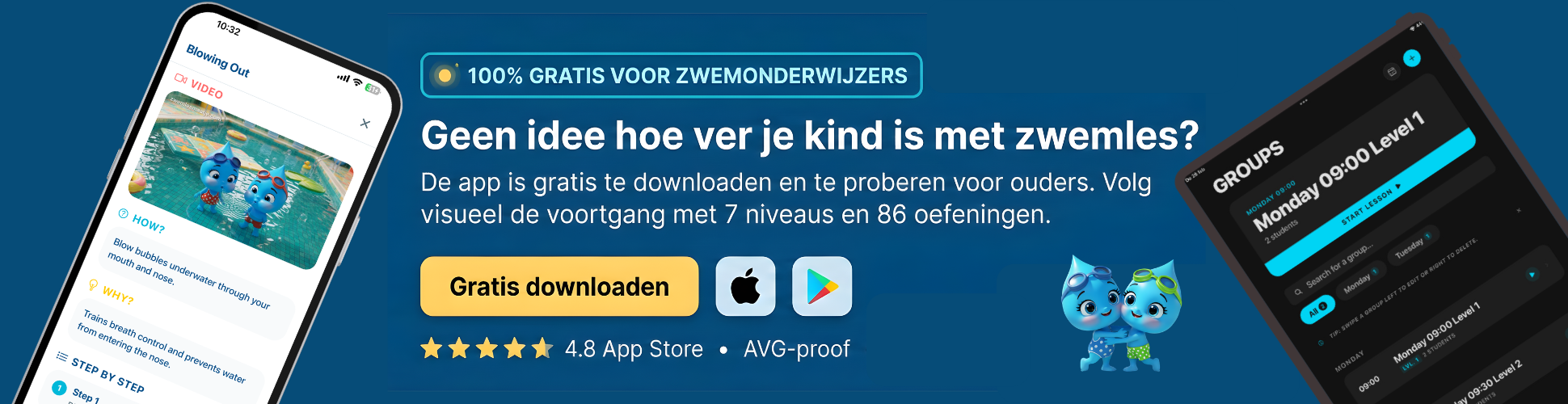
Zwemlesmaatje is an independent app that allows you to track, assess, and celebrate swimming progress — whether you are a parent, adult swimmer, or instructor. You are not dependent on the swim school but keep control yourself.
For parents, the app offers a clear learning path of 7 levels (from Red to Gold) with 86 exercises. You assess each exercise with a simple scoring system (0 to 6) and receive a personal swimming certificate for each achieved level. This way, you can see at a glance where your child stands and what still needs work.
Adults who want to learn (better) swimming use Zwemlesmaatje discreetly and without group pressure. The app provides structure, breaks the learning process into manageable steps, and helps overcome insecurity. You train at your own pace, whenever it suits you.
Swim schools and instructors use Zwemlesmaatje completely free as a digital system for student administration, schedules, and progress. Parents see their child's development in real-time — without you having to do any extra work. A handy Marketing Toolbox also helps you create professional flyers, social media posts, and certificates.
Discover now how Zwemlesmaatje supports your swimming journey.
2. Observing and Recording Progress
In children with Down syndrome, motor development often proceeds differently than in peers. Therefore, it is important to carefully observe and record swimming lesson progress. In this chapter, we discuss how differences in motor skills affect progress, the use of a student tracking system, and how to effectively document progress.
Differences in motor development
Children with Down syndrome often develop motor skills at their own pace. This can manifest as delayed muscle strength, coordination, and balance. It is important to recognize these differences during swimming lessons. For example, a child may need more time to master a particular swimming technique.
By observing these motor differences, the instructor can better estimate which exercises are appropriate. It also helps to set realistic goals that match the individual developmental level. This keeps learning motivating and achievable for the child.
Use of a student tracking system
A student tracking system supports systematically keeping track of swimming lesson progress. With this, the instructor can note per child which skills have been practiced and which still need attention. This is especially valuable for children with Down syndrome, as progress can sometimes be less predictable.
With a digital tracking system, parents and other stakeholders can easily gain insight into development. It also promotes communication between instructors and parents. Together, they can tailor guidance to the child's needs.
Effective progress recording
Effective progress recording requires clear and concrete observations. Note not only whether a skill has been achieved but also how the child performs it. For example: ‘Child can float independently but still struggles with breathing technique.’
Use short, clear descriptions and work with fixed measurement moments. This makes it easier to track changes in motor skills and self-confidence. This way, swimming lessons can be increasingly adapted to the child.

3. Adapting Teaching Methods
In this chapter, we discuss how swimming teaching methods can be adapted for children with Down syndrome. We cover creating a safe environment, using tailored exercises, and the importance of good communication with the child and parents. This provides practical tools to make swimming lessons effective and pleasant.
Creating a safe environment
A safe environment is essential for children with Down syndrome during swimming lessons. This means the instructor is alert to the specific needs and limits of the child.
The swimming pool should be clear and free of unexpected stimuli that could distract or unsettle the child. Additionally, it is important that the water and temperature are comfortable so the child feels at ease.
Safety also involves providing sufficient support, for example by using flotation aids or accompanying the child in the water. This helps the child build confidence without feeling overwhelmed.
Tailored exercises
Exercises for children with Down syndrome should be adjusted to their motor abilities and pace. This means the instructor provides small, achievable steps that the child can follow.
Repetition and simple instructions help the child better understand and perform the exercises. For example, instead of a complex swimming stroke, practice floating and breathing techniques first.
It is also useful to use visual aids or demonstrations so the child clearly sees what is expected. This makes the learning process clear and motivating.
Communication with child and parents
Good communication with the child and parents is crucial for successful swimming lesson adjustment. The instructor must explain clearly and patiently what happens during the lesson.
This makes the child feel more involved and better understands what is expected. Parents can provide valuable information about their child's preferences and needs.
Regular feedback to parents about progress and any adjustments builds trust and cooperation. This creates a joint approach that supports the learning process.
4. Collaborating with Stakeholders
Collaboration is essential when adjusting swimming lesson progress for children with Down syndrome.
This chapter discusses the role of parents and caregivers, the importance of working with specialists, and coordination within the swimming group.
This creates a coherent approach that supports the learning process.
Role of parents and caregivers
Parents and caregivers are important partners in monitoring and adapting swimming lessons.
They can provide valuable information about the child's behavior and needs outside the pool.
Regular communication between instructors and parents helps keep goals realistic and discuss progress.
An example is coordinating home exercises with the swimming lesson so the child can practice consistently.
Collaboration with specialists
Specialists such as physiotherapists, occupational therapists, and speech therapists can provide additional insights.
Their knowledge of motor and communication skills helps determine appropriate lesson adjustments.
By regularly consulting these experts, instructors can better respond to the child's individual abilities.
For example, a physiotherapist can advise on posture and movement support during swimming.
Coordination within the swimming group
Good coordination within the swimming group promotes a safe and stimulating learning environment.
Instructors can share experiences about adjustments that work well.
It is also important that fellow students show understanding for differences in pace and approach.
A practical step is organizing short evaluation sessions to discuss group dynamics and progress.
5. Tips for Long-Term Guidance
When guiding children with Down syndrome in swimming lessons, it is important to find a good balance between structure and flexibility.
Motivation also plays a major role in keeping the learning process positive in the long term.
In these tips, we discuss how to practically apply these elements for sustainable swimming lesson guidance.
Maintaining structure in lessons
A fixed structure in swimming lessons helps children with Down syndrome feel safe and familiar.
Repeating routines and clear daily schedules provide predictability.
This allows a child to better focus on learning swimming skills without unnecessary distractions.
An example is always starting with a warm-up in the same place and then following a fixed order of exercises.
Flexibility with learning goals
Although structure is important, the learning process requires flexibility in goals.
Each child develops at their own pace and may need adjustments at different times.
It is useful to regularly evaluate learning goals and adjust them where necessary.
For example, a child may first work on water confidence before focusing on a specific swimming technique.
Motivating and rewarding
Motivation plays a big role in maintaining swimming lessons in the long term.
Positive reinforcement and rewarding small successes encourage the child to continue.
This can be through compliments, stickers, or a small surprise after reaching a milestone.
It is important that rewards match what the child likes and are used consistently.

Summary
Summary of Swimming Lesson Guidance for Children with Down Syndrome
A good balance between structure and flexibility is important in swimming lessons for children with Down syndrome. Motivation plays a major role in keeping the learning process positive over the long term.
A fixed structure with repetition and clear daily schedules helps children feel safe and familiar. This promotes focus on swimming skills without distraction.
Why a digital tracking system helps
Collaboration between parents, caregivers, specialists, and instructors is essential for a coherent swimming lesson approach. Regular communication supports aligning goals and discussing progress.
A digital tracking system makes it possible to accurately record and adjust swimming lesson progress. This system helps capture motor differences and set realistic goals.
Creating a safe and clear swimming environment is crucial. Using flotation aids and guidance in the water provides extra support and confidence.
Swimming lesson adjustment means lessons are tailored to the individual needs of the child. Flexibility and clear communication ensure appropriate guidance.
Dear reader, this blog post was about adjusting swimming lesson progress for children with Down syndrome.
We would love to hear if you have experience with following swimming lessons for children with special needs. Feel free to leave a comment below this article.
You can try Zwemlesmaatje for free via https://zwemlesmaatje.com.
Thank you for your attention and involvement.

Bob van Soest
As an expert in operating sports facilities (such as swimming pools) and developer of, among others, Zwemlesmaatje.com, I am passionately committed to making swimming lessons simpler, more fun and more insightful for parents, swimming instructors and everyone who wants to learn to swim.
Frequently Asked Questions
Related articles

Why Showering Before Swimming Lessons Is So Important
Why shower before swimming lessons? Discover why hygiene and preparation are crucial for the best swimming experience. Read our tips and avoid surprises!
When to Start Swimming Lessons for Optimal Progress
Effectively Registering Swimming Lesson Progress from What Age?
Discover Zwemlesmaatje
The all-in-one app for swimming lesson progress. For parents, swim schools, and adult swimmers.