PlanningSwimmingLessonsforBeginners:PracticalTips
Summary
- Choose suitable lesson types and subscriptions for a structured swimming lesson plan.
- Start swimming lessons around 4½-5 years with a trial lesson and good preparation.
- Parents play an important role in trust, motivation, and progress.
Planning swimming lessons for beginners requires a structured approach that takes into account age and water familiarity. This helps in setting realistic learning goals and creating a positive learning environment.
In this article, we discuss practical tips for setting up an effective swimming lesson schedule. Topics include the role of parents, choosing the right starting moment, and using play-based methods. We also highlight the importance of a swimming lesson plan that meets the needs of children and swim schools.
This information supports parents, instructors, and swim schools in organizing swimming lessons that are both educational and enjoyable.
1. Age Groups and Water Familiarity
When planning swimming lessons for beginners, it is important to consider age groups and the level of water familiarity.
These factors determine the learning objectives and the way children are playfully engaged with the water.
In this chapter, we discuss the division by age, goals per developmental phase, and how water involvement is naturally encouraged.
Division by Age
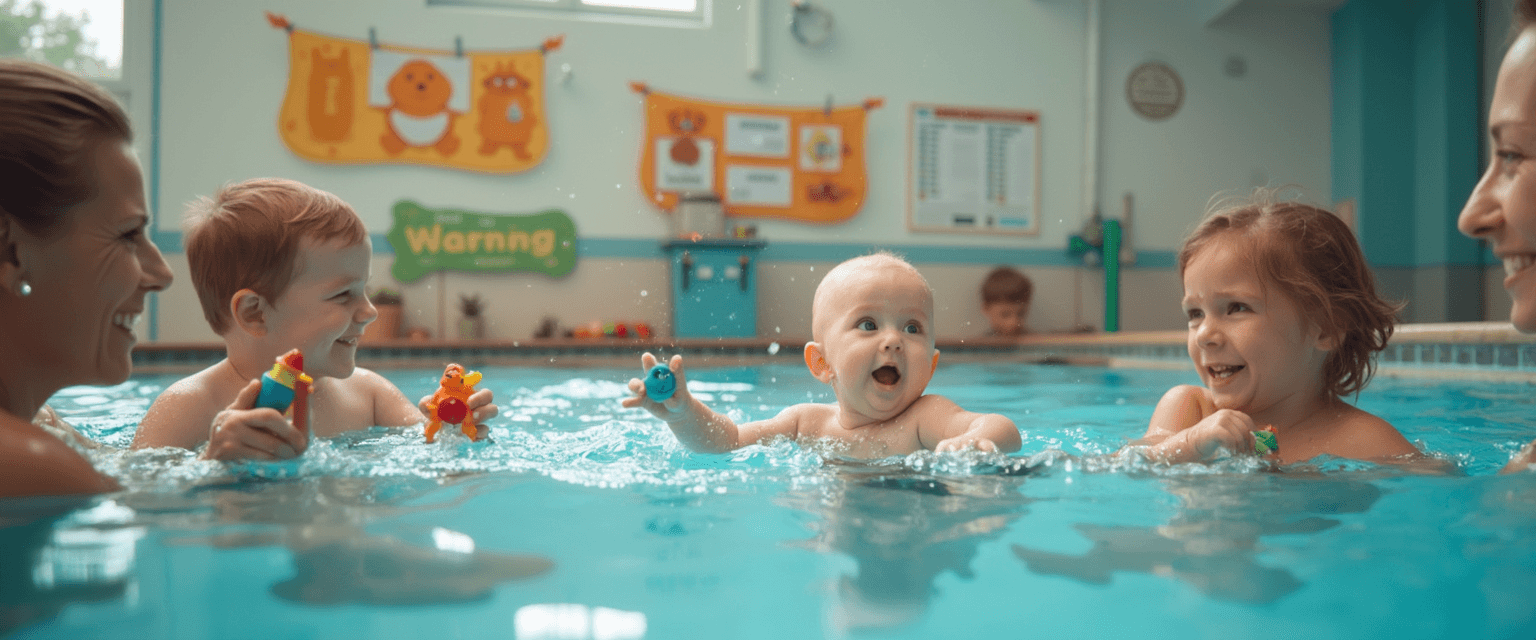
Swimming lessons for young children are often divided into different age groups.
These groups usually range from babies to toddlers and preschoolers, for example from 0 to walking, walking to 2 years, 2 to 3 years, and 3 to 4 years.
Each group focuses on specific developmental stages that match the child's motor skills and understanding.
This division allows instructors to better tailor lessons to the needs of the children.
Goals per Developmental Phase
The goals of swimming lessons differ per developmental phase.
For babies and toddlers, the focus is mainly on becoming familiar with water and stimulating motor skills.
Older toddlers and preschoolers work more on coordination, breathing, and moving independently in the water.
This progression helps children develop confidence and basic skills step by step.
Playful Water Involvement
Water involvement is encouraged playfully by using simple exercises and playful activities.
Children learn, for example, by splashing, singing, and floating in warm, shallow water.
This approach makes the water familiar and enjoyable, which increases motivation.
This creates a positive relationship with water that forms the basis for further swimming lessons.
What is Zwemlesmaatje?
Zwemlesmaatje is an independent app that allows you to track, assess, and celebrate swimming progress — whether you are a parent, adult swimmer, or instructor. You are not dependent on the swim school but keep control yourself.
For parents, the app offers a clear learning path of 7 levels (from Red to Gold) with 86 exercises. You assess each exercise with a simple scoring system (0 to 6) and receive a personal swimming certificate for each level achieved. This way, you can see at a glance where your child stands and what still needs work.
Adults who want to learn (better) swimming use Zwemlesmaatje discreetly and without group pressure. The app provides structure, breaks the learning process into manageable steps, and helps overcome insecurity. You train at your own pace, whenever it suits you.
Swim schools and instructors use Zwemlesmaatje completely free as a digital system for student administration, schedules, and progress. Parents see their child's development in real-time — without you having to do any work. A handy Marketing Toolbox also helps you create professional flyers, social media posts, and certificates.
Discover now how Zwemlesmaatje supports your swimming journey.
2. Role of Parents and Caregivers
Parents and caregivers play an important role when starting swimming lessons. They provide trust and safety in the water. Additionally, they offer valuable quality time during swimming together.
Swimming Together with Children
Swimming together with children strengthens the bond between parent and child. By being in the water together, children experience less tension and feel safer. This makes it easier to learn new skills. For example, splashing or floating together helps the child become familiar with water.
Parents can actively participate during parent-child lessons or practice at home in the pool. This also teaches them how to support their child. Discovering water fun together stimulates the child's motivation. This contributes to a positive start of swimming lessons.
Building Safety and Trust
Safety and trust are essential when getting used to water. Parents can promote this by being calm and patient. By gradually and positively exposing the child to water, trust grows step by step. For example, by practicing submersion or floating together in shallow water.
A safe environment and clear boundaries help the child feel comfortable. It is important that parents sense the child's signals well and respond accordingly. This creates a foundation of trust needed for further swimming skills.
Quality Time in the Water Environment
Quality time in the water environment offers more than just swimming skills. It is a moment of attention and togetherness. During playing, singing, or floating in warm, shallow water, a relaxed atmosphere arises. This strengthens the emotional bond between parent and child.
These moments contribute to the child's social and motor development. Parents can use this time to encourage and observe the child. This creates a positive experience that motivates the child to continue swimming.
3. Lesson Structure and Exercises
In this chapter, we discuss how swimming lessons for beginners can be effectively structured. We cover the use of games and exercises, teaching breathing and coordination, and employing motivating rewards. This gives you insight into a structured and enjoyable lesson setup.
Games and Exercises
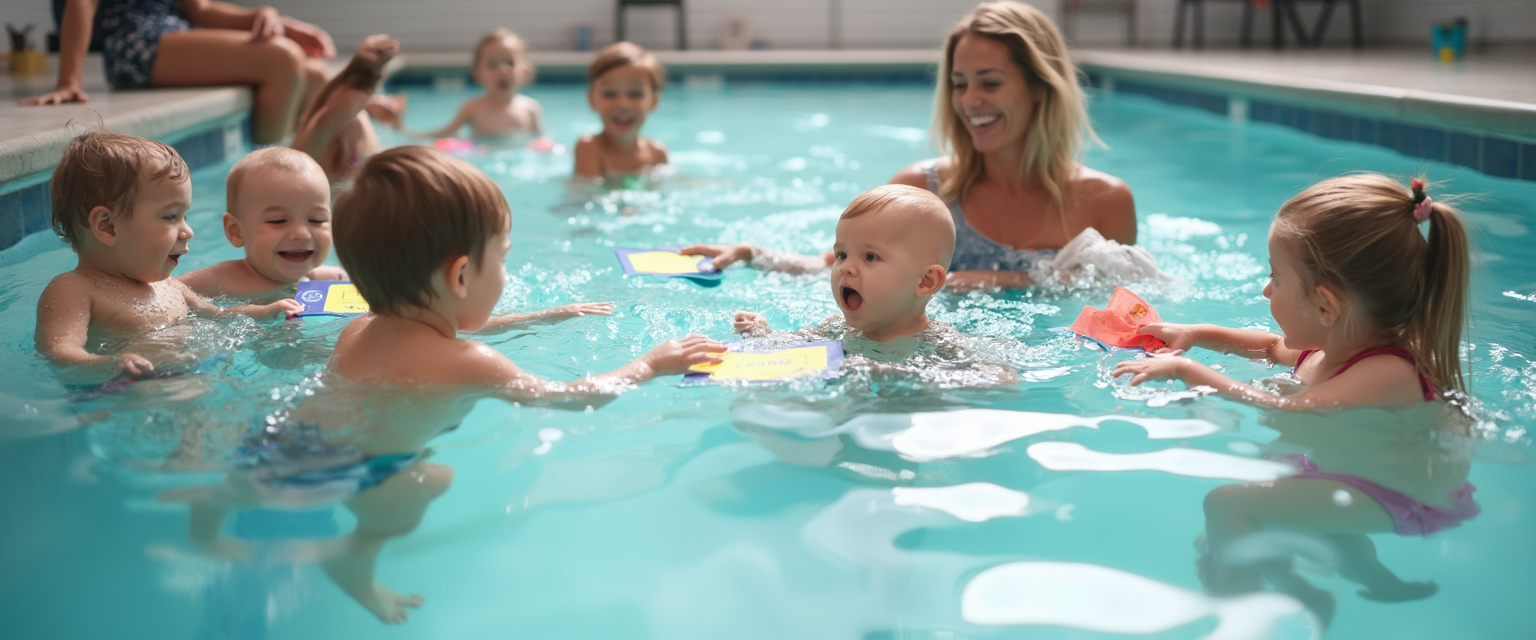
Games and exercises form the basis of a swimming lesson for beginners. They make the water familiarity process fun and accessible. Think of simple activities such as splashing, supported floating, and singing while moving in the water.
These exercises stimulate motor skills and help children naturally get used to water. By varying play forms, attention is maintained and the lesson remains varied. It is important that the exercises match the child's age and developmental level.
Breathing and Coordination
Breathing and coordination are essential skills in the swimming process. During lessons, children learn how to breathe calmly and coordinate their movements. For example, by practicing short underwater moments and coordinating arm and leg strokes.
These skills are built up step by step so the child gains confidence in their own body and the water. Regularly repeating breathing exercises helps reduce tension and promote relaxation. This creates a good foundation for later swimming techniques.
Use of Motivating Rewards
Motivating rewards play an important role in encouraging perseverance. Small successes are recognized with, for example, certificates or stickers. This strengthens self-confidence and encourages children to keep practicing new skills.
Rewards can also include using a special booklet with games and stories related to the swimming lessons. This makes the learning process tangible and fun. It is important that rewards are used positively and supportively, without putting pressure on the child.
4. Starting Moment and Preparations
When planning swimming lessons for beginners, it is important to choose the right starting moment. Additionally, a checklist helps determine if a child is ready for swimming lessons. A trial lesson can also provide valuable insights for good preparation.
Determining Suitable Starting Age
Most children start official swimming lessons between 4½ and 5 years old. This is an age when motor skills, concentration, and social abilities are sufficiently developed. Some children start earlier, but this can lead to longer learning trajectories due to reduced endurance. Older children, from 6 years, often learn faster due to better muscle strength and focus.
When determining the starting moment, it is also important to consider school changes and busy periods. This prevents the child from becoming overloaded. In Amsterdam, it is wise to register around the fourth birthday due to long waiting lists. This helps to start on time.
Swimming Lesson Readiness Checklist
A checklist can help parents assess if their child is ready for swimming lessons. Important points include: does the child dare to put their head underwater and can they float briefly with support? It is also important that the child can follow simple instructions and maintain attention for some time. Motivation also plays a role; an enthusiastic child often learns faster.
This checklist provides a practical picture of the swimming skills and behavior needed to effectively participate in swimming lessons. This prevents the child from starting too early or too late, which can affect the learning process.
Utilizing Trial Lessons
A trial lesson is a good way to experience how a child reacts to swimming lessons. During such a lesson, the child can get used to the water and the lesson environment. Parents also gain insight into the lesson structure and the instructor's approach. This helps in making an informed choice for a swim school.
Trial lessons are often low-threshold and offer room to ask questions. They can also help remove any insecurities the child may have. It is advisable to schedule a trial lesson before signing up for a subscription.
5. Practical Tips and Registration
When planning swimming lessons for beginners, various practical aspects play a role. It is important to choose suitable lesson types and subscriptions that match wishes and possibilities. Additionally, it is useful to consider available locations, lesson times, and waiting times during registration.
Lesson Choices and Subscriptions
Many swim schools offer different lesson options, such as single lessons, multi-week courses, or subscriptions with unlimited access. A subscription can offer advantages, such as priority on waiting lists and no registration fees after a certain period. This is especially useful if you want to swim regularly and track progress. Always check which options are available and what best fits your schedule and budget.
Additionally, the offer may vary per age group and level. Some subscriptions include extra materials or a starter package with games and information. This can enrich the swimming experience and motivate continuation. Ask about possibilities and conditions during registration to make an informed choice.
Locations and Lesson Times
Swimming lessons are often offered at multiple locations, for example at different pools in the region. It is important to choose a location that is easily accessible and where lesson times fit your daily rhythm. This makes it easier to consistently attend lessons. Inquire about available times per location, as popular times can fill up quickly.
Additionally, the atmosphere and facilities may differ per pool. Some locations have specially heated pools for young children, which increases comfort. Also consider parking options and proximity to public transport. This prevents unnecessary stress when bringing and picking up from swimming lessons.
Waiting Time and Planning
Waiting times for swimming lessons can vary, especially in busy regions with many registrations. It is wise to register well in advance, for example around a child's fourth birthday, to guarantee a spot. Some swim schools use a waiting list with priority for subscription holders or children who already take lessons.
Also plan swimming lessons so they do not coincide with busy school periods or other activities. This helps prevent fatigue and promotes concentration during lessons. Use trial lessons to experience if the timing and lesson type suit the child and family.

Summary
Summary of Planning and Following Swimming Lessons for Beginners
When planning swimming lessons, it is important to choose suitable lesson types and subscriptions. Locations, lesson times, and waiting times play a role.
Different subscriptions offer advantages such as priority on waiting lists and extra materials. This supports a structured swimming lesson plan.
The Right Starting Moment and Preparation
Most children start swimming lessons between 4½ and 5 years due to their motor skills and concentration. A trial lesson and checklist help with good preparation.
School changes and busy periods are also important to consider. Timely registration prevents long waiting times.
Effective Lesson Structure with Games and Exercises
Games and exercises make swimming lessons fun and accessible. They stimulate motor skills and water familiarity naturally.
Variety in play forms maintains attention and matches the child's developmental level. This promotes an enjoyable learning experience.
The Role of Parents in Swimming Lessons
Parents strengthen children's trust and safety in the water. Swimming together enhances the bond and reduces tension.
Parents can actively participate during lessons or practice at home. This stimulates motivation and supports swimming lesson progress.
Age Groups and Learning Goals
Swimming lessons are divided into age groups that fit children's motor skills and understanding. This makes lessons more effective.
The division helps instructors better monitor and tailor swimming progress to each group's needs.
Dear reader, in this blog post we discussed practical tips for planning swimming lessons for beginners.
We would love to hear if you have experience organizing swimming lessons. Feel free to leave a comment below this article.
You can try Zwemlesmaatje for free via https://zwemlesmaatje.com.
Thank you for reading and your interest in this topic.

Bob van Soest
As an expert in operating sports facilities (such as swimming pools) and developer of, among others, Zwemlesmaatje.com, I am passionately committed to making swimming lessons simpler, more fun and more insightful for parents, swimming instructors and everyone who wants to learn to swim.
Frequently Asked Questions
Related articles


Discover Zwemlesmaatje
The all-in-one app for swimming lesson progress. For parents, swim schools, and adult swimmers.