EffectiveSwimmingLessonPlanningforChildreninFosterFamilies

Summary
- Regular evaluation and flexibility are essential for effective swimming lesson planning.
- Digital tracking system improves organization, communication, and planning of swimming lessons.
- Insight and clear communication ensure a safe, structured swimming lesson experience.
This blog post titled "Effective Swimming Lesson Planning for Children in Foster Families" was updated on: .
A good swimming lesson plan is important for children in foster families. It helps organize swimming lessons in a structured way, taking into account the specific situation of the child and the foster family.
In this article, we discuss how a swimming lesson plan can be tailored. We cover the use of digital tools, collaboration with swimming schools and foster parents, and the importance of clear communication.
Additionally, we address how regular evaluation and flexibility contribute to effective progress in swimming lessons. This creates a clear overview of the steps needed for a successful swimming lesson plan.
1. Importance of Swimming Lesson Planning
In this chapter, we discuss why a good swimming lesson plan is essential for children in foster families. We cover the importance of safety and development, the specific needs of foster children, and the role of collaboration with foster parents. This provides a clear picture of how swimming lessons can be effectively organized.
Ensuring Safety and Development
Safety is always the top priority in swimming lessons for children in foster families. A structured plan helps develop swimming skills step by step. This allows children to get used to the water in a calm and familiar way. It contributes to their confidence and motor development.
Additionally, a clear plan ensures continuity in the lessons. This prevents children from going too long without practice. Instructors can also better respond to each child's pace. This makes the swimming lesson a safe and educational experience.
Specific Needs of Foster Children
Foster children often have specific needs that affect their swimming lessons. Sometimes there are emotional or physical challenges. It is important that instructors take this into account when structuring the lessons. This requires flexibility and patience during teaching.
A good plan allows room for extra attention and repetition. This way, children can progress at their own pace. It also allows better alignment with any fears or insecurities. This makes the swimming lesson more effective and enjoyable for the child.
Collaboration with Foster Parents
Collaboration with foster parents is crucial for a successful swimming lesson plan. Foster parents know the child well and can share valuable information about needs and experiences. This helps instructors better tailor the lessons.
Additionally, foster parents can support the planning by motivating and guiding the child to the swimming lesson. Regular communication between instructor and foster parent ensures a joint approach. This creates a safe and familiar environment for the child.
What is Zwemlesmaatje?
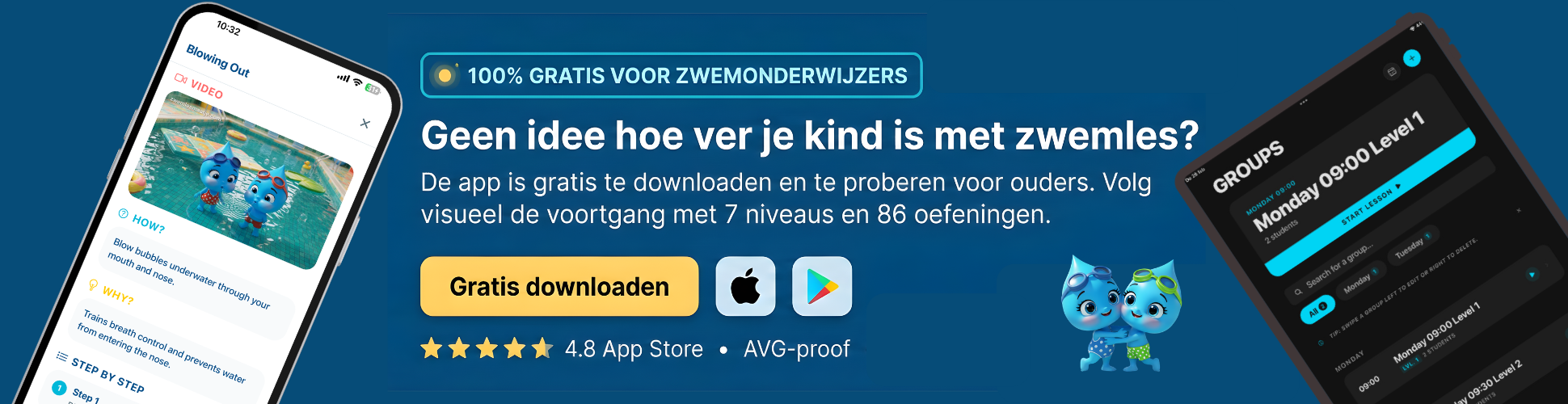
Zwemlesmaatje is an independent app that allows you to track, assess, and celebrate swimming progress — whether you are a parent, adult swimmer, or instructor. You are not dependent on the swimming school but keep control yourself.
For parents, the app offers a clear learning path of 7 levels (from Red to Gold) with 86 exercises. You assess each exercise with a simple scoring system (0 to 6) and receive a personal swimming certificate for each achieved level. This way, you can see at a glance where your child stands and what still needs work.
Adults who want to learn (better) swimming use Zwemlesmaatje discreetly and without group pressure. The app provides structure, breaks the learning process into manageable steps, and helps overcome insecurity. You train at your own pace, whenever it suits you.
Swimming schools and instructors use Zwemlesmaatje completely free as a digital system for student administration, schedules, and progress. Parents see their child's development in real time — without extra work for you. A handy Marketing Toolbox also helps you create professional flyers, social media posts, and certificates.
Discover now how Zwemlesmaatje supports your swimming journey.
2. Organizing Swimming Lesson Planning
A good swimming lesson plan for children in foster families starts with insight into the available swimming lessons.
Next, it is important to create a tailored plan that fits the situation of the child and the foster family.
Finally, clear communication with all involved parties plays a crucial role in ensuring the plan runs smoothly.
Overview of Available Lessons
The overview of available swimming lessons helps foster parents and caregivers find suitable options.
Swimming pools and schools often offer different levels and lesson times, for example on fixed days or in blocks.
It is also useful to know if there are special lessons for children needing extra support or with specific needs.
By gathering this overview, choices can be better aligned with the child and the practical possibilities of the family.
Creating a Tailored Plan
A tailored plan takes into account the rhythm and availability of the foster child and family.
It is important to consider school hours, other activities, and any appointments with caregivers.
Flexibility may be needed, for example with changing care days or unexpected situations.
Making a clear, fixed plan helps the child experience structure and ensures better progress in swimming lessons.
Communication with Involved Parties
Communication with all involved, such as foster parents, swimming school, and possibly caregivers, is essential for successful planning.
Regular coordination prevents misunderstandings and allows quick responses to changes.
Use simple means such as email, phone, or a shared calendar to record appointments.
This keeps everyone informed and allows the child to benefit optimally from the swimming lessons.

3. Use of Planning Software
Digital planning software offers practical support in organizing swimming lessons for children in foster families.
These tools help manage groups, track progress and absences, and provide clear communication.
In this chapter, you will read how this software works and what benefits it offers for all involved.
Advantages of Digital Tools
Digital tools make planning swimming lessons clearer and more efficient.
They provide a central place where all data of children, lessons, and instructors are stored.
This allows foster parents and instructors to quickly see when a child has a lesson and which skills have already been practiced.
Additionally, it prevents double bookings and facilitates communication among all involved.
An example is an app where parents can directly see if their child was present and which exercises were done.
This increases involvement and insight into the learning process.
Group Management Features
Planning software often includes features for managing groups of children.
Instructors can divide groups by level, age, or availability.
The software makes it possible to schedule lessons that fit the specific needs of foster children.
Changes in group composition can also be easily implemented, for example with new registrations or cancellations.
A clear overview of groups helps better align lessons and ensure continuity.
This contributes to a structured and calm learning environment.
Tracking Progress and Absences
Tracking progress and absences is essential for good swimming lesson planning.
Digital systems automatically record which lessons a child has attended and which skills have been achieved.
Absences can also be noted with a reason, so instructors and foster parents can anticipate.
This data provides insight into the child's development and makes it possible to adjust the lesson program where needed.
An example is identifying delays or rapid progress, so the instructor can steer accordingly.
This keeps the swimming journey transparent and tailored to the child.
4. Collaboration with Swimming Schools
In this chapter, we discuss how good collaboration with swimming schools can improve swimming lesson planning for foster children.
We cover agreements and flexibility, improving information exchange, and the support foster parents can receive.
These topics help tailor swimming lessons better to the specific situation of foster families.
Agreements and Flexibility
It is important to make clear agreements with swimming schools about lesson times and formats.
Flexibility plays a big role because foster children sometimes face changing circumstances.
It may be necessary to reschedule or adjust lessons without causing problems.
A good plan takes this variability into account and allows room for cooperation.
Improving Information Exchange
Efficient information exchange between foster parents and swimming schools contributes to better progress in swimming lessons.
By regularly sharing updates about development and any special circumstances, instructors can better tailor their approach.
Digital communication tools can support this, so all involved are quickly and clearly informed.
This prevents misunderstandings and ensures a joint approach around the child.
Support for Foster Parents
Foster parents often need extra support to organize and guide swimming lessons well.
Swimming schools can play a role by providing information about lesson options and practical tips.
It can also help if there are contact persons who assist foster parents with questions or problems.
This creates a network where foster parents feel supported and children can learn to swim optimally.
5. Tips for Successful Implementation
Good execution of swimming lesson planning requires attention to evaluation, involvement, and flexibility.
In this chapter, we discuss how regular assessment helps adjust the lesson program.
We also explain why it is important to actively involve children and how to adapt the plan to changing circumstances.
Plan Regular Evaluations
Schedule fixed moments to evaluate the progress of swimming lessons with all involved.
This can be, for example, every six weeks, looking at achieved goals and any bottlenecks.
Use these evaluations to adjust the lesson program where needed and set new goals.
This keeps the swimming lesson aligned with the child's development and needs.
Involve the Children Themselves
Actively involve children in their swimming lesson planning by letting them share their experiences and wishes.
Ask, for example, what they like about the lessons and what they still find difficult.
This increases their motivation and confidence during learning to swim.
It also helps to identify and discuss any fears or insecurities in time.
Adapt to Changing Needs
Take into account changes in the child's situation, such as new foster parents or school hours.
Adjust the swimming lesson plan if needs or availability change.
Flexibility ensures the child can continue lessons without extra stress.
Discuss these adjustments regularly with all involved to keep the plan up to date.

Summary
Summary of Swimming Lesson Planning and Digital Tracking System for Foster Children
A good swimming lesson plan requires regular evaluation, involvement of children, and flexibility. This helps adjust the lesson program to the child's development and needs.
Fixed evaluation moments provide insight into achieved goals and bottlenecks. This keeps the swimming lesson aligned with the student's progress.
Why a Digital Tracking System Helps
A digital tracking system supports organizing swimming lessons for foster children. It provides an overview of groups, progress, and attendance.
The system simplifies communication between foster parents, instructors, and swimming schools. This allows appointments to be flexibly adjusted to changing circumstances.
It also helps plan lessons and prevent double bookings. Parents see their child's swimming progress and involvement directly.
A good swimming lesson plan starts with insight into the offer and clear communication. This ensures a safe and structured swimming lesson experience.
Dear reader, in this blog post we discussed effective swimming lesson planning for children in foster families.
We would love to hear if you have experience organizing or attending swimming lessons in a similar situation. Feel free to leave a comment below this article.
You can try Zwemlesmaatje for free via zwemlesmaatje.com. We hope it can support you in planning swimming lessons.

Bob van Soest
As an expert in operating sports facilities (such as swimming pools) and developer of, among others, Zwemlesmaatje.com, I am passionately committed to making swimming lessons simpler, more fun and more insightful for parents, swimming instructors and everyone who wants to learn to swim.
Frequently Asked Questions
Related articles

Discover Zwemlesmaatje
The all-in-one app for swimming lesson progress. For parents, swim schools, and adult swimmers.