OrganizingSwimmingLessonPlanningWithoutPaperAdministration
Summary
- Digital tracking prevents double bookings and clarifies lesson availability.
- Real-time progress updates boost swimmer motivation and parent engagement.
- Structured plans with clear goals ensure safe, personalized learning.
Organizing swimming lessons without paper administration requires a clear and efficient approach. Many swim schools and instructors are looking for ways to better structure lesson planning and progress tracking. A paperless swimming lesson plan can help manage information more clearly and improve communication with parents.
In this article, we discuss various methods to plan and track swimming lessons without traditional paper systems. We cover both manual and digital solutions and the benefits they offer for clarity and engagement.
The content provides practical insights for swim schools, instructors, and parents who want to optimize their swimming lesson organization.
1. Importance of Swimming Lesson Planning
A good swimming lesson plan is essential for tracking progress and motivating swimmers. In this chapter, we discuss why monitoring safety and development is important. We also explain how to avoid repetition and how to encourage motivation among swimmers and parents.
Monitoring Safety and Progress
Monitoring safety and progress is an important part of swimming lesson planning. By understanding which skills a swimmer has mastered, the instructor can choose appropriate exercises. This prevents swimmers from being exposed to unsafe situations or tasks that are too difficult.
Additionally, it helps identify any delays or areas needing attention. This keeps the lesson focused and safe, with clear goals for each swimmer.
Preventing Unnecessary Repetition
A good plan prevents unnecessary repetition of skills that have already been mastered. This ensures more efficient use of lesson time and keeps the lessons challenging. Swimmers stay motivated because they continue to take new steps.
By maintaining an overview of lesson content, the instructor can set targeted new goals. This prevents swimmers from becoming bored or frustrated by repeating the same exercises.
Motivating Swimmers and Parents
Motivation of swimmers and parents is an important factor for success in swimming lessons. By making progress visible, swimmers feel recognized in their development. This encourages them to participate actively and persevere.
Parents who are informed about progress can better support and encourage their child. This strengthens the collaboration between instructor, swimmer, and parent, benefiting the learning process.
What is Zwemlesmaatje?
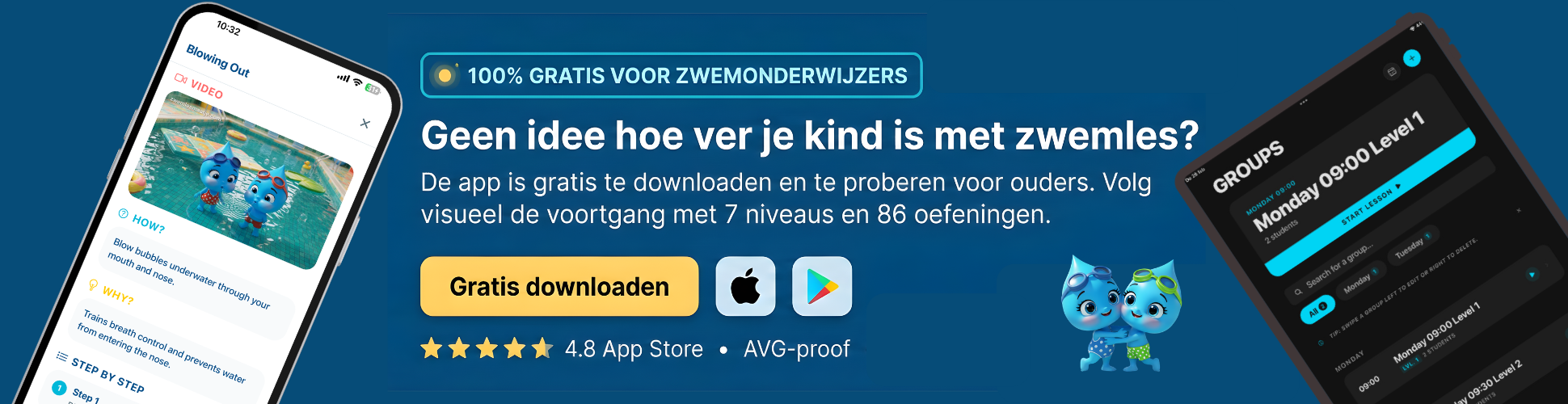
Zwemlesmaatje is an independent app that allows you to track, assess, and celebrate swimming progress — whether you are a parent, adult swimmer, or instructor. You are not dependent on the swim school but keep control yourself.
For parents, the app offers a clear learning path of 7 levels (from Red to Gold) with 86 exercises. You rate each exercise with a simple scoring system (0 to 6) and receive a personal swimming certificate for each level achieved. This way, you can see at a glance where your child stands and what still needs work.
Adults who want to learn (better) swimming use Zwemlesmaatje discreetly and without group pressure. The app provides structure, breaks the learning process into manageable steps, and helps overcome insecurity. You train at your own pace, whenever it suits you.
Swim schools and instructors use Zwemlesmaatje completely free as a digital system for student administration, schedules, and progress. Parents see their child’s development in real-time — without extra work for you. A handy Marketing Toolbox also helps you create professional flyers, social media posts, and certificates.
Discover now how Zwemlesmaatje supports your swimming journey.
2. Traditional Methods Without Software
In this chapter, we discuss traditional methods to organize swimming lesson planning without software.
We cover the use of paper logbooks, checklists, and scorecards, as well as using photos and videos as aids.
These methods help instructors and parents keep track of progress clearly and communicate effectively.
Paper Logbooks and Notes
Paper logbooks are a commonly used way to record swimming skills and notes per lesson.
Instructors write down which skills were practiced and any points of attention.
This provides a clear overview and makes it possible to track progress without digital tools.
Parents can also gain insight into their child’s development through these logbooks.
Use of Checklists and Scorecards
Checklists and scorecards offer a structured way to assess swimming skills.
With a checklist, an instructor can tick off step-by-step which skills a swimmer has mastered.
Scorecards provide an objective assessment and help tailor lesson content to the swimmer’s level.
These tools prevent important skills from being overlooked and support a systematic approach.
Photos and Videos as Aids
Photos and videos are valuable visual tools to capture and analyze swimming technique.
They make it possible to give swimmers targeted feedback and provide parents with a clear picture of progress.
By reviewing footage, swimmers can better understand what to work on themselves.
This method requires good organization and parental consent for the use of images.

3. Structure in Lesson Planning and Communication
In this chapter, we discuss how a structured lesson plan contributes to clarity and consistency in swimming lessons. We also cover the importance of clear communication with parents for engagement and trust. Finally, we explain how recording step-by-step learning goals makes the learning process transparent.
Benefits of Structured Lesson Plans
A structured lesson plan ensures a clear progression of swimming lessons. It helps instructors systematically teach skills and monitor progress. This creates more consistency within lessons, improving the learning experience.
By setting learning goals in advance, lessons can be prepared and executed purposefully. This prevents important skills from being skipped or unnecessarily repeated. This keeps the learning process efficient and clear for both instructor and swimmer.
Additionally, a structured plan provides support when adapting the lesson program to individual needs. This makes it possible for swimmers to grow at their own pace without losing overview.
Effective Communication with Parents
Effective communication with parents strengthens involvement in the swimming process. By regularly and clearly informing about progress, parents better understand the steps their child is taking. This increases trust in the swim school and instructors.
Practically, this can be done via digital updates, emails, or brief conversations after lessons. This keeps parents informed without extra work for the instructor.
Clear communication prevents misunderstandings and ensures parents know what to expect. This contributes to a positive collaboration between swim school, instructor, and family.
Recording Step-by-Step Learning Goals
Recording learning goals in small, clear steps makes the learning process transparent. Each step describes a specific skill the swimmer must master before the next is taught. This provides a clear structure in lesson planning.
By keeping these goals written or digital, instructors can easily track progress and give targeted feedback. Parents also gain insight into which skills their child has mastered and what still needs work.
An example is breaking down swimming strokes into sub-skills, such as breathing, arm movement, and leg kick. This makes the learning process manageable and measurable.
4. Gradual Digital Support
In this chapter, we discuss the benefits of digitally tracking swimming lesson progress. We look at the right moment to switch to digital tools. We also cover how paper and digital methods can be combined for a smooth transition.
Benefits of Digital Progress Tracking
Digital progress tracking offers a clear overview of each student’s swimming skills. Instructors can quickly see which skills are mastered and where extra attention is needed. This prevents unnecessary repetition and makes teaching more efficient.
Additionally, parents can receive real-time updates via digital systems, increasing engagement. It also helps motivate swimmers as they can follow their own progress. An example is an app that shows scores and achieved levels immediately.
When to Switch to Digital Tools
Switching to digital tools is especially useful when the group of swimmers grows or when multiple instructors collaborate. Then it becomes difficult to keep everything clear on paper. Digital systems provide a central place for all data.
Also, if parents want more insight into progress, digital support can help. It is wise to start with simple digital tools, such as an app with basic functions. This way, everyone becomes familiar with the system without it becoming complex immediately.
Combining Paper and Digital Methods
A combination of paper and digital methods can ease the transition. Instructors can, for example, first make notes on paper and later enter them digitally. This prevents spending too much time learning new software right away.
Photos or videos can also be collected on paper and then shared digitally with parents. This keeps communication clear and gradually reduces administrative burden. This approach helps to get used to digital support step by step.
5. Tips for Efficient Swimming Lesson Planning
Efficient swimming lesson planning requires a clear overview of dates, involvement of swimmers and parents, and flexibility in adjusting the schedule.
These three aspects together ensure smooth lessons without paper administration.
In this chapter, we discuss practical tips to organize these elements well.
Keeping Data Clearly Organized
Keeping data without paper requires a structured digital approach.
Use, for example, a clear calendar or planning tool in which you record lesson times, absences, and progress.
By centralizing and making data accessible, you prevent double bookings and keep insight into swimmers’ availability.
A clear overview also helps when planning follow-up lessons and spotting trends in attendance or performance.
Involving Swimmers and Parents
Involving swimmers and parents in planning increases engagement and clarity.
Communicate regularly via digital channels about lesson schedules and any changes.
This way, parents can respond in time to absences or plan extra practice sessions.
Sharing progress and goals also motivates and ensures transparent collaboration between instructor and family.
Flexible Scheduling and Adjustments
Flexibility in planning is important to respond to unexpected circumstances.
Use digital tools that allow you to quickly reschedule or cancel lessons without administrative hassle.
A flexible system also makes it possible to better accommodate individual learning needs.
By making adjustments easily, the schedule stays up-to-date and aligned with practice.

Summary
Summary of Swimming Lesson Planning and Digital Progress Tracking
A good swimming lesson plan requires an overview of dates, involvement of swimmers and parents, and flexibility in the schedule. These elements ensure smooth lessons without paper administration.
Digitally keeping data prevents double bookings and makes availability clear. This helps in planning follow-up lessons and spotting trends in attendance and performance.
Why a Digital Tracking System Helps
Digital progress tracking provides a clear overview of swimming skills per student. Instructors quickly see which skills are mastered and where extra attention is needed.
Parents receive real-time updates, increasing engagement. Swimmers can follow their own progress, which boosts motivation.
A structured lesson plan ensures consistency and clarity in swimming lessons. Predefined learning goals make the learning process clear and efficient.
The plan also allows adapting the lesson program to individual needs. This way, each swimmer grows at their own pace without losing overview.
Traditional methods such as paper logbooks and checklists help track progress without digital tools. These provide parents and instructors insight into swimmers’ development.
Monitoring safety and progress is essential in swimming lesson planning. Insight into skills helps choose appropriate exercises and prevents unsafe situations.
Delays are also detected faster, keeping the lesson focused and safe. This contributes to clear goals for each swimmer.
Dear reader, this blog post was about organizing swimming lesson planning without paper administration.
We would love to hear if you have experience with digitally planning and tracking swimming lessons. Feel free to leave a comment below this article.
You can try Zwemlesmaatje for free via zwemlesmaatje.com. We hope it helps you organize swimming lessons.

Bob van Soest
As an expert in operating sports facilities (such as swimming pools) and developer of, among others, Zwemlesmaatje.com, I am passionately committed to making swimming lessons simpler, more fun and more insightful for parents, swimming instructors and everyone who wants to learn to swim.
Frequently Asked Questions
Related articles


Discover Zwemlesmaatje
The all-in-one app for swimming lesson progress. For parents, swim schools, and adult swimmers.