TrackingSwimmingLessonProgresswithFearofWater
Summary
- Positive support and celebrating small successes boost water confidence.
- Step-by-step, playful approach reduces fear and builds swimming skills.
- Digital tracking aids personalized progress and improves communication.
This blog post titled "Tracking Swimming Lesson Progress with Fear of Water" was updated on: .
Keeping track of swimming lesson progress is essential, especially for students who experience fear of water. A digital tracking system can help by providing clear insights into the development of swimming skills and the confidence of the student.
In this article, we discuss how fear of water manifests and what methods exist to systematically record progress. Additionally, we cover practical tips for instructors and parents to support the learning process in a constructive way.
This information provides an overview of how to create a personal and safe swimming lesson environment where fear is reduced step by step.
1. What is fear of water?
Fear of water is a common emotion among both children and adults. In this chapter, we explain exactly what fear of water entails, what causes underlie it, and how this fear manifests at different ages. This gives you a clear picture of this form of fear.
Definition of fear of water
Fear of water means that someone is afraid to be in the water or to learn to swim. It often involves a feeling of insecurity or loss of control in the water. This fear can range from mild tension to severe panic. It is a recognizable reaction that influences swimming behavior.
The fear can occur in both children and adults. It is important to take fear of water seriously because it affects confidence and development in the water. Fear of water is not an illness but an emotion that can be addressed with care.
Causes of fear of water
The causes of fear of water are diverse. Often unpleasant experiences in the water play a role, such as an unexpected fall or the feeling of going underwater. Fear of water can also arise from adopting fear from parents or others. Additionally, unfamiliarity with water can lead to insecurity and tension.
These factors cause someone to perceive water as threatening. It is not always one cause but often a combination of experiences and feelings. Recognizing the cause helps in finding appropriate support.
Symptoms in children and adults
Symptoms of fear of water differ between children and adults. In children, it often shows as crying, refusing to enter the water, or clinging to parents. They may also visibly react with tension or panic during swimming lessons. This behavior is an expression of their fear.
Adults with fear of water often avoid swimming or feel tense in shallow water. They may have difficulty letting go of control and experience stress during water activities. Recognizing these signals is important to provide timely help.
What is Zwemlesmaatje?
Zwemlesmaatje is an independent app that allows you to track, assess, and celebrate swimming progress — whether you are a parent, adult swimmer, or instructor. You are not dependent on the swim school but keep control yourself.
For parents, the app offers a clear learning path of 7 levels (from Red to Gold) with 86 exercises. You assess each exercise with a simple scoring system (0 to 6) and receive a personal swimming certificate for each achieved level. This way, you can see at a glance where your child stands and what still needs work.
Adults who want to learn (better) swimming use Zwemlesmaatje discreetly and without group pressure. The app provides structure, breaks the learning process into manageable steps, and helps overcome insecurity. You train at your own pace, whenever it suits you.
Swim schools and instructors use Zwemlesmaatje completely free as a digital system for student administration, schedules, and progress. Parents see their child's development in real time — without you having to do any extra work. A handy Marketing Toolbox also helps you create professional flyers, social media posts, and certificates.
Discover now how Zwemlesmaatje supports your swimming journey.
2. The importance of registration
Registering swimming lesson progress with fear of water helps gain insight into the student's development.
By recording progress, fear-related signals can be recognized in time.
This contributes to a safe and personal learning environment where confidence can grow.
Why register progress?
Registering progress makes it possible to follow step by step how a student with fear of water develops.
This allows an instructor to see which exercises go well and where extra attention is needed.
This prevents important signals from being overlooked and helps adjust the lesson approach.
Additionally, registration provides an objective overview for conversations with parents and students.
Detecting fear-related behavior
By registering progress, instructors can more quickly detect fear-related behavior.
Examples include reluctance to enter the water or tension during certain exercises.
These observations are important to adjust the pace of lessons and provide extra support.
Registration also helps track behavioral changes over time and better understand what works.
Safety and personal development
Good registration contributes to safety during swimming lessons by providing insight into the student's personal boundaries.
It also supports personal development by making successes visible, no matter how small.
This strengthens self-confidence and encourages continuing despite fear.
Thus, a learning environment is created where the student feels safe and supported.
3. Practical tips for registration
In this chapter, we discuss how to practically record the progress of swimming lessons for children with fear of water.
We cover observing and noting progress, using digital tracking systems, and the importance of good communication with parents and students.
These tips help instructors and parents make the learning process clear and supportive.
Observing and noting progress
It starts with carefully observing the behavior and reactions of the student during the swimming lesson.
Note small steps, such as getting used to water or daring to submerge the head.
Use short, concrete notes that are easy to read back later.
This creates a clear picture of personal development and allows recognition of moments of success.
Use of tracking systems
Digital tracking systems offer a structured way to record all observations.
They make it possible to keep goals, exercises, and acquired skills clearly organized.
By adding photos, videos, or notes, progress becomes visual and tangible for both instructor and student.
These systems also support planning next steps tailored to the student.
Communication with parents and students
Regular communication with parents and students is essential to maintain trust and manage expectations.
Discuss progress openly and positively, and explain which small successes have been achieved.
This way, parents feel involved and can provide the right support at home.
Students also gain more motivation and insight into their own learning process.
4. Support for fear of water
This chapter discusses how fear of water can be addressed supportively during swimming lessons. Attention is given to slowly becoming familiar with water, breathing exercises, and learning through play. Special lessons and guidance that help build confidence are also covered.
Calmly getting used to water
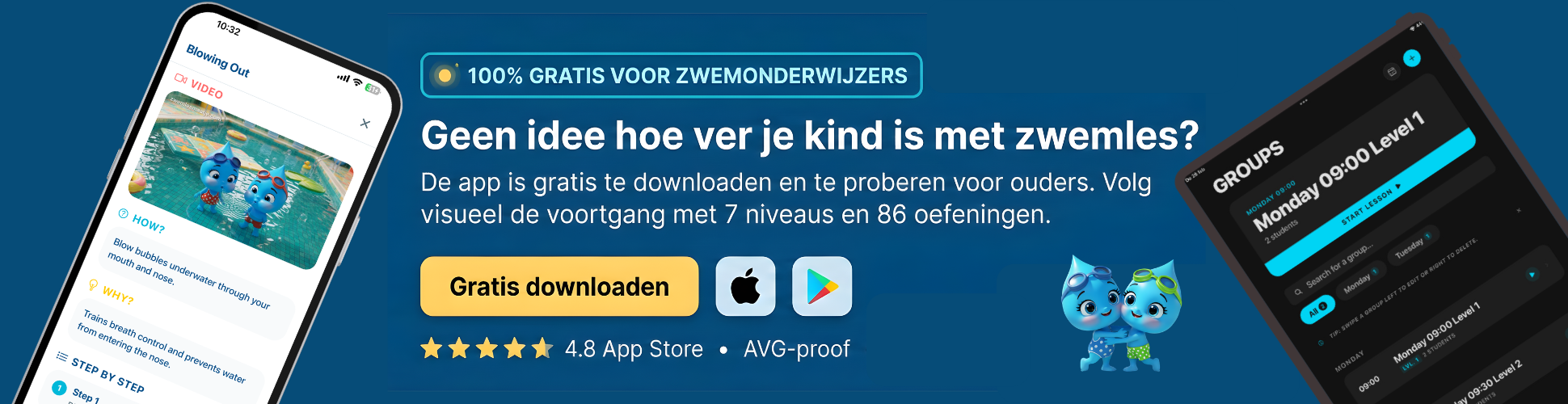
It is important to let children and adults with fear of water calmly get used to the water. This can be done by practicing short moments in shallow water without pressure to swim immediately. This gradually creates familiarity with the feeling of water on the skin and moving in it.
An example is playing with water in a small tub or walking along the edge of the pool. This provides space to reduce fear without it becoming immediately stressful. Through this step-by-step approach, confidence is slowly built up.
Breathing exercises and learning through play
Breathing exercises are an effective way to reduce tension in fear of water. By breathing in and out calmly, swimmers learn to control their breathing in the water. This helps to stay calm and prevent panic.
Additionally, learning through play can increase enjoyment in the water. Games that focus on movement and having fun provide a positive experience. This makes swimming less threatening and more inviting.
Special lessons and guidance
For people with persistent fear of water, special lessons are often a good solution. These lessons often take place in small groups or private lessons, allowing more personal attention. The instructor can better respond to the individual needs and pace of the student.
This guidance focuses on building confidence step by step. Through a safe and patient environment, space is created to overcome fears. This makes it possible to eventually swim with more certainty and enjoyment.
5. Role of parents and instructors
Parents and instructors have an important role in guiding children and adults with fear of water.
Their attitude and communication influence the confidence and motivation of the swimming student.
In this section, we discuss how a positive approach, avoiding fearful remarks, and celebrating small successes together contribute to progress.
Promoting a positive attitude
A positive attitude helps swimmers with fear feel safe and supported during lessons.
Parents and instructors can do this by radiating confidence and being patient, even if progress is slow.
Pointing out small improvements, such as daring to go underwater or breathing calmly, strengthens self-confidence.
This creates an environment where the swimming student dares to develop without pressure or stress.
Avoiding fearful remarks
Fearful remarks can actually reinforce fear and hinder the learning process.
It is important to avoid negative or alarming statements, such as warnings about danger or emphasizing risks.
Instead, it helps to speak reassuringly and focus on what is going well.
An example is saying: "You’re doing well, we’ll continue step by step" instead of "Be careful, the water is deep".
Celebrating small successes together
Celebrating small successes motivates and makes the learning process positive.
Parents and instructors can give attention to every progress, no matter how small, together with the swimming student.
This can be done, for example, with a compliment, a sticker, or a short moment of shared pride after a lesson.
This positive reinforcement helps reduce fear and encourages continuing practice.

Summary
Summary of fear of water and the use of a digital tracking system
Fear of water is an emotion found in children and adults. It manifests in feelings of insecurity and can influence swimming behavior.
A positive attitude from parents and instructors helps increase confidence and motivation. Small successes are celebrated together to stimulate progress.
Step-by-step approach to fear of water
Fear of water is addressed by slowly becoming familiar with water and breathing exercises. Learning through play and special guidance support the process.
Short moments in shallow water and playing with water reduce fear without pressure. This gradually builds confidence in the swimming student.
Recording progress with a digital tracking system
Observing and noting small steps is important for insight into development. Concrete notes make it clear and usable.
A digital tracking system helps register swimming lesson progress. This supports a personal and safe learning environment.
Benefits of registration and communication
By registering progress, instructors can better respond to the needs of the student. It prevents important signals from being missed.
Registration provides an objective overview for conversations with parents and students. This improves the alignment of swimming lesson planning with the student.
The role of parents and instructors
A positive and patient approach strengthens the self-confidence of swimmers with fear. Small improvements are acknowledged and celebrated.
This creates an environment without pressure or stress, where the swimming student feels safe and dares to develop.
Dear reader, this blog post was about tracking swimming lesson progress with fear of water.
We would love to hear if you have experience with digitally tracking swimming lessons. Feel free to leave a comment below this article.
You can try Zwemlesmaatje for free via https://zwemlesmaatje.com.
Thank you for your attention and involvement.

Bob van Soest
As an expert in operating sports facilities (such as swimming pools) and developer of, among others, Zwemlesmaatje.com, I am passionately committed to making swimming lessons simpler, more fun and more insightful for parents, swimming instructors and everyone who wants to learn to swim.
Frequently Asked Questions
Related articles

Why Showering Before Swimming Lessons Is So Important
Why shower before swimming lessons? Discover why hygiene and preparation are crucial for the best swimming experience. Read our tips and avoid surprises!
When to Start Swimming Lessons for Optimal Progress
Effectively Registering Swimming Lesson Progress from What Age?
Discover Zwemlesmaatje
The all-in-one app for swimming lesson progress. For parents, swim schools, and adult swimmers.