OrganizingSwimmingLessonsforHighlySensitiveChildren
Summary
- Highly sensitive children need emotional readiness and group coping skills for swimming success.
- Digital tracking helps parents support progress, boosting confidence and motivation.
- Calm, playful lessons with small groups prevent overstimulation and build self-confidence.
This blog post titled "Organizing Swimming Lessons for Highly Sensitive Children" was updated on: .
Guiding highly sensitive children during swimming lessons requires an adapted approach. These children often experience stimuli and emotions more intensely, which affects their learning process and motivation.
In this article, we discuss how a calm swimming lesson environment and a step-by-step approach can contribute to a positive swimming experience. Additionally, we cover how parents and instructors can work together to increase confidence and enjoyment.
Furthermore, we pay attention to the importance of observation and aligning swimming lesson planning with the emotional and physical readiness of the child.
1. Understanding High Sensitivity
Highly sensitive children have specific characteristics that influence their swimming lesson experience. Often, fears play a role in their participation in swimming lessons. Emotions also affect their learning process and progress.
Characteristics of Highly Sensitive Children
Highly sensitive children are extra sensitive to stimuli from their environment. They can quickly become overstimulated by sounds, light, or crowds. This sometimes causes them to react hesitantly or uncertainly in new situations. Additionally, they process impressions deeply and often have a rich inner world.
These characteristics require a calm and understanding approach during swimming lessons. It is important that they feel safe and seen. Due to their sensitivity, they can also strongly react to the atmosphere and attitude of the instructor. Recognizing these traits helps to better tailor the swimming lesson to their needs.
Common Fears in Swimming Lessons
Many highly sensitive children experience fears that can complicate their participation in swimming lessons. Fear of water is common, but also fear of the unknown or separation from parents. These fears can lead to hesitation or even refusal to participate.
It is important to take these fears seriously and talk calmly about them. By gradually familiarizing the child with the water and the lesson environment step by step, the fear can decrease. Avoiding pressure and providing predictability helps to increase trust.
Effect of Emotions on Learning
Emotions play a major role in the learning process of highly sensitive children. Positive experiences strengthen their motivation and self-confidence. Negative emotions can lead to blockages and reduced concentration.
Therefore, it is essential to pay attention to the child's emotional state during the swimming lesson. A safe and supportive environment helps regulate emotions. This way, they can learn better and enjoy swimming.
What is Zwemlesmaatje?
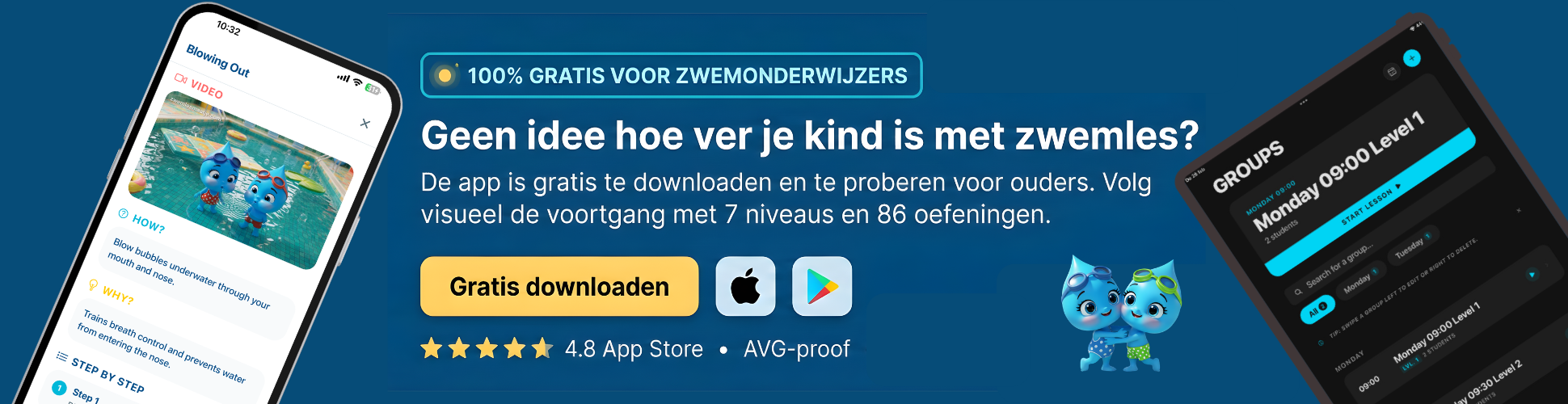
Zwemlesmaatje is an independent app that allows you to track, assess, and celebrate swimming progress — whether you are a parent, adult swimmer, or instructor. You are not dependent on the swimming school but keep control yourself.
For parents, the app offers a clear learning path of 7 levels (from Red to Gold) with 86 exercises. You assess each exercise with a simple scoring system (0 to 6) and receive a personal swimming certificate for each achieved level. This way, you can see at a glance where your child stands and what still needs work.
Adults who want to learn (better) swimming use Zwemlesmaatje discreetly and without group pressure. The app provides structure, breaks the learning process into manageable steps, and helps overcome insecurity. You train at your own pace, whenever it suits you.
Swimming schools and instructors use Zwemlesmaatje completely free as a digital system for student administration, schedules, and progress. Parents see their child's development in real time — without you having to do any work. A handy Marketing Toolbox also helps you create professional flyers, social media posts, and certificates.
Discover now how Zwemlesmaatje supports your swimming journey.
2. Calm and Safe Swimming Lesson Environment
A calm and safe swimming lesson environment is essential for highly sensitive children. This chapter discusses a step-by-step approach for water experience, the importance of small groups, and the role of the swimming instructor in the water. This creates a familiar atmosphere in which the child feels comfortable.
Step-by-Step Approach to Water Experience
Start by slowly familiarizing the child with water, for example by playing with water together at home. Let the child get used to the feeling of water without pressure to swim immediately. During the swimming lesson, you build this up calmly with simple exercises that the child can choose. This creates a positive water experience that increases confidence.
Explain clearly in advance what will happen during the lesson. This helps the child feel safe and worry less. Give the child space to set their own pace so they do not become overwhelmed. A step-by-step approach prevents the child from feeling insecure.
Small Groups for Confidence
Small groups are important to give highly sensitive children confidence. In a small group, there is more attention for each child and fewer stimuli from other children. This creates a clear and calm environment. The child feels safe faster and dares to try more.
Because of the limited group size, the swimming instructor can better respond to the child's needs. There is also less distraction, which helps maintain focus. Small groups thus promote the learning process and reduce stress.
Role of the Swimming Instructor in the Water
The swimming instructor plays a crucial role in creating a safe swimming lesson environment. By being present in the water, the instructor can directly support and reassure the child. This gives the child a sense of closeness and safety.
The instructor observes the child carefully and adjusts the exercises where necessary. By showing a calm and patient attitude, the instructor helps the child build confidence. An involved swimming instructor makes a difference in the learning process of highly sensitive children.
3. Stimulating Motivation and Pleasure
In this chapter, we discuss how motivation and pleasure can be stimulated in highly sensitive children during swimming lessons. We cover the importance of playfulness, celebrating small successes, and creating rituals. We also explain how giving responsibility can strengthen self-confidence.
Swimming Lessons as a Playful Activity
Swimming lessons for highly sensitive children become more effective when they feel like a playful activity. By linking exercises to games, the child remains engaged and relaxed.
An example is using favorite toys in the water or coming up with small challenges that resemble play. This reduces pressure and increases enjoyment during the lesson.
Playfulness also helps to maintain attention and positively stimulate the child without coercion. This creates a natural motivation to keep practicing.
Celebrate Small Successes Together
Celebrating small successes is important to increase the self-confidence of highly sensitive children. Every step forward, no matter how small, deserves recognition.
This can be done by giving a compliment after a new exercise or making progress visible with stickers or a progress board. This way, the child clearly sees their development.
By regularly naming successes, motivation remains high and the child feels appreciated. This prevents the child from becoming discouraged by challenges.
Rituals and Giving Responsibility
Rituals around swimming lessons provide structure and safety for highly sensitive children. A fixed routine, such as packing the swim bag together, gives the child a sense of control.
Involving the child in preparations stimulates responsibility and independence. This can strengthen self-confidence and reduce anxiety about the lesson.
Additionally, a short ritual before or after the lesson, such as a fixed greeting or a closing compliment, helps the transition go smoothly. This makes the child feel recognized and supported.
4. Involving Parents in Swimming Lessons
Parents play an important role in supporting highly sensitive children during swimming lessons.
In this chapter, we discuss how positive communication after the lesson helps, how digital progress tracking can involve parents, and provide tips for patient listening at home.
This approach strengthens the child's confidence and motivation.
Positive Communication After Swimming Lessons
After each swimming lesson, it is valuable to talk positively with the child about what they have done.
Focus on small successes and mention what went well, even if it is just a small step forward.
Avoid pressure or negative remarks so the child feels safe to share their experiences.
This builds the child's confidence and strengthens the enjoyment of swimming.
Use of Digital Progress Tracking
Digital progress tracking provides parents insight into their child's development during swimming lessons.
Through a clear system, parents can see which skills have been practiced and which goals are upcoming.
This makes it easier to ask targeted questions after the lesson and encourage the child.
Additionally, it helps the swimming school and instructors to tailor the lesson approach to the child's pace.
Tips for Patient Listening at Home
At home, patient listening is essential to support the child in their swimming process.
Give the child space to express their feelings and experiences without interruption.
Ask open questions and show understanding, even if the child mentions insecurities or fears.
This way, the child feels heard and supported, which promotes motivation and self-confidence.
5. Preparing and Assessing Readiness
When organizing swimming lessons for highly sensitive children, it is important to look at their emotional and physical readiness.
This chapter discusses how age and emotional development are related, the importance of introductory lessons and observation, and possible alternatives for younger children.
This way, parents and instructors can better estimate when a child is ready for swimming lessons and which approach works best.
Age versus Emotional Readiness
A child's age is a guideline but does not say everything about readiness for swimming lessons.
Emotional readiness plays a major role, especially for highly sensitive children who can quickly become overstimulated.
A child must be able to handle the group situation and follow instructions without too much stress.
Therefore, it is important to look not only at calendar age but also at the child's behavior and reactions in new situations.
Introductory Lessons and Observation
Introductory lessons offer a good opportunity to assess a child's readiness.
During these lessons, the instructor can observe how the child reacts to the water and environment.
The child can also get used to the swimming instructor and lesson structure without feeling immediate pressure.
This creates a better picture of emotional and motor skills, which helps determine the right moment to start.
Alternatives for Young Children
For younger children who are not yet ready for regular swimming lessons, there are alternatives such as baby or parent-child swimming.
These lessons focus on playfully becoming familiar with water together with a trusted adult.
This can lay the foundation for later swimming lessons and helps the child get used to water in a calm way.
This makes the transition to swimming lessons smoother and less stressful.

Summary
Summary of Swimming Lessons for Highly Sensitive Children
Highly sensitive children have specific needs in swimming lessons. Their emotional and physical readiness is important for a successful start.
Calendar age does not say everything. Emotional readiness and the ability to cope with the group are crucial.
Why a Digital Tracking System Helps
Parents can better follow and support swimming progress with a digital tracking system. This strengthens the child's confidence and motivation.
Positive communication after the lesson and keeping track of small successes help the child feel safe and valued.
Practical Approach and Benefits
A playful and calm swimming lesson environment increases enjoyment and motivation. Small groups and a step-by-step approach create a familiar atmosphere.
The child can get used to water and choose exercises at their own pace. This prevents overstimulation and promotes self-confidence.
Dear reader, this blog post was about organizing swimming lessons for highly sensitive children.
We would love to hear if you have experience with this topic. Feel free to leave a comment below this article.
You can try Zwemlesmaatje for free via https://zwemlesmaatje.com.
Thank you for your attention.

Bob van Soest
As an expert in operating sports facilities (such as swimming pools) and developer of, among others, Zwemlesmaatje.com, I am passionately committed to making swimming lessons simpler, more fun and more insightful for parents, swimming instructors and everyone who wants to learn to swim.