HowtoPlanSwimmingLessonsforMixedLevelGroups:PracticalGuideforInstructors[2026]
![How to Plan Swimming Lessons for Mixed Level Groups: Practical Guide for Instructors [2026]](/_next/image?url=https%3A%2F%2Fzvblogpostimages.s3.eu-west-3.amazonaws.com%2FAUTOMATISCH_UPLOAD%2F1_360c380d29e1.jpg&w=3840&q=75&dpl=dpl_VQ233rgayE4n6XNc2K8zLTDwZtzN)
Summary
- Mixed level groups are the reality for most swim schools: learn how to handle this smartly
- Discover the 3-block model that saves time and lets every student grow at their own level
- Smart division of your lesson hour into blocks makes the difference between chaos and control
- Zwemlesmaatje helps you track scores per student, even in large mixed groups, and it’s 100% free
Why Mixed Level Groups Are the Norm
The Reality of Small and Medium-Sized Swim Schools
As a swimming instructor at a smaller swim school, you immediately recognize the situation: you have one lesson hour, one pool, and fifteen students all at different levels. One student is still practicing floating, another is almost ready for the next diploma. Mixed level groups are not an exception, but the daily reality for the vast majority of Dutch swim schools. Large commercial swim schools can afford strictly divided level groups, but for the independent instructor with a few groups per week, that is simply not feasible. And that doesn’t have to be a problem at all, provided you use the right planning approach.
How Different Learning Speeds Affect One Group
Within one group of twelve children, you often see three to four different levels. One student picks up the breaststroke in two lessons, another needs eight. That difference in learning speed impacts the entire group dynamic. Fast learners get bored when they have to wait, while slower learners develop performance anxiety if they constantly have to rush. Without thoughtful planning, you as an instructor quickly lose overview and notice that lesson time is not used optimally. The result: frustrated children, dissatisfied parents, and an instructor who goes home exhausted at the end of the day.
The Pitfall of "Making Everyone Do the Same"
The most common mistake with mixed groups is the one-size-fits-all approach. Having all students do the same exercise seems efficient but backfires in practice. Beginners fall behind because the exercise is too difficult; advanced students learn nothing because the exercise is too easy. The result: minimal progress for everyone. The solution is not more hours or smaller groups (few have that luxury), but a smart lesson structure where you can work on three levels simultaneously within one group.
A Smart Lesson Structure for Mixed Groups
The 3-Block Model: Warm-Up, Core, Closing
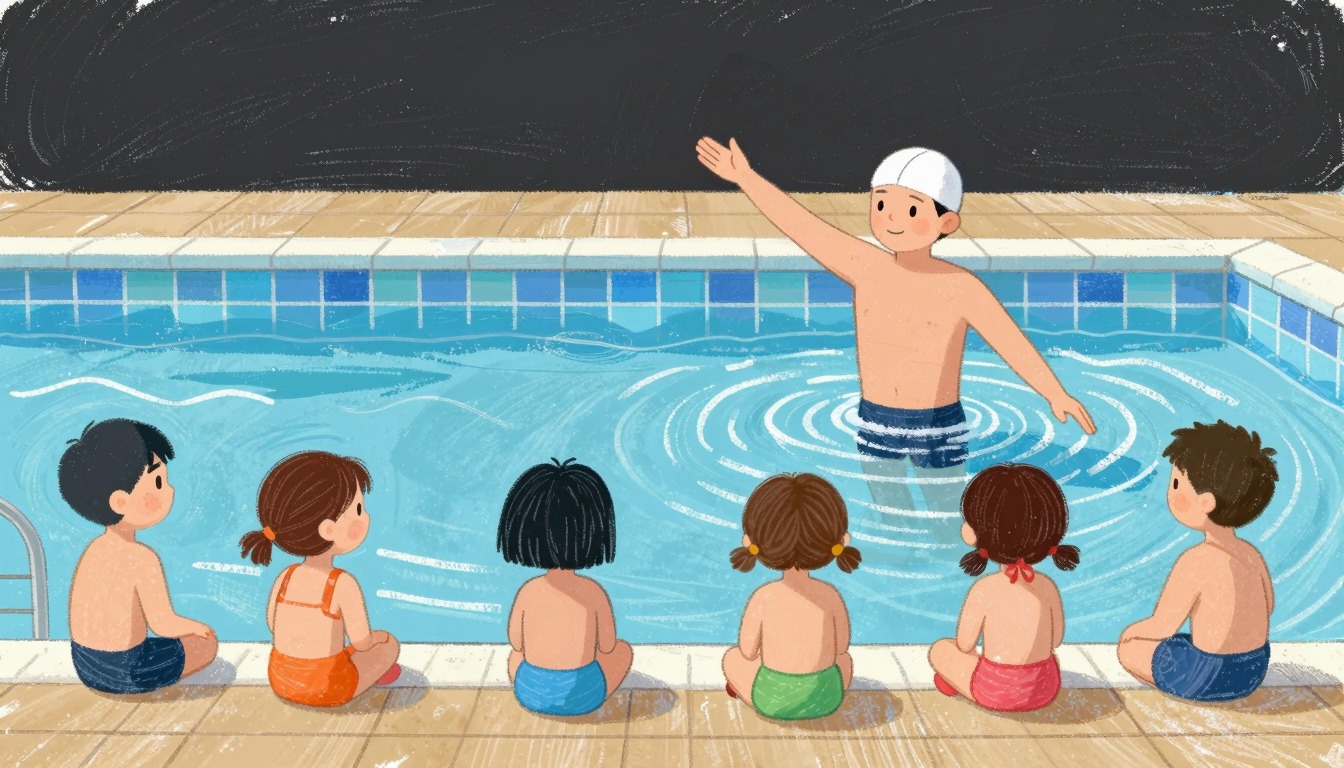
The most effective approach for mixed level groups is the 3-block model. You divide a lesson of 45 or 60 minutes into three clear blocks: a joint warm-up (10 minutes), a split core (25 to 35 minutes), and a joint closing (10 minutes). The secret lies in the middle block: the group splits into two or three subgroups based on level. Each subgroup works on its own exercises while you as the instructor rotate. This model requires that you know each student’s level and which exercises need to be covered beforehand, something we will return to later in this overview.
Block 1: Joint Warm-Up with Level Differentiation
Start each lesson with a warm-up that everyone can join, but automatically build in differentiation. For example, have all students swim five lengths, but give advanced students an extra task such as "swim the last two lengths with a leg exercise of your choice" or "try to use as few strokes per length as possible." Beginners may swim their familiar stroke and receive encouragement for their effort. This way, everyone starts together but at their own level. This creates group feeling and gives you as the instructor five minutes to scan the pool and see how everyone is doing.
Block 2: Split Core Exercises per Subgroup
This is the heart of your lesson. Divide the group into two or three subgroups based on current level. Subgroup A (beginners) works on basic exercises such as floating, kicking, or first leg strokes. Subgroup B (intermediate) practices full strokes, breathing techniques, or turns. Subgroup C (advanced) works on refinement, speed, or diploma requirements. The crucial part here is preparation: before the lesson, you know exactly which exercise each subgroup will do. You walk between the subgroups as instructor, give short instructions, and switch every 8 to 10 minutes. This requires discipline, but after three lessons you get into the rhythm and it runs like a well-oiled machine.
Block 3: Joint Closing with Games and Evaluation
Always end the lesson together. A short game moment (tag, diving ring search, relay with mixed teams) brings the group back together and ensures fun. Use the last two minutes for a quick evaluation: mention one positive point and one focus point per subgroup for the next lesson. This gives students (and their parents) guidance and shows that you pay attention to each individual. Immediately after the lesson, note your observations so you know exactly where each student stands next week.
Practical Tools for Planning and Progress
Tracking Scores per Student Without Paper Chaos
In a mixed group with twelve to fifteen students, it is impossible to remember all progress by heart. Many instructors resort to paper lists, whiteboards, or notebooks. The problem: these get wet, lost, or become unreadable due to hurried scribbles during the lesson. Moreover, keeping paper administration costs valuable lesson time better spent on students. Modern instructors switch to digital tools, with which you can record a score with one swipe between exercises.
The Role of Digital Tools in Mixed Groups
Digital tools are no longer a luxury for swim schools but a practical aid that makes your daily work significantly easier. With a digital app on your phone or tablet, you register each student’s progress on every skill, see at a glance each student’s level, and can determine beforehand which exercises each subgroup needs. This saves you at least two to three hours of administration per week, time you can spend on better lessons or simply yourself. Moreover, you give parents real-time insight into their child’s progress, which reduces the number of questions at the poolside by at least half.
How to Use Zwemlesmaatje for Mixed Level Groups
Zwemlesmaatje is specifically designed for instructors working with mixed groups. You create a free account, add your students, and assign them to groups. During the lesson, you swipe through the skills per student and give a score from 0 to 6, the well-known smiley system. The great thing is that the app automatically tracks each student’s level, so before each lesson you know exactly which exercises each subgroup needs. You can easily move students between groups with one swipe, ideal if a student progresses faster or slower than expected. And because Zwemlesmaatje is 100% free, it fits any budget, even that of an independent swimming instructor without expensive systems.
Tips from Experienced Instructors
Use Buddy Systems Between Different Levels
One of the most underestimated techniques in mixed groups is the buddy system. Pair an advanced student with a beginner for specific exercises. The advanced student practices leadership and reinforces their own technique by explaining it, while the beginner gets that little extra attention. Note: this only works for short practice moments of two to three minutes and under your supervision. It is not a replacement for your instruction but a valuable addition that strengthens group dynamics and produces learning effects for both students.
Rotate Subgroups Smartly for Maximum Lesson Time
A common mistake is that instructors stay too long with one subgroup. The rule of thumb is a maximum of eight to ten minutes per subgroup. Set a timer on your phone or smartwatch and force yourself to switch after each block. The subgroup working without direct guidance gets an independent exercise they have practiced before, such as swimming lengths while counting, repeating a specific leg exercise, or practicing with a buddy. By rotating strictly, you ensure all levels get equal attention and total lesson time is used optimally.
Communicate Clearly with Parents About Group Composition
Parents at the poolside don’t always see what you as an instructor do. They see that "their child is in a mixed group" and worry if there is enough attention. Prevent these worries by clearly explaining your 3-block model once at the start of the season. A short two-minute explanation at the poolside, a message in the parent app, or an A4 on the notice board at reception is enough. Explicitly state that each student gets exercises at their own level and that lesson time is used optimally. Transparent communication prevents negative reactions and ensures parents appreciate your professional approach.
Conclusion
Mixed level groups are the reality for most swimming instructors in the Netherlands, but with thoughtful planning you turn this challenge into a strength. The 3-block model gives you structure, digital tools like Zwemlesmaatje take administration off your hands, and smart techniques like buddy systems and strict rotation ensure every student progresses at their own level. As an independent instructor, you don’t need to buy expensive systems to work professionally: with the right approach and the right free tools, you run lessons that both students and parents get excited about.
Read more:
- Zwemlesmaatje for instructors: manage groups, track scores, 100% free
- All features of Zwemlesmaatje at a glance
- The 7 levels of Zwemlesmaatje: from Red to Gold
Frequently Asked Questions
Bob van Soest
As an expert in operating sports facilities (such as swimming pools) and developer of, among others, Zwemlesmaatje.com, I am passionately committed to making swimming lessons simpler, more fun and more insightful for parents, swimming instructors and everyone who wants to learn to swim.
Frequently Asked Questions
Related articles


Discover Zwemlesmaatje
The all-in-one app for swimming lesson progress. For parents, swim schools, and adult swimmers.