EfficientSwimmingLessonPlanningwithMultipleInstructors

Summary
- Digital software streamlines lesson planning and centralizes swimmer data.
- Progress reports and visuals enhance parent-instructor communication.
- Skill-based grouping and clear scheduling improve lesson effectiveness.
Organizing swimming lessons with multiple instructors requires a clear and structured approach. A swimming lesson schedule that takes into account different skills and lesson groups makes the process more transparent for both instructors and parents.
In this article, we discuss how efficient planning contributes to better collaboration between instructors and a smooth flow of lessons. Additionally, we cover the importance of tracking swimming lesson progress and the use of digital tools.
These insights help swim schools and instructors better tailor swimming education to the needs of swimmers and their parents.
1. Importance of Good Planning
Good planning is essential for swimming lessons with multiple instructors. This chapter discusses how goal-oriented planning improves the learning process, the benefits it offers to students, and how instructors can collaborate effectively. This results in a clear and efficient lesson organization.
Plan Purposefully and Efficiently
Plan purposefully and efficiently by making clear agreements about lesson division and responsibilities. Ensure that each instructor knows which groups and skills they are responsible for. This prevents overlap and ensures a balanced distribution of tasks.
Efficient planning takes into account available time and space so that lessons run smoothly. By setting clear goals in advance, instructors can work focused on the development of each swimmer. This way, you make optimal use of the available resources.
Benefits for Students
Good planning provides students with structure and clarity about what to expect. This increases their motivation and helps them work purposefully on their swimming skills. Additionally, a clear schedule allows better alignment with each student's pace.
Students also benefit from consistent lesson structure and repetition, which strengthens the learning process. By setting clear goals, they can better track their progress and experience more moments of success. This contributes to a positive learning experience.
Collaboration Between Instructors
Effective collaboration between instructors is crucial for good swimming lesson planning. Regular coordination prevents misunderstandings and ensures everyone is informed about lesson content and progress. This way, instructors can support and complement each other.
Through open communication, instructors can quickly respond to changes or special situations. This promotes a coherent approach and a pleasant working atmosphere. Collaboration thus contributes to a consistent and high-quality swimming lesson experience.
What is Zwemlesmaatje?
Zwemlesmaatje is an independent app that allows you to track, assess, and celebrate swimming progress — whether you are a parent, adult swimmer, or instructor. You are not dependent on the swim school but keep control yourself.
For parents, the app offers a clear learning path of 7 levels (from Red to Gold) with 86 exercises. You assess each exercise with a simple scoring system (0 to 6) and receive a personal swimming certificate for each achieved level. This way, you can see at a glance where your child stands and what still needs work.
Adults who want to learn (better) swimming use Zwemlesmaatje discreetly and without group pressure. The app provides structure, breaks the learning process into manageable steps, and helps overcome insecurity. You train at your own pace, whenever it suits you.
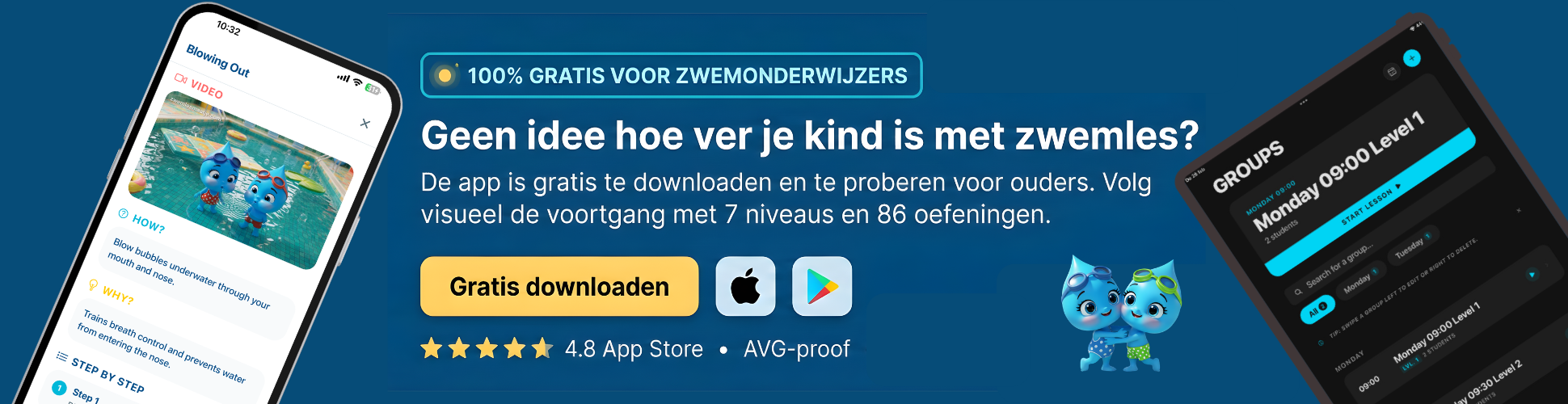
Swim schools and instructors use Zwemlesmaatje completely free as a digital system for student administration, schedules, and progress. Parents see their child's development in real time — without extra work for you. A handy Marketing Toolbox also helps you create professional flyers, social media posts, and certificates.
Discover now how Zwemlesmaatje supports your swimming journey.
2. Dividing Swimming Groups
Dividing swimming groups is essential for efficient lesson planning with multiple instructors.
In this chapter, we discuss grouping by skill level, the use of age groups, and the importance of uniform registration formats.
This approach helps organize lessons and better align the lesson offerings with the needs of the swimmers.
Grouping by Skill Level
Grouping swimming groups by skill level ensures that students with similar swimming experience receive lessons together.
This makes it possible to better tailor the lesson material to the group's level and prevents some swimmers from progressing too quickly or too slowly.
In practice, this can mean that beginners receive more attention for basic skills, while advanced swimmers work on technique and endurance.
This grouping allows instructors to teach more targeted lessons and makes the progress of each group more visible.
Effectively Using Age Groups
Age groups are a practical way to organize swimmers, especially with younger children.
Age groups provide a safe and familiar environment where children feel comfortable.
Additionally, it helps to adapt lesson materials and exercises to the developmental stage of the group.
By effectively using age groups, instructors can take into account both physical and social aspects of learning to swim.
Uniform Registration Formats
Using uniform registration formats is important to properly compare the progress of different groups.
A standard format provides clarity and makes it easier to analyze data and adjust lessons.
In practice, this means all instructors use the same criteria and codes when registering skills and diplomas.
This prevents misunderstandings and supports a consistent approach within the swim school.
3. Tracking Progress
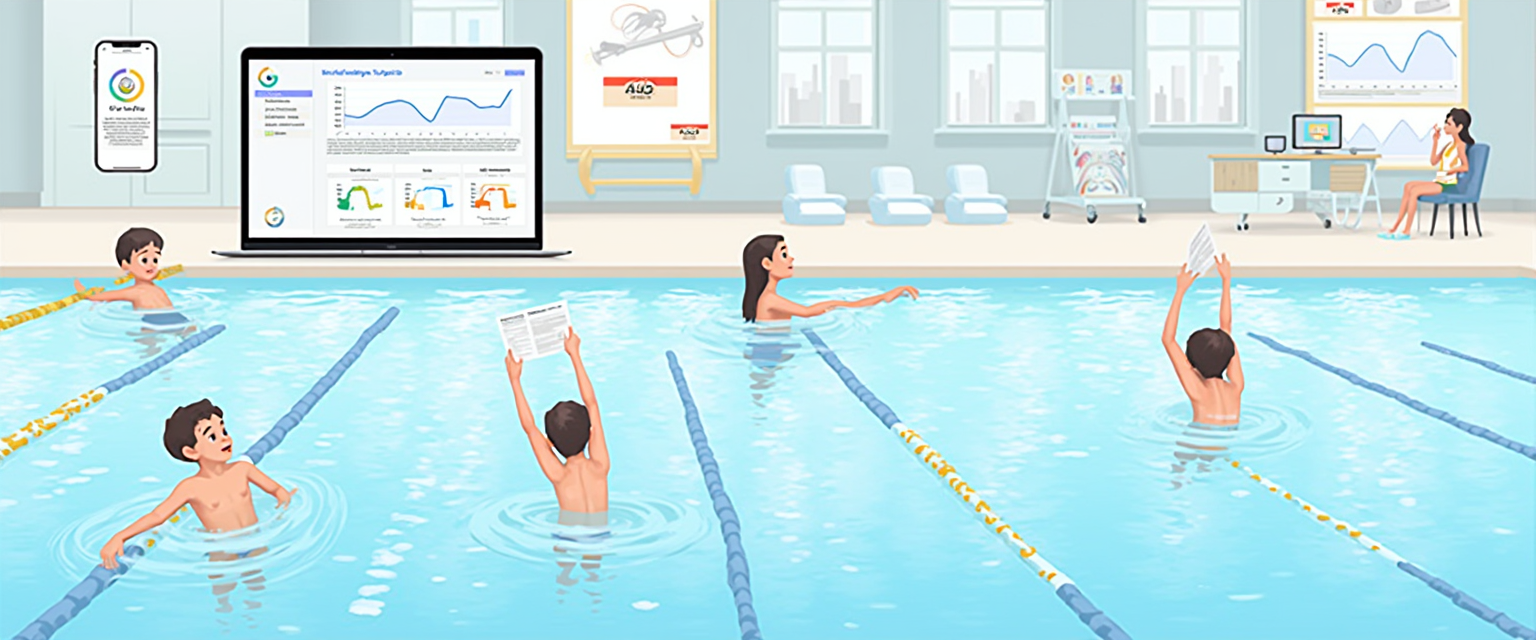
Tracking progress is essential for a structured swimming lesson schedule with multiple instructors.
In this chapter, we discuss the importance of regular evaluations, the differences between digital and manual registration, and sharing progress information with parents.
These insights help improve collaboration and the learning process of swimmers.
Scheduling Regular Evaluations
Regular evaluations ensure that instructors gain timely insight into the skills swimmers have mastered and where extra attention is needed.
By scheduling fixed moments for these evaluations, for example every four to six weeks, progress remains current and clear.
This makes it possible to better tailor lessons to the needs of the group and individual swimmers.
An example is scheduling interim test moments to determine if a swimmer is ready for the next level.
Digital vs. Manual Registration
Manual registration requires a structured approach with uniform formats and timely updates to be effective.
However, this can be time-consuming and cause errors in registration, especially with multiple instructors.
Digital systems offer advantages here through quick input, automatic reports, and visual display of progress.
This way, instructors can easily share data and gain real-time insight, which facilitates collaboration and lesson planning.
Sharing Data with Parents
Sharing progress data with parents strengthens communication and trust between instructors and families.
By providing clear and regular reports, parents better understand which skills their child is developing.
This also encourages involvement in the learning process and practicing outside of swimming lessons.
Digital tools make it possible to make this information easily and clearly available, for example via an app.
4. Communication with Parents
Good communication with parents is essential for successful swimming lesson planning with multiple instructors.
In this chapter, we discuss how clear progress reports, parental involvement, and targeted feedback contribute to a transparent learning process.
This approach strengthens collaboration between parents and instructors and effectively supports swimming education.
Clear Progress Reports
Progress reports give parents a clear overview of the swimming skills their child has mastered.
By regularly sharing clear and concise reports, trust and insight into the learning process are created.
An example is using visual graphs that show development per skill.
This way, parents can see exactly which steps their child has already taken and where more attention is needed.
Involving Parents in the Learning Process
Actively involving parents in the learning process stimulates the swimmer's motivation.
By informing them about lesson goals and achieved results, they can provide targeted support at home.
A practical tip is sharing exercises that parents can do together with their child.
This promotes a consistent learning environment and strengthens collaboration between instructors and parents.
Feedback and Support
Targeted feedback helps parents better understand and support their child's progress.
Instructors can also incorporate questions and comments from parents to improve the learning process.
An example is scheduling short evaluation moments where parents can ask questions.
This open communication ensures constructive collaboration and contributes to the success of the swimming lessons.
5. Use of Swimming Lesson Software
Digital swimming lesson software supports instructors and swim schools in efficiently planning and organizing lessons with multiple instructors.
These tools provide real-time insight into progress and simplify administrative tasks.
In this chapter, we discuss the benefits of digital tools, the importance of up-to-date information, and automating administration.
Benefits of Digital Tools
Digital tools make it possible to centrally and clearly record all data of swimmers.
This prevents errors and duplicate entries, which occur more often with manual registration.
Additionally, instructors can easily track progress and generate reports without extra work.
An example is using an app that offers a structured learning path with clear levels and exercises.
Real-Time Insight and Updates
With digital swimming lesson software, instructors and parents have immediate access to current progress information.
Updates are processed in real time, so everyone always has the same data.
This promotes collaboration between instructors and parents and makes it possible to quickly respond to learning needs.
A swim school can, for example, immediately see which swimmers need extra attention and adjust the planning accordingly.
Automating Administration
Administrative tasks such as tracking attendance, lesson schedules, and diploma presentations are largely automated with software.
This saves time and reduces the chance of errors in administration.
Instructors can therefore focus more on teaching and less on paperwork.
Reports and certificates can also be automatically generated and shared with parents.

Summary
Summary of Digital Swimming Lesson Software and Student Tracking Systems
Digital swimming lesson software supports instructors and swim schools in efficiently planning and organizing swimming lessons. It provides real-time insight into progress and simplifies administrative tasks.
With a digital tracking system, all data of swimmers is centrally and clearly recorded. This prevents errors and duplicate entries and makes tracking swimming lesson progress easier.
Why a Digital Tracking System Helps
Good communication with parents is important for a transparent swimming lesson process. Clear progress reports and targeted feedback strengthen collaboration between parents and instructors.
Progress reports give parents insight into their child's swimming skills. Visual graphs show development per skill and make the learning process transparent.
Regular evaluations provide current insight into swimmers' skills. This helps tailor lessons to the needs of the group and individual students.
Grouping swimming groups by skill level enables targeted lesson material. This prevents swimmers from progressing too quickly or too slowly and improves visibility of progress.
A goal-oriented swimming lesson schedule with clear agreements about lesson division and responsibilities improves collaboration between instructors. This makes lesson organization clear and efficient.
Dear reader, this blog post was about efficient swimming lesson planning with multiple instructors.
We would love to hear if you have experience organizing swimming lessons this way. Feel free to leave a comment below this article.
You can try Zwemlesmaatje for free via zwemlesmaatje.com. We hope it can support you in planning swimming lessons.

Bob van Soest
As an expert in operating sports facilities (such as swimming pools) and developer of, among others, Zwemlesmaatje.com, I am passionately committed to making swimming lessons simpler, more fun and more insightful for parents, swimming instructors and everyone who wants to learn to swim.
Frequently Asked Questions
Related articles


Discover Zwemlesmaatje
The all-in-one app for swimming lesson progress. For parents, swim schools, and adult swimmers.