BestAgetoStartSwimmingLessons
Summary
- Preparation with tools boosts children's water confidence and lesson clarity.
- Postpone lessons if child shows water fear or motor delays.
- Starting around five years aligns with readiness and school rhythm.
This blog post titled "Best Age to Start Swimming Lessons" was updated on: .
Determining the right time to start swimming lessons is an important step for parents and swim schools. Various factors, such as age, motor skills, and the child's comfort in the water, play a role. Using a digital tracking system can help accurately monitor swimming lesson progress and gain insight into the learning process.
In this article, we discuss the common starting age for swimming lessons and situations where starting earlier or later can be beneficial. We also cover signs that indicate when a child is ready for swimming lessons and how good preparation supports the learning process.
This information provides a practical framework for parents, instructors, and swim schools when planning swimming lessons.
1. Average Starting Age for Swimming Lessons
In this chapter, we discuss why five years is a common age to start swimming lessons. We look at the benefits of the school rhythm and how this contributes to concentration. We also address the energy and focus children often have around this age.Why 5 Years is Often Suitable
Five years is a commonly used starting age for swimming lessons because children are usually already accustomed to the school rhythm by then. They have developed enough independence to understand and follow instructions. This makes it easier to learn swimming skills.
Additionally, children at this age are often free of water fear and can better handle new situations. It is a moment when they are physically and mentally ready to take swimming lessons. This contributes to a positive learning experience.
Advantages of a School Rhythm
The school rhythm provides a fixed structure in children's daily lives. This makes it easier to schedule and maintain swimming lessons. The regularity helps children concentrate better during the lesson.
They also get used to working with a schedule and alternating activities. This promotes motivation and perseverance during swimming lessons. This creates a stable foundation for the learning process.
Energy and Focus in Children
Five-year-old children often have enough energy to actively participate in swimming lessons. They can concentrate for longer periods and are curious about new skills. This makes learning to swim more effective.
The combination of energy and focus ensures they can perform exercises better and make faster progress. It is important that children feel comfortable and engaged during the lesson. This keeps swimming fun and educational.
What is Zwemlesmaatje?
Zwemlesmaatje is an independent app that allows you to track, assess, and celebrate swimming progress — whether you are a parent, adult swimmer, or instructor. You are not dependent on the swim school but keep control yourself.
For parents, the app offers a clear learning path of 7 levels (from Red to Gold) with 86 exercises. You assess each exercise with a simple scoring system (0 to 6) and receive a personal swimming certificate for each achieved level. This way, you can see at a glance where your child stands and what still needs work.
Adults who want to learn (better) swimming use Zwemlesmaatje discreetly and without group pressure. The app provides structure, breaks the learning process into manageable steps, and helps overcome insecurity. You train at your own pace, whenever it suits you.
Swim schools and instructors use Zwemlesmaatje completely free as a digital system for student administration, schedules, and progress. Parents see their child's development in real time — without extra work for you. A handy Marketing Toolbox also helps you create professional flyers, social media posts, and certificates.
Discover now how Zwemlesmaatje supports your swimming journey.
2. Situations for Starting Earlier
In some situations, it can be useful to start swimming lessons earlier than average.
This applies, for example, to children who live in a water-rich environment, have siblings already taking swimming lessons, or children who are already motorically skilled.
These factors can influence the choice for an earlier start and offer practical advantages.
Living in a Water-Rich Environment
Children growing up in an environment with lots of water, such as near lakes, rivers, or canals, can benefit from an earlier start with swimming lessons.
By starting earlier, they become familiar with water and increase their self-reliance.
This is especially practical to reduce the risk of accidents and to allow the child to move safely near water.
Starting early does not mean the child immediately swims but learns to handle water playfully.
Swimming Lessons with Siblings
If siblings are already taking swimming lessons, it can be convenient to let the younger child start earlier as well.
This makes logistics easier for parents and can motivate the child by the example of the older brother or sister.
Additionally, a positive group dynamic often arises during lessons, which can speed up the learning process.
It is important, however, that the younger child is also ready for swimming lessons without pressure from the environment.
Motor Skills and Swimming Lessons
Children who are already well developed motorically can sometimes start swimming lessons earlier.
They often have more control over their movements and can pick up exercises faster.
This can facilitate the learning process and give the child more confidence in the water.
Still, it remains important to pay attention to the child's emotional and social readiness for swimming lessons.
3. Signs That a Child is Ready
In this chapter, we discuss three important signs that indicate a child is ready for swimming lessons. We look at the absence of water fear, comfort under the shower, and mastery of basic water exercises. These signs help parents and instructors determine the right moment for swimming lessons.Free of Water Fear and Relaxed
A child who is free of water fear feels relaxed in and around water. They dare to play with water without problems and do not panic when in contact with water. This is an important prerequisite for successfully following swimming lessons.
Children who are fearful may have difficulty learning swimming techniques. It is therefore wise to first work on building trust in water before starting swimming lessons.
Comfortable Under the Shower
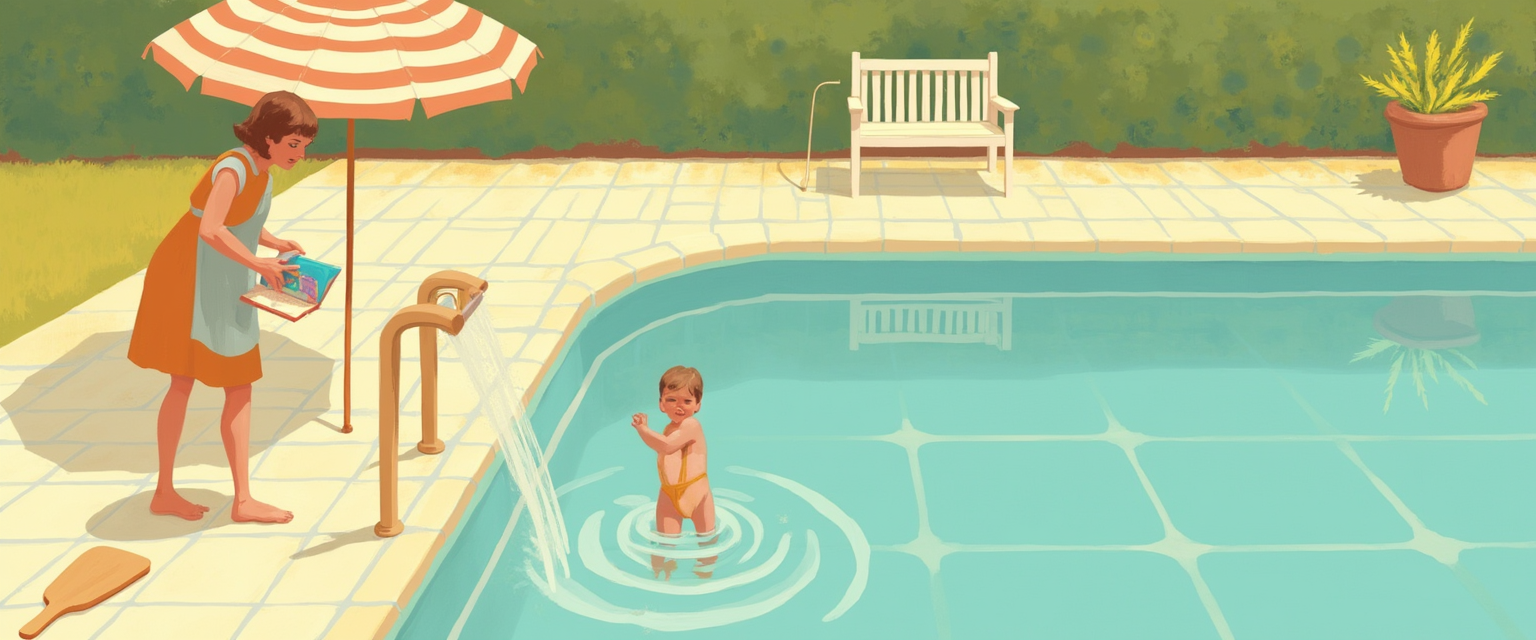
Being comfortable under the shower is a practical sign that a child is used to water on their body. The child can let water run over their head and face without protest. This helps to go underwater more easily later during swimming lessons.
Parents can practice this at home by letting the child calmly get used to the water stream and wet hair. This makes the transition to the pool less daunting.
Mastery of Water Exercises
A child who masters basic water exercises shows that they are ready for swimming lessons. This means they can perform simple tasks, such as going underwater and floating. The water fan is a handy tool to test these skills.
If a child masters these exercises, the instructor can move faster to swimming techniques. This ensures a more effective and enjoyable lesson experience.
4. When It Is Wise to Postpone Swimming
In this chapter, we discuss situations in which it may be wise to postpone swimming lessons. We look at signs of extreme water fear, motor delays, and practical circumstances such as family busyness and health problems. This gives insight into when a break in swimming lessons may be appropriate.
Recognizing Extreme Water Fear
Extreme water fear can be a reason not to start swimming lessons immediately. Children who visibly panic when in contact with water often need more time to build trust. It is important to take this fear seriously and first get used to water in a calm way. This prevents the child from associating negative experiences with swimming.
In some cases, extra guidance or an adapted approach can help reduce the fear. Only when the child feels comfortable is it meaningful to start swimming lessons. This prevents frustration and promotes a positive learning experience.
Mapping Motor Delays
A motor delay can make learning to swim more difficult. Swimming requires coordination, balance, and strength, which some children may not have sufficiently developed yet. It is wise to first consult a pediatrician or physiotherapist if you have doubts about your child's motor skills.
By mapping this delay, an appropriate moment for swimming lessons can be chosen. Sometimes extra practice outside the water is needed to improve motor skills. This ensures a better start and more success during swimming lessons.
Family Busyness and Ear Infections
Family busyness and frequent ear infections can also be reasons to postpone swimming lessons. A busy schedule can make it difficult to consistently attend swimming lessons, which hinders progress. Additionally, ear infections can worsen due to swimming, so it is better to wait until the child has recovered.
It is important to realistically assess the situation and possibly take a break. This prevents the child from developing negative associations with swimming lessons. Flexibility in scheduling helps to resume swimming lessons at a suitable time.
5. Preparation for Swimming Lessons
Good preparation helps children become familiar with swimming lessons.
Practical tools and home activities support this process.
Additionally, it is important to be flexible with the child's pace.
Use of Practical Tools
Practical tools can make starting swimming lessons easier.
For example, using a special swimming book is a good way to introduce children step-by-step to what they can expect.
Visual aids such as the water fan also help build water confidence.
These tools provide clarity for parents and children about the skills they are learning.
Tips for Parents at Home
Parents can already play an important role at home in preparing for swimming lessons.
By practicing water fun and simple water exercises together, the child becomes more relaxed in the water.
Regularly showering or bathing without stress helps the child get used to water contact.
This creates a positive experience that supports learning during swimming lessons.
Being Flexible with Swimming Lessons
It is important to respect the child's pace and be flexible with swimming lessons.
If a child struggles with certain exercises, a short break can sometimes help reduce tension.
Parents can consult with the instructor to adjust the lesson program.
This approach ensures better motivation and a pleasant swimming experience.

Summary
Summary of Preparation and Start of Swimming Lessons
Good preparation helps children become familiar with swimming lessons. Practical tools and home activities support this process and provide flexibility in the child's pace.
Specific tools such as a swimming book and the water fan make starting swimming lessons clearer. They provide insight into the skills children learn and help build water confidence.
When to Postpone Swimming Lessons and Signs for Starting
It may be wise to postpone swimming lessons in cases of extreme water fear, motor delays, or practical circumstances. Gradually getting used to water prevents negative experiences and promotes a positive learning experience.
Important signs for starting are the absence of water fear, comfort under the shower, and mastery of basic water exercises. These signs indicate that a child is ready for swimming lessons.
Early Start and Common Starting Age
An earlier start is useful for children in water-rich environments or with motor skills. This increases water confidence and self-reliance in a playful way.
Five years is a common age to start due to the school rhythm, independence, and being free of water fear. This promotes concentration and a positive swimming lesson experience.
Dear reader, in this blog post we discussed the best age to start swimming lessons.
We would love to hear if you have experience with the moment you started swimming lessons. Feel free to leave a comment below this article.
You can try Zwemlesmaatje for free via https://zwemlesmaatje.com. We hope you find it useful.

Bob van Soest
As an expert in operating sports facilities (such as swimming pools) and developer of, among others, Zwemlesmaatje.com, I am passionately committed to making swimming lessons simpler, more fun and more insightful for parents, swimming instructors and everyone who wants to learn to swim.
Frequently Asked Questions
Related articles

Discover Zwemlesmaatje
The all-in-one app for swimming lesson progress. For parents, swim schools, and adult swimmers.