Recognizingearlysignsofdropoutduringswimminglessons
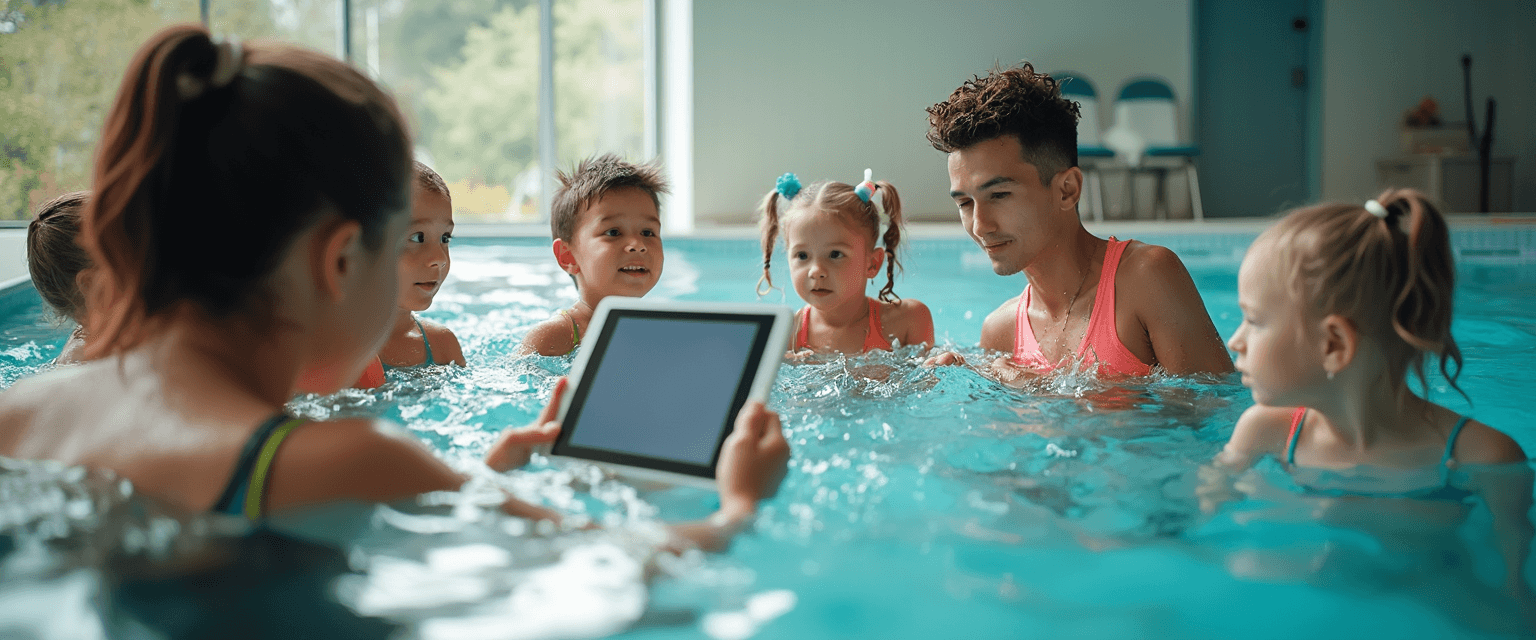
Recognizing early signs of dropout during swimming lessons is important for both parents and swimming instructors. By identifying these signals in time, swimmer engagement can be better maintained. This contributes to more effective lesson planning and a positive learning experience.
In this article, we discuss which behavioral characteristics and causes may indicate reduced motivation or concentration. Additionally, we cover practical ways to prevent dropout and how a digital tracking system can help monitor swimming lesson progress.
These insights support a structured approach to increasing continuity and enjoyment in swimming lessons.
1. Why focus is important
Focus during swimming lessons is essential for a safe and effective learning environment. In this chapter, we discuss why attention is important for safety, the learning process, and preventing dropout. This helps parents and instructors better understand how to support concentration.
Safety during swimming lessons
Safety is paramount during swimming lessons. When children are not paying attention, unsafe situations can arise. It is therefore important that they follow instructions carefully and remain alert during exercises.
Good focus helps prevent accidents and ensures children react in time. This allows instructors to supervise better and intervene quickly if necessary.
Promoting effective learning
Effective learning requires concentration. Swimming skills improve faster when children are attentive. During the lesson, they can better understand and apply instructions.
Good focus prevents frustration and makes the learning process more enjoyable. This contributes to a positive experience and encourages perseverance.
Preventing dropout
Preventing dropout starts with maintaining attention. Children who are distracted learn less and become discouraged more quickly. This can lead to quitting swimming lessons.
By ensuring a calm environment and clear instructions, parents and instructors can work together to improve concentration. This keeps swimming fun and motivating.
What is Zwemlesmaatje?
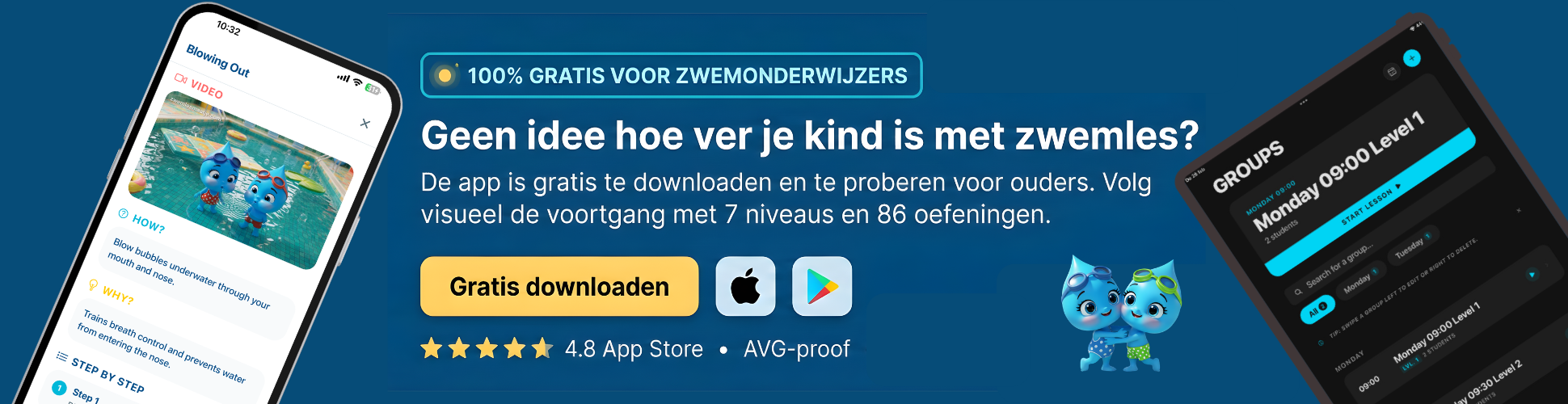
Zwemlesmaatje is an independent app that allows you to track, assess, and celebrate swimming progress — whether you are a parent, adult swimmer, or instructor. You are not dependent on the swimming school but keep control yourself.
For parents, the app offers a clear learning path of 7 levels (from Red to Gold) with 86 exercises. You assess each exercise with a simple scoring system (0 to 6) and receive a personal swimming certificate for each achieved level. This way, you can see at a glance where your child stands and what still needs work.
Adults who want to learn (better) swimming use Zwemlesmaatje discreetly and without group pressure. The app provides structure, breaks the learning process into manageable steps, and helps overcome insecurity. You train at your own pace, whenever it suits you.
Swimming schools and instructors use Zwemlesmaatje completely free as a digital system for student administration, schedules, and progress. Parents see their child's development in real-time — without extra work for you. A handy Marketing Toolbox also helps you create professional flyers, social media posts, and certificates.
Discover now how Zwemlesmaatje supports your swimming journey.
2. Early signs of dropout
Early signs of dropout during swimming lessons are important to recognize in time.
These signals include not following instructions, distracted behavior, and complaints such as boredom.
By carefully observing these signs, parents and instructors can intervene sooner and improve engagement.
Not following instructions
Not following instructions is a clear sign that a child is struggling with the lesson.
This can manifest as ignoring directions or not performing exercises as requested.
Often, this indicates that the child has difficulty concentrating or does not understand the lesson content.
Instructors can notice this by paying attention to repeated behavior and responding accordingly.
Recognizing distracted behavior
Recognizing distracted behavior helps prevent a child from disengaging further during the lesson.
Examples include watching other children, playing with water, or not being involved in the exercise.
Such behavior reduces learning effectiveness and can lead to frustration for the child.
By detecting this behavior early, instructors and parents can work together to find suitable solutions.
Complaints such as boredom
Complaints like boredom or fatigue are often subtle signs of dropout.
Children may say they find the lesson boring or are too tired to participate well.
These remarks provide insight into the child's experience and may indicate reduced motivation.
By paying attention to this, lessons can be better tailored to the learner's needs.

3. Causes of reduced focus
Reduced focus during swimming lessons can have various causes.
In this chapter, we discuss how age, fatigue, and emotions contribute to this.
This gives you insight into factors that influence swimmers' concentration.
Age and attention span
Children's attention spans vary greatly with age.
Younger children often concentrate for shorter periods and get distracted more quickly.
A 4-year-old child, for example, may only pay attention for a few minutes at a time, while a 10-year-old can stay focused longer.
This means swimming lessons need to take these differences into account to maintain attention.
Fatigue and overstimulation
Fatigue plays a major role in reducing focus during swimming lessons.
After a busy day or insufficient rest, children can become distracted more easily.
Overstimulation, for example from too many stimuli in the environment, can also lead to loss of concentration.
A child who is tired or overstimulated has difficulty following instructions and actively participating.
Fear and insecurity
Fear and insecurity can significantly affect concentration during swimming lessons.
Children who feel unsafe or doubt their abilities pay less attention to the lesson.
This can manifest as distracted behavior or avoiding certain exercises.
It is important that instructors and parents recognize these feelings and respond with reassurance and positive encouragement.
4. Approaches to dropout prevention
In this chapter, we discuss how dropout during swimming lessons can be effectively prevented. We cover adjustments instructors can make, the role of parents in support, and the importance of small groups with good preparation. This creates a practical approach to increasing swimmer engagement.
Lesson adjustments by instructors
Instructors can adjust lessons by tailoring exercises to the level and needs of each swimmer. This helps maintain attention and prevent frustration. It is important to give regular feedback and emphasize success experiences. This keeps motivation high and prevents dropout.
Additionally, instructors can introduce variety in lesson formats, for example by alternating individual and group activities. This keeps the lesson dynamic and better matches different learning styles. Adjusting the pace to the group also contributes to a positive learning environment.
Support from parents
Parents play an important role in supporting their child during swimming lessons. By having positive conversations at home about the swimming lesson, they increase the child's motivation and self-confidence. It also helps to set goals together and discuss progress.
Furthermore, parents can ensure good preparation, such as being on time and reassuring the child. This reduces tension and makes it easier for the child to concentrate during the lesson. An involved attitude from parents helps prevent dropout.
Small groups and preparation
Small groups provide more personal attention and better guidance during swimming lessons. This allows instructors to respond more quickly to signs of reduced focus or motivation. This prevents swimmers from dropping out due to lack of connection.
Good preparation, both by instructors and parents, strengthens this effect. Think of explaining the lesson content beforehand and practicing skills at home. This makes the swimmer feel more confident and reduces the chance of dropout.
5. Benefits of digital monitoring
Digital monitoring offers a clear way to track swimmers' progress.
It helps to recognize early signs of dropout and makes communication with parents easier.
In this chapter, we discuss how these benefits contribute to better guidance and maintaining motivation.
Tracking progress digitally
With digital systems, instructors and parents can accurately follow students' swimming skills.
Each lesson and exercise is recorded, making it easier to make progress visible.
This overview helps identify which skills need extra attention.
This way, swimmers can be guided step by step according to their own pace and level.
Timely detection of dropout
By monitoring progress digitally, signs of possible dropout become clear more quickly.
If a student, for example, stagnates for a long time or participates less actively, this immediately stands out.
Instructors can then intervene in time with adjusted lessons or extra support.
This prevents problems from accumulating and increases the chance of lasting motivation.
Better communication with parents
Digital monitoring makes it easier to keep parents informed about their child's swimming development.
Parents receive up-to-date information about achieved goals and points of attention.
This promotes open and constructive communication between the swimming school and home.
This way, parents can be more involved and support their child effectively in the learning process.

Summary
Summary of Digital monitoring and focus during swimming lessons
A digital tracking system offers a clear way to monitor students' swimming lesson progress. It simplifies communication with parents and helps recognize early signs of dropout.
With digital systems, instructors and parents can accurately track swimming skills. Each lesson and exercise is recorded, making progress visible and allowing targeted extra attention.
Benefits of a digital tracking system
A digital tracking system helps prevent dropout during swimming lessons by increasing engagement. Instructors can tailor lessons to the level and needs of each swimmer.
Variety in lesson formats and regular feedback keep motivation high. This creates a positive learning environment and better guidance.
Focus and attention during swimming lessons
Swimmers' concentration is influenced by age, fatigue, and emotions. Younger children have shorter attention spans than older children.
Early signs of dropout include not following instructions and distracted behavior. Good focus is important for safety and an effective learning process during swimming lessons.
Dear reader, in this blog post we have discussed the early signs of dropout during swimming lessons.
We would love to hear if you have experience recognizing these signs. Feel free to leave a comment below this article.
You can try Zwemlesmaatje for free via zwemlesmaatje.com. We hope this tool can support you.

Bob van Soest
As an expert in operating sports facilities (such as swimming pools) and developer of, among others, Zwemlesmaatje.com, I am passionately committed to making swimming lessons simpler, more fun and more insightful for parents, swimming instructors and everyone who wants to learn to swim.
Frequently Asked Questions
Related articles



Discover Zwemlesmaatje
The all-in-one app for swimming lesson progress. For parents, swim schools, and adult swimmers.