Effectivelyorganizingswimminglessongroupsbylevels
Summary
- Regular skill tests ensure groups match swimmers' levels and progress.
- Digital tracking systems streamline scheduling and reduce administrative errors.
- Small, level-based groups improve lesson effectiveness and personalized guidance.
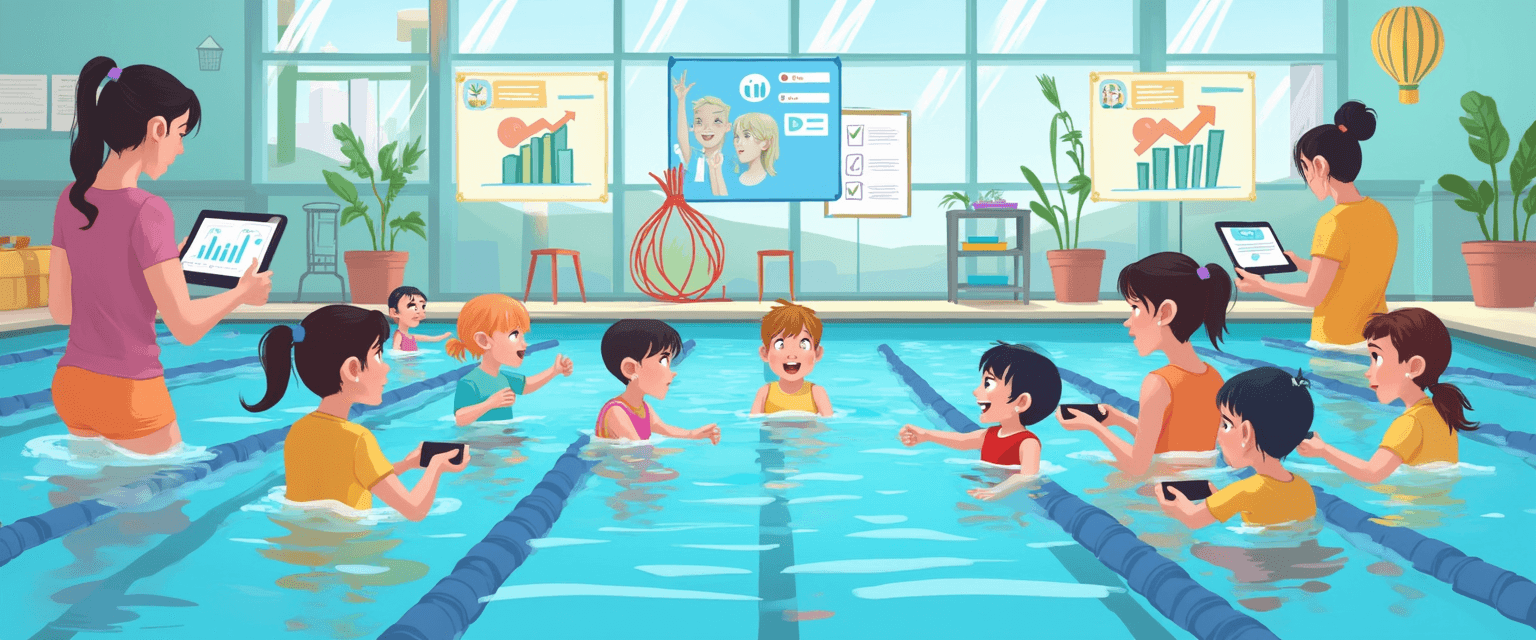
Organizing swimming lesson groups based on levels is essential for a structured and effective swimming lesson plan. Factors such as swimming skills, age, and group size play an important role. A good division ensures targeted guidance and a pleasant learning environment for all participants.
In this article, we discuss how swim schools and instructors can organize groups by level. Additionally, the use of a digital tracking system is covered, which helps keep track of swimming lesson progress clearly and adjust groups where necessary.
We cover practical aspects and benefits of this approach, so that the organization of swimming lessons runs smoothly and transparently.
1. Criteria for swimming lesson groups
When organizing swimming lesson groups, it is important to apply clear criteria. Age, swimming skills, behavior, and learning style play a role in the division. In addition, safety and group size are crucial factors for an effective lesson environment.
Age and swimming skills
Age is an important criterion when composing swimming lesson groups. Children of similar age often have a comparable developmental level. This makes it easier to provide appropriate exercises and tailor the lesson material.
Furthermore, swimming skills are essential to organize groups by level. By bringing together students with a similar swimming level, instructors can offer targeted exercises. This prevents some children from getting bored or overwhelmed.
A good division by age and skill contributes to a pleasant and safe learning environment. This way, everyone can make progress at their own pace.
Behavior and learning style
Behavior and learning style are also important factors when dividing swimming lesson groups. Some children need more structure and calm to learn well. Others are more active and learn better through a lot of variation.
By taking these differences into account, instructors can better tailor their approach. This results in a more effective lesson and fewer disruptions.
Recognizing learning styles also helps to stimulate motivation. This way, students feel more comfortable and stay engaged in the lesson.
Safety and group size
Safety always comes first when organizing swimming lesson groups. An appropriate group size is essential here. Generally, the optimal size is between 6 and 8 students per instructor.
This ratio makes it possible to give sufficient individual attention and intervene quickly if problems arise. Instructors can also better supervise the group's behavior.
By properly aligning safety and group size, a learning environment is created where everyone feels safe and can practice optimally.
What is Zwemlesmaatje?
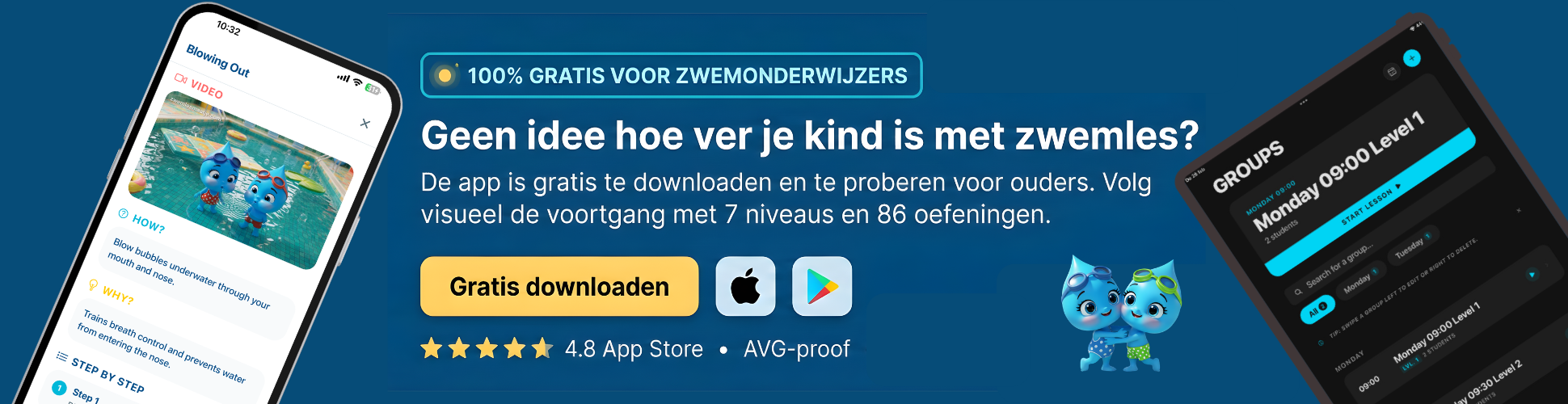
Zwemlesmaatje is an independent app that allows you to track, assess, and celebrate swimming progress — whether you are a parent, adult swimmer, or instructor. You are not dependent on the swim school but keep control yourself.
For parents, the app offers a clear learning path of 7 levels (from Red to Gold) with 86 exercises. You assess each exercise with a simple scoring system (0 to 6) and receive a personal swimming certificate for each achieved level. This way, you can see at a glance where your child stands and what still needs work.
Adults who want to learn (better) swimming use Zwemlesmaatje discreetly and without group pressure. The app provides structure, divides the learning process into manageable steps, and helps overcome insecurity. You train at your own pace, whenever it suits you.
Swim schools and instructors use Zwemlesmaatje completely free as a digital system for student administration, schedules, and progress. Parents see their child's development in real time — without you having to do any work. A handy Marketing Toolbox also helps you create professional flyers, social media posts, and certificates.
Discover now how Zwemlesmaatje supports your swimming journey.
2. Group size and division
When organizing swimming lesson groups, group size is an important factor for effective lessons. Small groups offer advantages such as more individual attention and better motivation. In addition, a flexible division of groups is essential to respond to differences in swimming level and learning needs.
Optimal group size
The optimal group size for swimming lessons is usually between 6 and 8 students per instructor. This number ensures that each student receives sufficient personal guidance. In smaller groups, the instructor can better respond to individual learning needs and pace.
For younger children or beginners, an even smaller group may be desirable to ensure safety and attention. Larger groups can lead to less overview and less effective communication. Therefore, it is important to align group size with age and skill.
Advantages of small groups
Small groups offer clear advantages for both students and instructors. Students receive more individual attention, which improves learning outcomes. There is also more room for personal feedback and technique correction.
For instructors, this means they can teach more targeted and respond faster to problems. Additionally, students often feel less pressure and safer in a smaller group. This promotes motivation and enjoyment during the swimming lesson.
Flexible group division
A flexible group division makes it possible to adjust groups to current levels and needs. This way, students can progress faster to a higher level or receive extra support. This prevents students from getting bored or overwhelmed.
By regularly evaluating the group division, the lesson offer remains aligned with the swimmers' development. This requires good communication between instructors and coordinators. Flexibility contributes to efficient lesson organization and better learning outcomes.
3. Benefits of level divisions
Organizing swimming lesson groups by levels offers clear benefits for lesson programs, motivation, and preventing frustration. By separating groups based on swimming skills, instructors can offer targeted exercises. This contributes to a pleasant and effective learning environment for all participants.Targeted lesson programs
By dividing swimming lesson groups by level, instructors can better tailor lesson programs to the specific skills of the students.
Beginners receive more attention for basic skills, while advanced swimmers work on refinement and technique. This makes lessons more efficient and goal-oriented. Moreover, exercises can better match the group's pace, supporting the learning process.
Stimulating motivation
A clear level division stimulates swimmers' motivation because they receive lessons that match their current abilities. They experience less frustration because the assignments are achievable and success becomes visible faster. This increases self-confidence and encourages continued practice. Additionally, it creates a positive group dynamic, as students feel comfortable among peers with similar skills.
Preventing frustration
Preventing frustration is an important advantage of working with level groups. When students have too much difference in skills, some may feel overwhelmed or bored. By separating groups, swimmers receive appropriate challenges that match their level. This prevents them from dropping out and promotes an enjoyable learning experience for everyone.
4. Digital support and planning
Digital support plays an important role in organizing swimming lesson groups by levels. Using software helps plan lessons, track progress, and communicate with parents. In this chapter, we discuss how these digital tools make lesson organization more efficient and transparent.
Lesson planning with software
Lesson planning software makes it possible to organize swimming lessons clearly based on levels and availability. This way, instructors can easily compose groups and schedule lessons without double bookings. It also offers flexibility to quickly implement schedule changes, for example, when a student is absent. This prevents misunderstandings and ensures smooth lesson flow.
A practical example is using an app where each lesson is assigned a clear time and level. Instructors immediately see which students are in which group and can adjust the schedule if needed. This saves time and reduces administrative errors.
Tracking progress digitally
Digitally tracking progress makes it possible to closely monitor each swimmer's development. Instructors record achieved skills and can provide targeted feedback. This helps identify weaknesses in time and adjust the lesson program accordingly.
For parents, digital progress tracking offers transparency. They see which skills their child has mastered and which still need practice. This promotes involvement and encourages practicing outside of lessons. Moreover, certificates can be issued digitally upon reaching a level, providing extra motivation.
Communication with parents
Good communication with parents is essential for successful swimming lesson organization. Digital systems offer various options for this, such as real-time updates and reports. Parents automatically receive information about progress and can ask questions via the platform.
This transparency strengthens trust between swim school, instructors, and parents. It prevents misunderstandings and makes it easier to set goals together. This creates a constructive collaboration that supports the swimmer's learning process.
5. Evaluation and adjustment of groups
Evaluating and adjusting swimming lesson groups is essential for lasting effectiveness. This chapter discusses how regular skill tests, instructor feedback, and adjustments based on results contribute to an optimal group division. This way, the lesson offer remains aligned with each swimmer's development.
Regular skill tests
Regular skill tests provide a clear picture of each swimmer's progress. By periodically administering these tests, instructors can determine which skills are mastered and where extra attention is needed. This helps keep the group at the right level and prevents students from progressing too fast or too slow. An example is testing breathing technique after several lessons to determine if a student is ready for the next step.
The tests can be easily integrated into the lesson so they do not take extra time. Digital systems support this by recording and analyzing results immediately. This creates a clear report that provides insight into group composition and individual performance.
Instructor feedback
Instructors play an important role in assessing swimming lesson groups. Their observations and experiences during lessons provide valuable information about the group's functioning. They can signal if a student needs more challenge or extra support. This feedback is essential to adjust the lesson material and group division.
Additionally, it helps to regularly consult with fellow instructors about progress and any bottlenecks. This creates a shared view and allows improvements to be implemented faster. Open communication with parents about feedback also strengthens involvement in the learning process.
Adjustment based on results
Based on test results and instructor feedback, groups can be adjusted. This may mean students move up or down a level, or the lesson content is modified. The goal is to have each swimmer practice at the right level, improving motivation and learning outcomes.
A practical approach is to schedule fixed moments for evaluation and reorganization. This prevents groups from staying too long at the same level and ensures a dynamic lesson organization. By making these adjustments regularly, the swimming lesson program remains aligned with the students' current needs.

Summary
Summary of effectively organizing swimming lesson groups with a digital tracking system
Evaluating and adjusting swimming lesson groups is important for good lesson organization. Regular skill tests and feedback ensure groups match each swimmer's level.
These tests provide insight into progress and help move students at the right time. Digital systems record results and make reports clear.
Why a digital tracking system helps
A digital tracking system supports planning and organizing swimming lessons by level. It prevents double bookings and makes schedule changes easy to implement.
With a digital tool, instructors immediately see which students are in which group. This saves time and reduces administrative errors.
Benefits of level division and group size
Dividing groups by swimming level makes lessons more effective and targeted. Beginners get attention for basic skills, advanced students work on technique.
Small groups of 6 to 8 students provide more personal guidance. Group size is aligned with age and skill for a safe and pleasant learning environment.
Dear reader, this blog post was about effectively organizing swimming lesson groups by levels.
We would love to hear if you have experience with dividing swimming lesson groups. You can leave a comment below this article.
You can try Zwemlesmaatje for free via zwemlesmaatje.com. We wish you much success with organizing swimming lessons.

Bob van Soest
As an expert in operating sports facilities (such as swimming pools) and developer of, among others, Zwemlesmaatje.com, I am passionately committed to making swimming lessons simpler, more fun and more insightful for parents, swimming instructors and everyone who wants to learn to swim.
Frequently Asked Questions
Discover Zwemlesmaatje
The all-in-one app for swimming lesson progress. For parents, swim schools, and adult swimmers.